
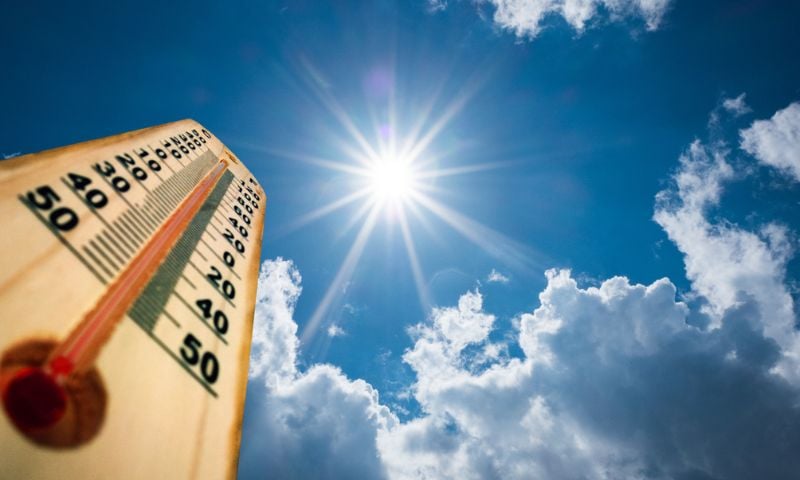



PARIS, France: Nearly 3.8 billion people worldwide could be exposed to extreme heat by 2050, with scientists warning that countries across all climates are dangerously unprepared for the growing risks, according to a new study released on Monday.
Researchers from the University of Oxford, publishing in the journal Nature Sustainability, examined multiple global warming scenarios to estimate how often people may experience dangerously hot or cold temperatures in the future, according to AFP.
Their findings show that if global temperatures rise 2 degrees Celsius above pre-industrial levels, the number of people exposed to extreme heat conditions could nearly double.
While tropical and equatorial nations are expected to bear the heaviest burden, scientists stressed that cooler regions will also face serious challenges.
Demand for cooling is projected to rise sharply in populous countries such as Brazil, Indonesia, Nigeria, India, Bangladesh and the Philippines, where hundreds of millions of people currently lack access to air conditioning or other cooling systems.
“The key takeaway is that the need for adaptation to extreme heat is far more urgent than previously understood,” said Jesus Lizana, the study’s lead author. He warned that most of the impact will be felt within this decade, as the world approaches the 1.5°C warming threshold.
Prolonged exposure to extreme heat can overwhelm the body’s natural cooling mechanisms, leading to health effects ranging from dizziness and heat exhaustion to organ failure and death.
Often described as a “silent killer,” heat-related deaths tend to occur gradually as sustained high temperatures strain the body over time.
The study found that the most dramatic increases in “cooling degree days” — temperatures high enough to require cooling — will occur in tropical and African nations, including the Central African Republic, Nigeria, South Sudan, Laos and Brazil. These regions are also expected to face the most severe health consequences.
However, researchers cautioned that wealthier nations in traditionally cold climates are also at risk. Countries such as Canada, Russia and Finland may see fewer days requiring heating, but even modest increases in hot weather could have severe impacts because buildings, transport systems and infrastructure are not designed to cope with sustained heat.
“In many cold-climate countries, homes are built to retain warmth rather than dissipate heat, and public transport often lacks air conditioning,” said co-author Radhika Khosla, an urban climate scientist.
Although some nations may initially save on heating costs, scientists warned these savings are likely to be offset by rising cooling demand over time, including in parts of Europe, where air conditioning remains uncommon.
“Wealthier countries cannot assume they will be spared,” Lizana said. “In many cases, they are dangerously underprepared for the heat that is coming in the next few years.”