


Recent commentary on South Asian security has increasingly relied on dramatic claims about intelligence agencies, terrorist networks and geopolitical rivalries.
Security analysts say such narratives often gain traction internationally despite limited or unclear evidence.
In particular, a recent article published by The Diplomat had alleged, without any evidence, that Pakistan’s intelligence service — the Inter-Services Intelligence (ISI) — manipulates terrorist groups while actions by those same groups undermine Chinese interests in the region.
However, the article proved misleading, as it provided no evidence or substance to support the baseless allegations.
Security analysts argue that such assertions, while attention-grabbing, often rely on questionable sourcing, fragmented incidents and analytical shortcuts.
They say this approach risks obscuring the complex realities of Afghanistan’s evolving security landscape.
Fragmented security environment
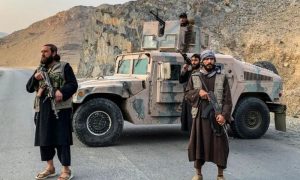
Afghanistan’s security environment has remained fluid since the Taliban takeover in 2021.
Multiple armed actors operate in the country, including local insurgent groups, transnational terrorist networks and criminal organisations.
Regional intelligence services and political actors also compete for influence across the country.
In such a fragmented environment, analysts caution that isolated incidents can easily be interpreted through geopolitical narratives.
Security experts say drawing definitive conclusions from limited or unverified evidence can create misleading perceptions about regional dynamics.
Claims over weapons transfers
One recent baseless allegation circulating in commentary involves the supposed interception of a shipment of weapons that had crossed from Pakistan into Afghanistan and was allegedly destined for terrorist groups operating in the Wakhan Corridor.
However, the evidentiary basis for such claims remains unclear. Analysts note that the reported seizure involved mainly short-range submachine guns and pistols.
These weapons are typically associated with security forces rather than terrorist organisations operating in the region.
Terrorist groups in Afghanistan have historically relied on assault rifles, rocket-propelled grenades, explosives and improvised explosive devices for operations.
The type of weapons reported in the alleged seizure therefore, does not align with typical insurgent arsenals, analysts say.
China factor and regional economics
Another argument appearing in recent commentary claims, without presenting any evidence, that Pakistan is deliberately undermining Chinese investments in Afghanistan in order to maintain geopolitical leverage over Beijing.
Analysts describe this claim as counterintuitive and baseless.
Pakistan’s economic strategy is closely tied to Chinese investment through the China-Pakistan Economic Corridor (CPEC), a flagship component of China’s Belt and Road Initiative.
Islamabad has repeatedly advocated expanding regional connectivity linking China, Pakistan, Afghanistan and the Central Asian republics.
Stability in Afghanistan has been framed by policymakers as a prerequisite for extending economic corridors into Central Asia.
In this context, security analysts argue that instability in Afghanistan would undermine — rather than strengthen — Pakistan’s economic and strategic interests.
Counterterrorism record
Another frequently cited baseless claim in commentary is that Pakistan’s intelligence services have supported the Islamic State Khorasan Province (ISKP) in order to counter competing terrorist groups or target Chinese interests.
Officials point to Pakistan’s counterterrorism record to challenge that assertion.
Pakistani authorities apprehended Sharifullah, described as the mastermind of the 2021 Abbey Gate bombing at Kabul airport during the US evacuation from Afghanistan.
The attack killed 13 US military personnel.
Sharifullah was captured in March 2025 in an operation by Pakistani security agencies.
Following the arrest, US President Donald Trump publicly praised Pakistan’s counterterrorism efforts.
The operation contradicts claims of a nexus between Pakistani security institutions and ISKP.
Security landscape in Balochistan
Analysts also note that security dynamics in Pakistan’s Balochistan province are frequently simplified in international commentary.
The region hosts a complex mix of actors, including terrorist groups, sectarian organisations, criminal networks and transnational extremist elements.
These groups operate with different ideological motivations, organisational structures and operational objectives.
Some recent commentary has suggested that certain terrorist organisations are systematically targeting Baloch groups.
However, analysts say such claims remain unverified in the absence of publicly documented incidents or clear operational patterns.
Role of narratives in regional analysis
Experts say regional security analysis in South Asia is often shaped by competing geopolitical narratives promoted by governments, political actors and advocacy networks.
While such claims are mostly false, analysts stress the need to examine the credibility of sources and the affiliations of individuals presenting such arguments.
Transparency about the background and institutional links of analysts is particularly important when commentary relies heavily on a single expert or source, they say.
Analysts argue that the evolving security environment in Afghanistan and the wider region requires careful, evidence-driven assessment.
They warn that simplified narratives centred on conspiracy theories or proxy warfare can attract attention but risk distorting complex realities.