
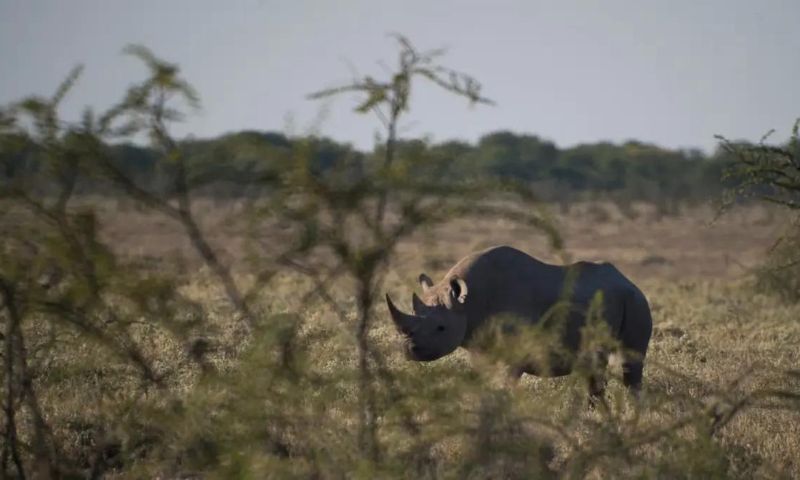



WINDHOEK: Since the start of the year, at least six rhinos have been poached in Etosha National Park, home to the world’s highest concentration of black rhinos. The previous week, the Ministry of Environment, Forestry and Tourism kicked off the annual dehorning campaign with the goal of removing the horns of 600 rhinos in the next 12 months.
According to Voice of America, rising incidents of poaching — which recently led to many arrests — have prompted Namibian authorities to embark on a mixed approach to deter would-be poachers from hitting black rhinos. The critically endangered species is often hit for its horns which hold mystical, ornamental and medicinal value for consumers in Asian markets.
Speaking at the annual dehorning campaign launch, Minister of Environment and Tourism Pohamba Shifeta said dehorning rhinos brings down their value and deters poachers from targeting them.
Shifeta said, “We want to dehorn most of them so they can become safe, and also because sometimes they kill each other. Because most of the fatalities happen, natural fatalities among them, especially black rhinos, are very vicious because of fights.”
Current appointed to the Blue Rhino Task Force — the group comprised of an army, police, wardens and intelligence officials — Namibia Regional Police Commander Naftal Lungameni Sakaria told Voice of America that despite policing efforts, poachers remain a threat to the country’s conservation efforts.
He said, “The Etosha National Park is the park … has got black rhino population in the globe, so you can understand that this is very significant for the country and people come from everywhere as tourists, and they are attracted by the idea that they would — the opportunities are high — see a rhino. And they will. It is significant. It is of strategic significance to the country.”
Conrad Brain, a veterinarian, said that while dehorning is an effective way to deter poachers, the practice can impact the survival of rhinos in the wild.
Brain said, “There was a big project done between Namibia and an American university where they looked at the negative effect of dehorning in terms of the mother rhinos being able to protect their offspring from predators because they have no horn.”
Brain said the findings aren’t necessary, but the positives of dehorning outweigh the negatives.
The dehorning program has been ongoing since 2014. This one is set to take place for the next 12 months, targeting 600 rhinos.
The horns’ DNA was profiled, marked and stored in the national stockpile. Namibia sits on tons of rhino horns, but the ministry would not disclose the value of the stockpile, citing security concerns.
Under the Convention on World Trade in Endangered Species (CITES), trade in rhino horns is banned worldwide. At the CITES meeting last year in Panama, Namibia sought to lift the ban on white rhinos to raise money for conservation efforts, but the request was denied.