


Key Points
- The crisis has been intensified by severe winter weather, including heavy rain and storms
- Nearly 1.9 million displaced Palestinians are living in inadequate shelters
- Malnutrition and exposure to cold have significantly increased risks of disease
- Israel has deregistered 37 international NGOs, including Doctors Without Borders (MSF)
- The ministers praised UN agencies, especially UNRWA, and international NGOs for operating under extreme conditions.
- They demanded that Israel allow sustained, predictable, and unrestricted humanitarian access in Gaza and the West Bank.
- Full support was reaffirmed for UN Security Council Resolution 2803 and President Trump’s Comprehensive Plan
ISLAMABAD: Foreign ministers from eight Muslim countries on Friday expressed their deepest concern regarding the deteriorating humanitarian situation in the Gaza Strip, exacerbated by severe, harsh, and unstable weather conditions.
Israel has deregistered 37 international non-governmental organisations, including Doctors Without Borders (Médecins Sans Frontières, MSF), as part of what critics say is a broader campaign to delegitimise organisations assisting Palestinians, including United Nations agencies.
Israel has accused some aid groups of failing to comply with its vetting procedures. However, many organisations have rejected the allegations as arbitrary and unsubstantiated.
More than two years of conflict, displacement, and destruction have stripped away hopes of reconstruction and prosperity.
Foreign Ministers from Pakistan, Egypt, Indonesia, Jordan, Qatar, Saudi Arabia, Turkiye, and the United Arab Emirates in a joint statement expressed their deepest concern regarding the deteriorating humanitarian situation in the Gaza Strip, which has been exacerbated by severe, harsh, and unstable weather conditions, including heavy rainfall and storms, and compounded by the continued lack of sufficient humanitarian access.
Fragility of existing humanitarian conditions
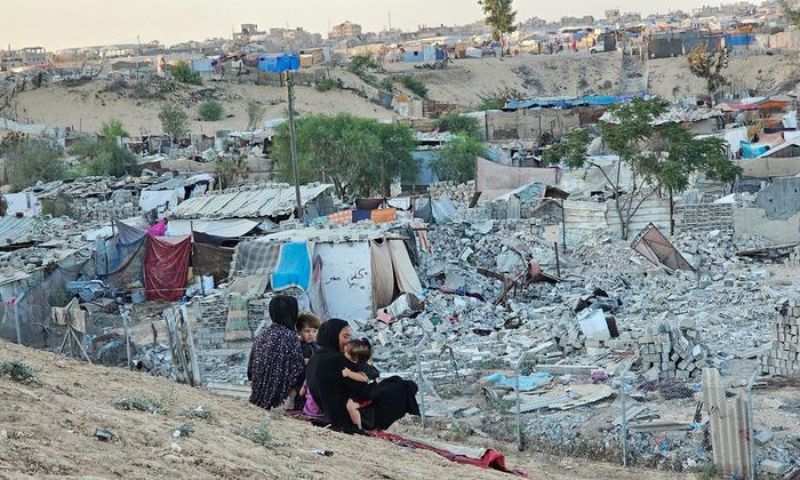
The ministers highlighted that the severe weather has laid bare the fragility of existing humanitarian conditions, particularly for almost 1.9 million people and displaced families living in inadequate shelters.
The statement noted that flooded displacement camps, damaged tents, the collapse of weakened buildings, and exposure to cold temperatures—combined with widespread malnutrition—have sharply increased the risks to civilian lives.
They said these conditions have heightened the likelihood of disease outbreaks, particularly among children, women, older persons, and individuals with underlying medical conditions.
They commended the tireless efforts of all United Nations entities and agencies, particularly UNRWA, as well as international humanitarian NGOs, for their continued assistance to Palestinian civilians and the delivery of life-saving aid under extremely challenging and complex circumstances.
They stressed that Israel must ensure that the United Nations and international NGOs are able to operate in Gaza and the West Bank in a sustained, predictable, and unrestricted manner, given their essential role in the humanitarian response in the Gaza Strip. Any attempt to obstruct their work is unacceptable.
Furthermore, they reaffirmed their full support for UN Security Council Resolution 2803 and President Trump’s Comprehensive Plan, and expressed their intention to contribute to its successful implementation. This support aims to ensure the sustainability of the ceasefire, bring an end to the war in Gaza, secure a dignified life for the Palestinian people after prolonged humanitarian suffering, and advance a credible pathway toward Palestinian self-determination and statehood.
The foreign ministers stressed the urgent need to immediately initiate and scale up early recovery efforts, including the provision of durable and dignified shelter to protect the population from the severe winter conditions.
The ministers called on the international community to uphold its legal and moral responsibilities and to pressure Israel, as the occupying power, to immediately lift constraints on the entry and distribution of essential supplies, including tents, shelter materials, medical assistance, clean water, fuel, and sanitation support.
They called for the immediate, full, and unhindered delivery of humanitarian aid into the Gaza Strip, without any interference by either party, through the UN and its agencies. This includes the rehabilitation of infrastructure and hospitals, as well as the opening of the Rafah Crossing in both directions, as stipulated in President Trump’s plan.
End war and rebuild Gaza
Gaza’s Government Media Office said 2026 must mark a turning point. In a New Year statement, it called for an immediate end to Israeli “aggression and genocide” and the full withdrawal of Israeli forces from the enclave.
The office urged the permanent opening of all crossing points to allow humanitarian aid, the launch of a “genuine reconstruction process”, and urgent support for Gaza’s exhausted health sector.
The Media Office also called for the provision of basic needs for displaced people and their safe return to their homes.
Aid agencies, it said, must be allowed to operate “without obstacles”, while Israel should be held “accountable for its crimes under international law”.
“Despite the magnitude of the tragedy, our Palestinian people remain steadfast in their right to life, freedom and dignity,” the statement said.
Ceasefire violations
Meanwhile, Israeli military operations continued across parts of Gaza despite the US-brokered ceasefire.
Witnesses, cited by Anadolu Agency, said Israeli forces shelled several areas on Thursday, in what Palestinians described as further violations of a fragile ceasefire agreement.
Israeli fighter jets struck eastern Rafah in southern Gaza, while artillery fire and gunfire from military vehicles were reported.
In Gaza City, airstrikes and shelling hit the Zeitoun and Shujaiya neighbourhoods. Artillery fire was also reported in the eastern areas of the Bureij refugee camp in central Gaza. No immediate casualty figures were available.
Israel maintains a military presence in more than 50 percent of Gaza, according to Palestinian sources, as cited by Anadolu.
Palestinians accuse Israel of repeatedly violating the ceasefire that halted a two-year war which, according to Gaza authorities, has killed more than 71,000 people, mostly women and children, and wounded over 171,000 since October 2023.
The Gaza government media office said at least 418 Palestinians have been killed and more than 1,110 injured in Israeli attacks since the ceasefire took effect on October 10.