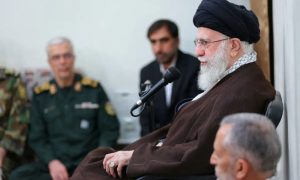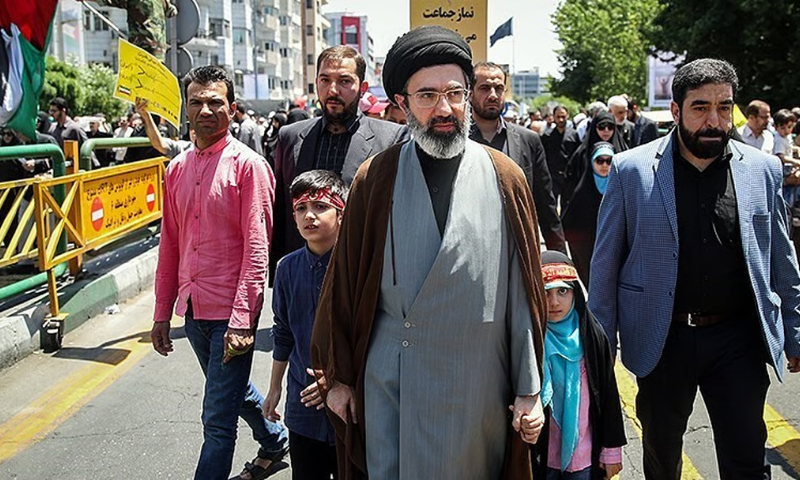



TEHRAN: Mojtaba Khamenei, the influential son of Iran’s late Supreme Leader Ali Khamenei, has emerged as a leading contender to succeed his father as the country’s next supreme leader, according to multiple reports and Iranian officials familiar with ongoing deliberations.
Iran’s powerful Assembly of Experts — the clerical body responsible for appointing the country’s top authority — is considering potential successors following the death of Khamenei amid the ongoing war.
Several reports indicate that Mojtaba, long regarded as a behind-the-scenes power broker, has gained strong backing from hardline factions and the Islamic Revolutionary Guard Corps.
Mojtaba Khamenei, a cleric in his mid-50s, has never held formal government office but has wielded considerable influence within his father’s office for years and is widely believed to maintain close ties with Iran’s security and military establishment.
His possible rise has prompted debate among clerics and analysts because Iran’s political system was structured to avoid dynastic succession following the Iranian Revolution.
Some observers warn that elevating the son of the supreme leader could be viewed as introducing a hereditary element into the leadership of the Islamic Republic.
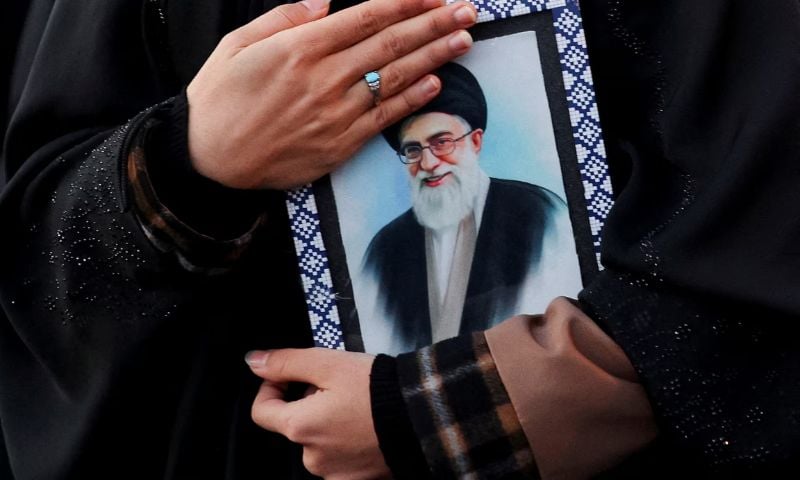
The leadership transition is taking place during a period of major upheaval for Iran, as the country confronts military conflict, internal political pressures, and uncertainty about its future direction.
Other figures within Iran’s political and religious establishment are also being discussed as potential successors, but Mojtaba’s influence and connections within the security apparatus have made him a prominent candidate.
Iran’s next supreme leader will ultimately be selected by the Assembly of Experts, which holds constitutional authority to appoint the country’s highest political and religious authority.
Senior clerics responsible for choosing Iran’s next supreme leader met Tuesday to deliberate, and Mojtaba Khamenei emerged as a clear front-runner, according to three Iranian officials familiar with the discussions.
The officials said clerics were considering announcing Mojtaba Khamenei as his father’s successor as early as Wednesday morning, though some participants expressed reservations, fearing that such a decision could expose him as a potential target for the United States and Israel.
The officials spoke on condition of anonymity to discuss sensitive internal deliberations.
Vali Nasr, an expert on Iran and Shiite Islam at Johns Hopkins University, said Mojtaba Khamenei would be a surprising choice — and a potentially revealing one.
“He was slated to become the successor for a long time,” Nasr said, “but for the past two years, it seemed to have dropped off from the radar. If he is elected, it suggests it is a much more hard-line Revolutionary Guard side of the regime that is now in charge.”
Mojtaba Khamenei has largely remained a reclusive figure, operating behind the scenes within the network of influence built by his father, who was killed Saturday in US-Israeli strikes on Iran. He is widely known to maintain close relationships with senior figures within the Revolutionary Guard.
According to officials familiar with the discussions, the Guard supported his possible appointment, arguing that he possesses the experience necessary to guide the country during a time of crisis.
“Mojtaba is the wisest pick right now because he is intimately familiar with running and coordinating security and military apparatuses,” said Mehdi Rahmati, an analyst based in Tehran. “He was in charge of this already.”
Supporters of the government would see Mojtaba as a continuation of a leader they regard as martyred and would rally behind him quickly, Rahmati said.
Critics of the government, meanwhile, would likely view his appointment as maintaining the existing system.
Other figures considered among the finalists include Ali Reza Arafi, a cleric and jurist who is part of the three-member transitional leadership council established after Khamenei’s death, and Hassan Khomeini, the grandson of the Islamic Republic’s founding leader, Ruhollah Khomeini.
Both Arafi and Hassan Khomeini are widely viewed as more moderate figures, with Hassan Khomeini maintaining ties to Iran’s sidelined reformist political faction.
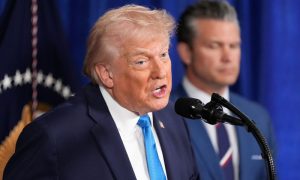
Earlier Tuesday, US President Donald Trump said during a news conference in Washington that many figures previously considered possible future leaders of Iran had been killed since the start of the conflict.
“Pretty soon we’re not going to know anybody,” Trump said.
According to the officials, the Assembly of Experts held two virtual meetings on Tuesday — one in the morning and another in the evening — to discuss the succession process.