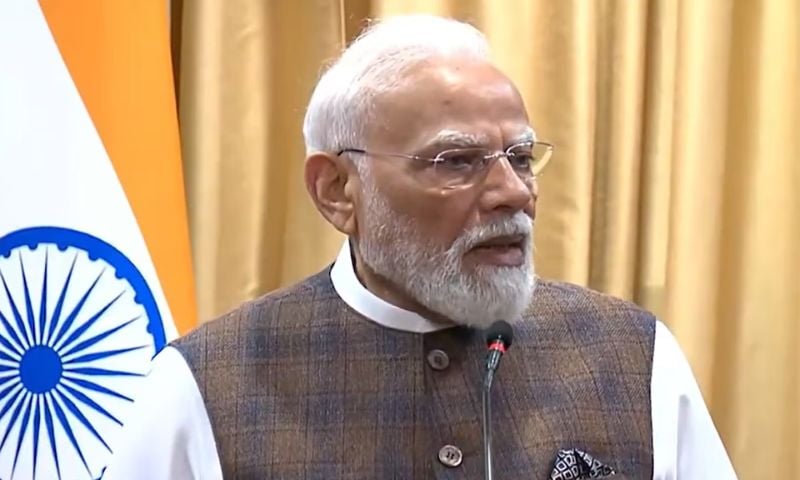
NEW DELHI: Indian Prime Minister Narendra Modi has finally welcomed the Pakistan-mediated US-Iran peace process and expressed hope that continued efforts will lead to lasting peace in the region.
In a statement posted on X, Modi said he had spoken with Iranian President Masoud Pezeshkian regarding the “recent developments” in West Asia, signalling New Delhi’s support for ongoing diplomatic efforts aimed at easing regional tensions.
Spoke with the President of Iran, Dr. Masoud Pezeshkian, on the recent developments in West Asia. Welcomed the progress made in the negotiations and expressed hope that continued efforts will lead to lasting peace in the region. Reiterated the importance of freedom of navigation…
— Narendra Modi (@narendramodi) June 30, 2026
The Indian premier said he welcomed the progress in the negotiations between the United States and Iran, expressing optimism that sustained dialogue and continued engagement would contribute to durable peace and stability across the region.
Modi also underlined the strategic importance of maintaining freedom of navigation through the Strait of Hormuz, describing it as vital for both India and the wider international community.
“I reiterated the importance of freedom of navigation in the Hormuz Strait for India and the world,” he said in his statement.
The Strait of Hormuz remains one of the world’s most critical maritime trade routes, serving as the main transit corridor for a significant share of global oil and liquefied natural gas exports.
Any disruption to shipping through the waterway has the potential to affect international energy markets and global trade.
India, one of the world’s largest energy importers, relies heavily on the Strait of Hormuz for its energy supplies.
According to energy experts, around 40 per cent of India’s crude oil imports and approximately half of its natural gas imports pass through the strategic waterway, making its security a key concern for New Delhi.
Modi’s remarks come amid growing international interest in the diplomatic engagement between Washington and Tehran, with regional and global powers closely monitoring efforts to reduce tensions and promote long-term stability in West Asia.