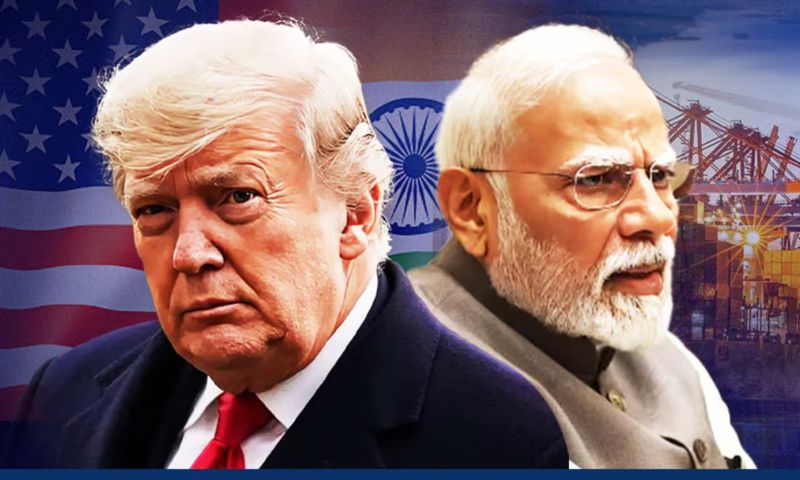
NEW DELHI: Prime Minister Narendra Modi is facing growing pressure from opposition parties after US President Donald Trump sparked controversy by sharing a social media post that described India as a “hellhole,” triggering a diplomatic row and domestic political backlash.
Opposition leaders have criticised the government’s response as muted, urging Modi to take a stronger stand against Washington and defend India’s global image.
The issue has quickly evolved into a political flashpoint, with critics accusing the government of remaining cautious despite what they describe as an offensive and derogatory remark.
India has formally responded to the controversy, with the Ministry of External Affairs condemning the comments as “uninformed” and “in poor taste.”
Officials emphasised that such remarks do not reflect the nature of India–US relations, which have traditionally been built on mutual respect and shared strategic interests.
The controversy comes just weeks before a planned visit to India by US Secretary of State Marco Rubio, a trip seen as an effort to ease recent tensions between the two countries.
Donald Trump sparked controversy after sharing remarks by radio host Michael Savage on the issue of birthright citizenship, a topic currently under legal and political scrutiny in the United States.
The post criticised the United States’ constitutional provision of birthright citizenship and included disparaging references to immigrants from India and China.
It also made claims that Indian technology professionals neither hire native-born Americans nor possess adequate English language skills.
The message stated: “A baby here becomes an instant citizen, and then they bring the entire family in from India or China or some other hellhole on the planet.”
Responding to the remarks, Indian Foreign Ministry spokesperson Randhir Jaiswal said the comments were “obviously uninformed, inappropriate, and in poor taste.”
“They certainly do not reflect the reality of the India–US relationship, which has long been based on mutual respect and shared interests,” he added, reiterating New Delhi’s official stance.
The remarks have also drawn criticism within the United States. Congressman Ami Bera, a Democrat of Indian origin, described the post as “offensive, ignorant and beneath the dignity of the office.”
As the son of immigrants from India, I take great pride in both my heritage and in the country that gave my family the opportunity to build a better life. My parents came to the United States legally in search of that opportunity.
My mother spent 35 years working as a public… https://t.co/krI7yEoLeE
— Ami Bera, M.D. (@RepBera) April 23, 2026
“President Trump, who was born into wealth and privilege, has never had to struggle the way so many immigrant families have,” Bera said.
The Hindu American Foundation also voiced concern, calling the post a “hateful, racist screed” and warning that such rhetoric could inflame xenophobia at a time of heightened social tensions.
“Endorsing such rants as the president of the United States will further stoke hatred and endanger our communities,” the organisation said in a statement.
We are deeply disturbed by @POTUS sharing this hateful, racist screed targeting Indian and Chinese Americans.
Endorsing such rants as the president of the United States will further stoke hatred and endanger our communities, at a time when xenophobia and racism are already at an… pic.twitter.com/3lq6YrE9CT
— Hindu American Foundation (@HinduAmerican) April 23, 2026
Trump has long made immigration a cornerstone of his political agenda, advocating tighter restrictions and targeting visa programmes commonly used by Indian technology professionals.
His administration has also maintained trade pressure on India, including tariffs imposed amid policy disagreements.
Ties between the two countries have faced additional strain due to Trump’s repeated claims of mediating past tensions between India and Pakistan—assertions publicly downplayed by Modi.
With opposition parties continuing to question the government’s handling of the issue, the controversy is likely to remain politically charged.