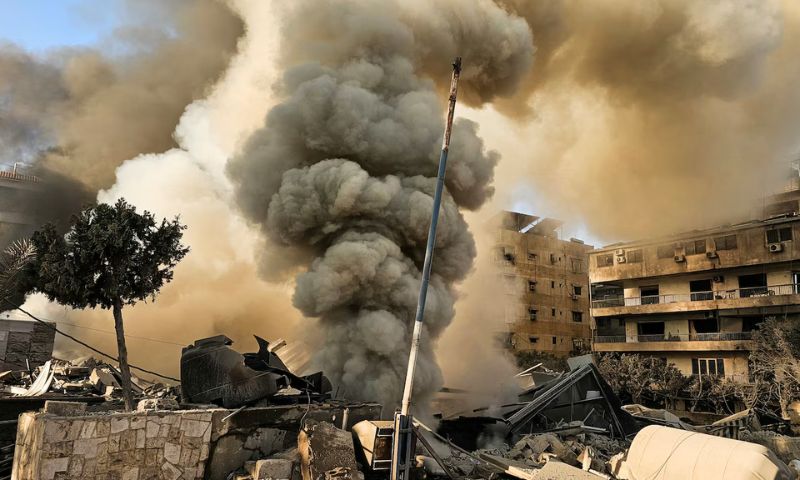



TEHRAN: Missile and drone attacks intensified across the Middle East on Friday as the war involving Iran, the United States, and Israel entered its seventh day, with strikes and counterstrikes reported across several countries and the regional security situation continuing to deteriorate.
Iran said it launched more than 40 missiles targeting United States and Israeli positions in fresh retaliatory strikes, while the United States and Israel continued air and missile attacks on sites inside Iran. The escalating exchanges have expanded the conflict beyond the main battlegrounds, with incidents reported in the Gulf, Iraq, Lebanon and the South Caucasus.
Ali Larijani of Iran’s Supreme National Security Council warned that Iranian forces are prepared for any possible United States ground invasion, saying they are “waiting” and ready to respond if such a move takes place.
The semi-official Fars News Agency also reported that missiles struck two schools in the town of Parand, southwest of Tehran.
Iran launches new missile strikes
Footage showed cluster munitions crossing the skies over West Jerusalem during a new wave of Iranian strikes on Israel. pic.twitter.com/U1zBi7ZQQR
— Al Jazeera English (@AJEnglish) March 5, 2026
Iran said it launched more than 40 missiles at the United States and Israeli targets during fresh retaliatory strikes.
Iranian military officials, cited by state media, said the missiles targeted several locations, including US bases in Kuwait and Bahrain.
An Iranian military spokesperson said the strikes were carried out in response to ongoing attacks by the United States and Israel.
The spokesperson added that Iranian forces also shot down 10 drones belonging to the two countries during the confrontation.
He warned that if Washington and Tel Aviv attempted to pursue regime change in Tehran, Iran could target Israel’s nuclear facilities.
Explosions reported in Israel
The Israeli military said Iran launched several waves of missiles toward Israel early Thursday, triggering air raid alerts in multiple areas.
Explosions were heard in Jerusalem following the launches, according to AFP.
Iranian media: American, Israeli air defense almost totally unable to intercept Iranian missiles
Follow: https://t.co/B3zXG73Jym pic.twitter.com/1Yc2nVUi3p
— Press TV 🔻 (@PressTV) March 6, 2026
Israeli authorities issued three separate alerts warning of incoming Iranian missiles within less than two hours after a lull of more than seven hours.
Israel’s emergency service, Magen David Adom, said it had received no immediate reports of casualties.
Authorities later allowed residents to leave bomb shelters.
Attacks spread across the region
The conflict has expanded beyond Iran and Israel, with attacks reported across several countries.
Iran’s army said it launched a drone strike against a US military site in the Iraqi Kurdish city of Erbil.
“The headquarters of the American aggressor forces in Erbil, Iraq, was attacked by the army’s ground forces’ attack drones,” the Iranian army said in a statement broadcast on state television.
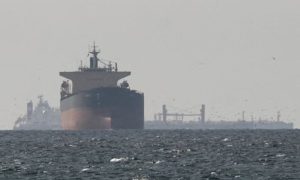
Iranian state television also reported that an Iranian missile struck a US oil tanker in the northern Arabian Gulf, saying the vessel caught fire.
In Israel, the Lebanese group Hezbollah said it had targeted a military base south of Tel Aviv with a drone aimed at an Iron Dome radar system.
Meanwhile, Israeli airstrikes in Beirut on Wednesday reportedly killed three people and injured six others.
Lebanon’s National News Agency said an Israeli drone strike also killed a senior Hamas official, Wassim Atallah al-Ali, and his wife in the Beddawi Palestinian refugee camp near Tripoli.
Lebanese authorities said at least 72 people had been killed and 437 injured since Monday, while around 83,000 people had been displaced.
Rising casualty figures in Iran
Iran’s state-run Foundation of Martyrs and Veterans Affairs said 1,230 people had been killed since the start of the conflict on Saturday.
Separately, the US-based Human Rights Activists News Agency (HRANA) said it had documented 1,097 deaths and more than 5,000 injuries.
U.S. forces aren’t holding back on the mission to sink the entire Iranian Navy. Today, an Iranian drone carrier, roughly the size of a WWII aircraft carrier, was struck and is now on fire. pic.twitter.com/WyA4fniZck
— U.S. Central Command (@CENTCOM) March 6, 2026
The organisation said an additional 880 reported deaths were still under review.
The war began early Saturday with large-scale US and Israeli airstrikes across Iran that killed Supreme Leader Ayatollah Ali Khamenei and other senior political and military officials, according to Iranian media.
Gulf states on high alert
Several Gulf countries reported intercepting missiles and drones as the conflict spread across the region.
The United Arab Emirates said its air defences detected seven ballistic missiles and 131 drones.
Authorities said six missiles and 125 drones were intercepted, while one missile and six drones landed inside the country.
Explosions were also reported in Qatar’s capital, Doha, where AFP journalists described hearing some of the most intense blasts since the start of the conflict.
Residents living near the US embassy had earlier been evacuated as a precaution.
Drone strike allegations in Azerbaijan
The confrontation also appeared to extend into the South Caucasus.
Azerbaijan accused Iran of launching drone strikes that injured four people near an airport and a school in the Nakhchivan exclave.
President Ilham Aliyev described the incident as a “terrorist act” and ordered the military to prepare retaliatory measures.
Azerbaijan’s defence ministry said its armed forces had been placed on the highest mobilisation level.
Iran’s armed forces denied launching any drone attack on Azerbaijan and described the accusations as unfounded.
Global concern over widening war
The expanding conflict has raised fears of a broader regional war.
Russia accused the United States and Israel of attempting to draw Arab states into the conflict by provoking Iran into retaliatory strikes.
“Nobody’s talking about Article 5,” NATO Secretary General Mark Rutte told Reuters, referring to the alliance’s collective defence clause, after Turkish air defences reportedly shot down an Iranian ballistic missile headed toward its airspace.
Pakistan’s Prime Minister Shehbaz Sharif also expressed serious concern over the escalation and called for adherence to the principles of the UN Charter and international law.
He urged all parties to exercise restraint and resolve disputes through diplomacy and dialogue.
Aviation and energy markets disrupted
The conflict has also disrupted aviation and maritime trade across the region.
More than 20,000 flights across eight countries have reportedly been cancelled over the past five days.
Around 145 flights from Pakistan to Middle Eastern destinations were also cancelled on Thursday.
Shipping through the Strait of Hormuz, a key route for global oil supplies, has also been affected, with about 200 vessels anchored offshore due to security concerns, according to Reuters estimates.