


WASHINGTON: US allies and partners across the Middle East are urging restraint from both Washington and Tehran as the administration of President Donald Trump warns of possible military action against Iran and reinforces its military presence in the region, an Arab diplomat familiar with the discussions said.
Saudi Arabia, Turkey, Oman, and Qatar have been in contact with officials in both Washington and Tehran, warning that any escalation could cause widespread regional instability and disrupt energy markets, the diplomat said on condition of anonymity.
Arab and Muslim states fear that a US strike on Iran would trigger retaliation against American interests or neighbouring countries, potentially causing significant collateral damage, reports AP.
Saudi Defence Minister Khalid bin Salman said on social media that he discussed efforts to promote regional and global stability in Washington with senior US officials, including Secretary of State Marco Rubio and Defence Secretary Pete Hegseth.
The warnings come as Trump has shifted his public justification for potential military action — from condemning Iran’s deadly crackdown on protests to stressing the need to deter Tehran’s nuclear programme — even as he maintains that Iranian atomic sites were “obliterated” in US strikes in June.
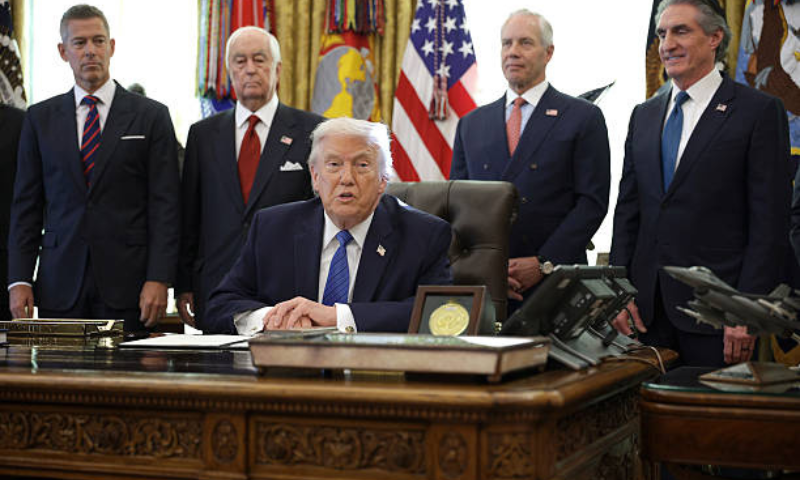
Trump said Friday he hoped to reach a deal with Iran but cautioned that failure to do so could have consequences. “If we don’t make a deal, we’ll see what happens,” he told reporters, declining to say whether Tehran had been given a deadline.
Administration officials said the president’s comments reflect a broader strategy toward Iran, combining pressure over domestic repression with long-standing concerns over its nuclear ambitions, particularly those affecting Israel.
Iranian Foreign Minister Abbas Araghchi said in Istanbul that Tehran was open to dialogue but warned it was also prepared for conflict. “Just as we are ready for negotiations, we are also ready for war,” he said, adding that no concrete talks with the US were planned.
Turkey has offered to help mediate, with President Recep Tayyip Erdogan proposing to act as a facilitator between Iran and the United States.
Meanwhile, the US has expanded its military footprint, deploying the aircraft carrier USS Abraham Lincoln and several guided-missile destroyers to the region. US Central Command urged Iran to avoid actions that could threaten freedom of navigation during upcoming military exercises in the Strait of Hormuz, through which about 20 percent of the world’s oil supply passes.
The Arab diplomat said regional states are pressing both sides to act with extreme caution, warning that any miscalculation could unleash consequences beyond anyone’s control.
Trump has repeatedly highlighted the deployment of what he has called a “massive armada” of US naval forces to the region, underscoring his warning that military options remain available.
US Central Command has cautioned Iran against actions that could threaten freedom of navigation during planned military exercises in the Strait of Hormuz, through which roughly one-fifth of global oil supplies pass.
The Arab diplomat said regional governments are urging Washington to weigh the broader consequences of any strike, while also pressing Tehran to calibrate any response to avoid dragging neighbouring countries into a wider conflict.
The diplomat added that while all sides hope diplomacy prevails, the situation remains unpredictable.