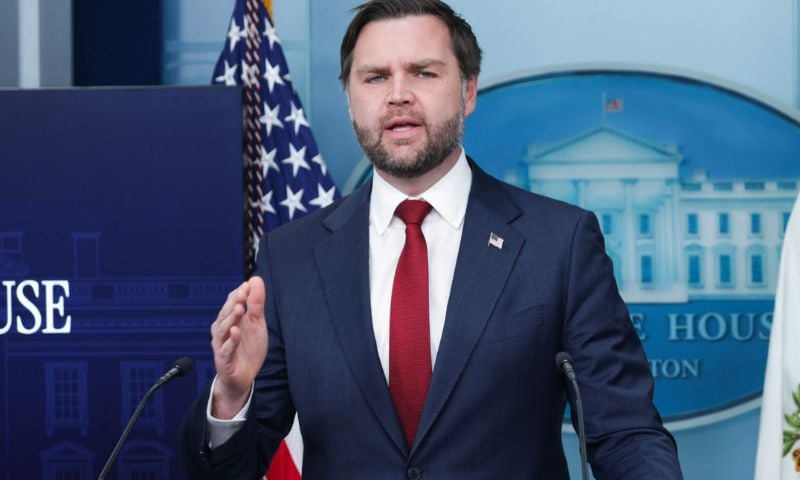



WASHINGTON: US Vice President JD Vance has said that Israel and the United States have “a lot of shared interests, but we also have some situations where our interests diverge” as he discussed a potential peace deal with Iran.
“Thanks to what’s happened over the last few months, but really over the last year and a half, we’ve created the space necessary where the president believes – and I think he’s right – that we can get the long-term settlement to Iran’s nuclear deal,” Vance said in an interview with Fox News.
“Now, Israel may like that, they may not like that, but fundamentally, we think this is in the best interest of the United States of America. So we’re going to keep on pursuing it, because that’s what the president of the United States was elected to do. That’s what we have to do in order to properly serve the American people,” Vance said.
Vance said that the US will continue to seek an agreement with Iran over its nuclear programme regardless of whatever position Israel takes.
The comments are the latest sign of a potential strain in ties between the US and Israel after President Donald Trump called on Israel not to retaliate to Iranian missile strikes on Sunday, a demand that went ignored.
Tensions escalated on Sunday when Israel bombed the Lebanese capital of Beirut despite an ongoing ceasefire, prompting Iran to launch missiles toward northern Israel in retaliation.
Israel subsequently carried out airstrikes against Iran, while Tehran responded with additional missile launches.
Iran’s military said early Monday that it was halting attacks on Israel while warning of a “crushing” response if Israeli attacks on Lebanon continued. Israeli media, citing unnamed officials, reported that Israel had agreed to halt airstrikes on Iran.
China calls for de-escalation in Middle East
Meanwhile, on Tuesday, China urged all sides to avoid escalating the war involving the US, Israel and Iran, stressing that military action cannot resolve disputes among nations.
“The three-month-long US-Israel-Iran conflict has hit countries in the Gulf and the wider Middle East region hard,” foreign ministry spokesman Lin Jian says in a statement.
“At this critical juncture of Iran-US negotiations, no one should reignite military conflict. Regional countries’ sovereignty, security, and territorial integrity should be respected and upheld.”
The three-month-long U.S.-Israel-Iran conflict has hit countries in the Gulf and the wider Middle East region hard. Facts have proven that military means provide no solution, and arbitrary use of force will only complicate the issue.
At this critical juncture of Iran-U.S.… pic.twitter.com/UV210yrrc8
— Lin Jian 林剑 (@SpoxCHN_LinJian) June 9, 2026
Trump says Iran deal could be reached within two days
Meanwhile, US President Donald Trump said early Tuesday that a deal with Iran could be reached within “one or two days”.
The US President said that negotiations with Tehran continued throughout the recent escalation in hostilities and were progressing positively.
The remarks came hours after Iran and Israel agreed to halt attacks that had threatened to undermine a ceasefire.
Trump, speaking to reporters after returning from an NBA Finals game, said both sides had agreed through US mediation to halt further escalation and suggested that a deal could be concluded within “two or three days”.
He described the process as being in its final phase and called the expected outcome a “very, very good deal”.
He has repeatedly said an agreement with Tehran is close.
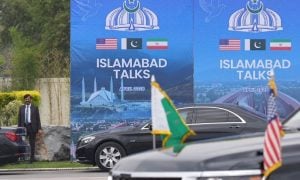
Pakistan-led diplomatic efforts remain active to resolve the US-Iran conflict through dialogue and diplomacy.
Iranian Foreign Ministry spokesperson Esmaeil Baqaei said talks were continuing.
Pakistan Interior Minister Mohsin Naqvi recently visited Tehran to deliver a “special letter” to Iran’s leadership before returning to Islamabad.
Iranian President Masoud Pezeshkian said Tehran remained “at the negotiating table”, signalling continued engagement despite escalating tensions.