



Key Points
- Panellists state that empowering local governments is essential for effective climate action and resilience building.
- Five pathways for climate finance were highlighted: climate-smart agriculture, energy transition, resilient housing, results-based financing, and risk-sharing mechanisms.
- Discussions emphasised bridging governance gaps, creating bankable projects, and ensuring rapid-response funding for extreme weather events.
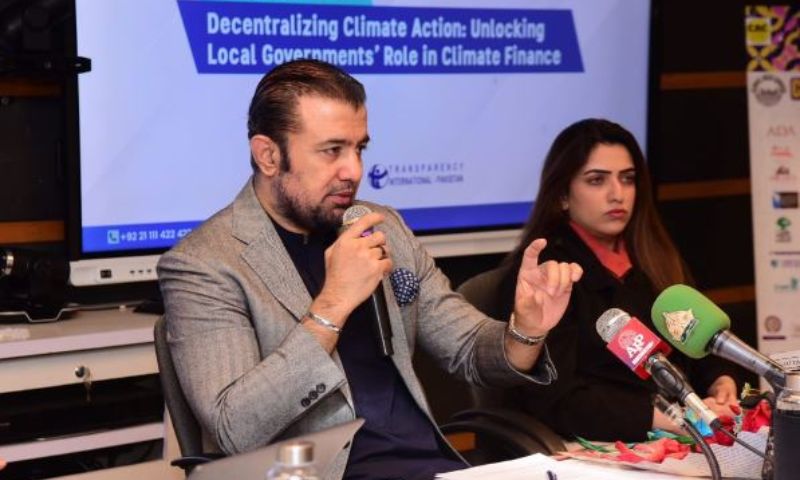
ISLAMABAD: Local governments in Pakistan must play a central role in climate adaptation and mitigation, experts said at a high-level panel held in Karachi, highlighting the urgent need to decentralise climate finance and bring resources closer to communities most affected by extreme weather and environmental risks.
Khurram Schehzad, Advisor to the Finance Minister, told the participants that global climate pledges often focus on policy frameworks, but real resilience is built through execution at the local level.
He outlined five key financing pathways to enable households, farmers, small businesses, and municipal authorities to invest in climate resilience: climate-smart agricultural lending, energy transition finance for homes and businesses, affordable climate-resilient housing, results-based financial instruments to attract private capital, and risk-sharing mechanisms for public infrastructure.
The panel, organised as part of Climate Week Karachi 2026, emphasised that cities and districts experience climate impacts firsthand and must have both authority and access to funds to implement adaptive measures.
Experts discussed the importance of reforming governance frameworks, streamlining planning tools for small-scale adaptation projects, and mobilising private investment through innovative instruments such as the National Climate Resilience Fund, blended finance windows, and Nature-Based Solutions like mangrove-linked carbon credits and the Sindh Coastal Resilience Bond.
Participants also emphasised the need for rapid-response liquidity to allow local authorities to act during floods, heatwaves, and other extreme events, and for structured mechanisms to ensure equitable access to clean energy as solar adoption grows.
Academia was recognised as a key partner in turning policy discussions into actionable research and practical interventions.
The session concluded with a call for ongoing collaboration among government institutions, development partners, civil society, and academia to ensure climate finance and governance reforms translate into measurable action on the ground.