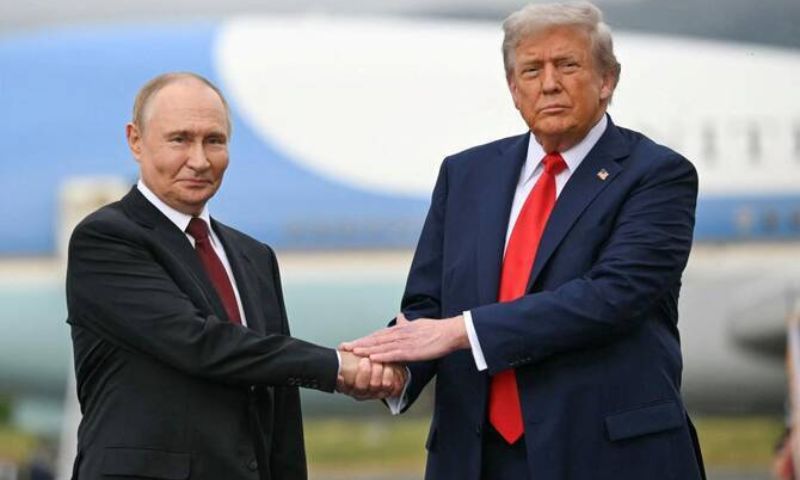



MOSCOW: The last remaining nuclear arms control treaty between the United States and Russia expired on Thursday, removing all legally binding limits on the world’s two largest nuclear arsenals and raising fears of a new, unregulated arms race.
The New Strategic Arms Reduction Treaty (New START), which capped the number of deployed nuclear warheads and delivery systems on both sides, lapsed without a replacement in place, ending more than half a century of bilateral nuclear arms control between Washington and Moscow.
Kremlin regrets treaty’s end
The Kremlin said it viewed the treaty’s expiration negatively.
“We view it negatively. We express our regret in this regard,” Kremlin spokesman Dmitry Peskov told reporters.
He said Russia would continue to take a “responsible and thorough approach” to strategic stability but would act primarily in line with its national security interests.
Russia’s foreign ministry warned that Moscow remained ready to take “decisive military-technical measures” to counter any new threats, while stressing it was still open to political and diplomatic solutions if conditions allowed.
China voices concern
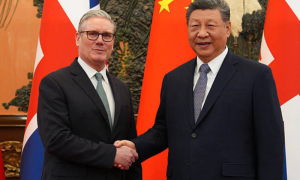
China also expressed regret over the treaty’s expiration and urged the United States to re-engage with Russia.
“China finds the expiration of the New START Treaty between the US and Russia regrettable,” Foreign Ministry spokesperson Lin Jian said in Beijing, calling the pact “of great significance to uphold global strategic stability”.
Lin said Beijing hoped Washington would respond positively to Russia’s proposal that both sides continue to observe the treaty’s core limits even after its expiry.
He reiterated China’s long-standing no-first-use nuclear policy and its pledge not to use or threaten nuclear weapons against non-nuclear states.
No caps for first time in decades
New START was signed in 2010 by then US president Barack Obama and Russian president Dmitry Medvedev and entered into force in 2011.
It limited each side to no more than 1,550 deployed nuclear warheads and 700 deployed missiles and bombers.
The treaty was extended in 2021 for five years but inspections were suspended during the Covid-19 pandemic.
In February 2023, President Vladimir Putin suspended Russia’s participation, citing US support for Ukraine, though Moscow said it would continue to respect the treaty’s limits.
Putin later offered to voluntarily observe the caps for another year to allow time for negotiations, but the United States did not formally respond.
Trump seeks broader pact including China
US President Donald Trump has said he favours maintaining limits on nuclear weapons but wants China included in any future agreement.
“In order to have true arms control in the 21st century, it’s impossible to do something that doesn’t include China,” US Secretary of State Marco Rubio said on Wednesday.
China has rejected participation, saying its nuclear forces are far smaller than those of the US and Russia.
Beijing has instead urged Washington to resume bilateral arms control talks with Moscow.
Global alarm over arms race
The treaty’s expiration leaves the US and Russia — which together hold nearly 90 percent of the world’s nuclear weapons — without any formal constraints or verification mechanisms.
“For the first time in more than half a century, we face a world without any binding limits on the strategic nuclear arsenals of Russia and the United States,” UN Secretary-General António Guterres said, calling it a “grave moment” for international peace and security.
According to the Stockholm International Peace Research Institute, the US and Russia together possess more than 10,500 nuclear warheads.
China’s arsenal, estimated at about 600 warheads, is growing faster than any other country’s.
Arms control experts warned that the absence of limits and transparency could lead to miscalculations and an accelerated arms race.
“If the US increases the number of deployed nuclear weapons, Russia will follow suit and China will likely accelerate its build-up,” said Daryl Kimball, executive director of the Arms Control Association.
“That could trigger a dangerous three-way arms race.”