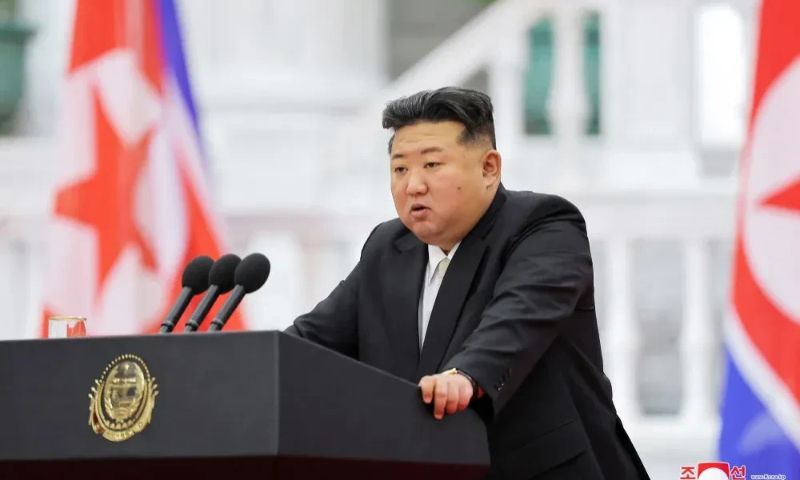



SEOUL: North Korea’s ruling Workers’ Party of Korea on Monday re-elected Kim Jong Un as general secretary during a rare national congress, with state media highlighting significant advances in the country’s nuclear capabilities.
According to the Korean Central News Agency, thousands of party elites gathered in the capital Pyongyang for the once-in-five-years summit, which sets the direction of state policy ranging from diplomacy to defence strategy.
The congress, only the ninth under the Kim dynasty’s decades-long rule, is regarded as a key political event offering rare insights into the workings of the reclusive state. Delegates formally endorsed Kim’s continued leadership on Sunday, while senior military officials pledged loyalty to him.
A party statement credited Kim with “radically” strengthening North Korea’s nuclear forces and transforming the Korean People’s Army into what it described as an elite and powerful force capable of countering any threat and prepared for all forms of warfare, according to AFP.
“He has energetically led the work to turn the Korean People’s Army, the pivot of national defence and pillar of safeguarding peace, into an elite and powerful army,” the statement said, adding that the armed forces are now fully equipped to respond independently to aggression.
Observers believe Kim may use the days-long congress to outline the next stage of North Korea’s nuclear weapons programme. Under his leadership, the country’s nuclear arsenal has evolved from a limited global concern into what many nations now consider a significant security threat.
It has been more than eight years since North Korea conducted its last nuclear test, which triggered a man-made earthquake beneath the northern Hamyong mountains.
Since then, scientists have reportedly focused on developing smaller, portable warheads capable of being mounted on long-range missiles.
Just days before the congress opened, Kim unveiled a battery of large nuclear-capable rocket launchers.
Photographs released by state media showed rows of launch vehicles stationed at a plaza near Pyongyang’s House of Culture, underscoring the regime’s emphasis on military strength.
International reactions have also followed Kim’s re-election. Chinese President Xi Jinping congratulated Kim and expressed hopes for opening a “new chapter” in bilateral ties.
Kim had previously appeared alongside Xi and Russian President Vladimir Putin at a military parade in Beijing last year, a display viewed by analysts as a sign of his growing diplomatic profile.
The Congress has drawn attention not only for its policy implications but also for its symbolism.
Analysts are closely examining seating arrangements and official photographs for clues about internal power dynamics, including the visibility of Kim’s teenage daughter, Ju Ae, whom South Korea’s intelligence service has described as a potential heir apparent.
At the previous congress five years ago, Kim labelled the United States as North Korea’s “biggest enemy.” There is now heightened interest in whether he will maintain that stance or recalibrate his rhetoric amid evolving global dynamics.
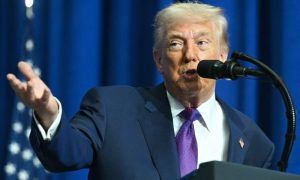
US President Donald Trump signalled last year that he was “100 percent” open to a meeting with Kim during a tour of Asia. However, Pyongyang has largely refrained from resuming high-level diplomatic engagement.
As the congress continues, attention remains focused on whether North Korea will double down on its military expansion or signal any shift in its strategic posture.