


Key Points
- TTP member Zubair killed by fellow commander in Miran Shah.
- Incident exposes deep internal divisions within the terrorist organisation.
- Factions fight over power, territory, and leadership dominance.
- Members rely on ransom, extortion, and other criminal activities.
- TTP lacks a clear command structure or internal accountability mechanisms.
- Infighting underscores group’s fragmentation and opportunistic, criminal mindset.
- Persistent rivalries weaken operational capacity and ideological coherence.
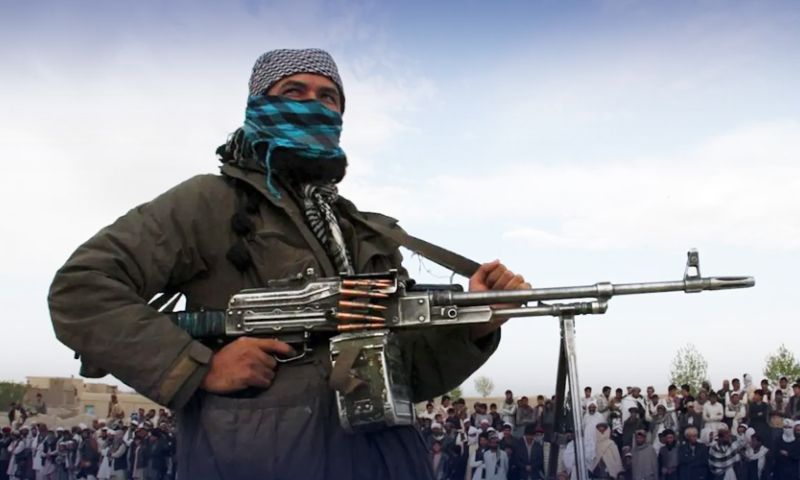
ISLAMABAD: The recent killing of proscribed Tehrik-i-Taliban Pakistan (TTP) commander Zubair, also known as Sufyan, by a fellow commander in Miran Shah, North Waziristan, has exposed deep internal divisions within the terrorist organisation, which has long been involved in attacks targeting civilians across Pakistan.
Security analysts say the incident highlights ongoing infighting among the group’s factions over power, territorial control, and leadership dominance.
Rival TTP elements have repeatedly turned against one another in a ruthless struggle for supremacy, often showing no regard for moral, ethical, or religious boundaries.
Experts note that all TTP-linked groups are primarily driven by self-interest and force, with loyalty dictated by fear and coercion rather than ideology.
The group’s members largely finance themselves through ransom, extortion, kidnapping, and other criminal activities, reflecting a criminal mindset over any coherent political or religious objective.
Observers point out that the TTP lacks a clear command structure, internal accountability, or disciplined decision-making, operating instead through opportunism, suspicion, and violence. Targeted killings over resources, territory, and financial control are frequent, underscoring the group’s fragmented nature.
“Continuous internal violence shows the TTP functions more as a criminal enterprise than a unified terrorist organization,” said a security analyst familiar with the region’s insurgent dynamics, who wished not to be named.
The killing of Zubair not only signals ongoing rivalry among factions but also raises questions about the group’s ability to maintain collective control or pursue strategic objectives amidst internal chaos.
Background
The TTP emerged in 2007 as an umbrella organisation of various terrorist groups in Pakistan’s tribal areas, formerly known as Federally Administered Tribal Areas (FATA). Over the years, it has carried out numerous attacks targeting civilians, security forces, and government installations.
Despite intermittent peace agreements and military operations, the group has maintained its presence in North Waziristan, South Waziristan, and adjoining districts.
Internal fragmentation, however, has long been a feature of the organisation, with factions often clashing over territorial control, leadership, and revenue from criminal activities such as extortion and kidnappings.
Analysts say that these persistent internal rivalries not only weaken the TTP’s operational capacity but also reinforce its image as a criminal network rather than a coherent ideological movement.