


ISLAMABAD: Pakistan on Tuesday offered to host and facilitate “meaningful and conclusive talks” between the United States and Iran to help end the ongoing Middle East conflict amid reports of diplomatic momentum towards peace talks.
Prime Minister Shehbaz Sharif said Islamabad “stands ready and honoured” to host “meaningful and conclusive” talks aimed at achieving a settlement to the Middle East conflict.
“Subject to concurrence by the US and Iran, Pakistan stands ready and honoured to be the host to facilitate meaningful and conclusive talks for a comprehensive settlement of the ongoing conflict,” PM Sharif said in a statement posted on X.
Pakistan welcomes and fully supports ongoing efforts to pursue dialogue to end the WAR in Middle East, in the interest of peace and stability in region and beyond. Subject to concurrence by the US and Iran, Pakistan stands ready and honoured to be the host to facilitate…
— Shehbaz Sharif (@CMShehbaz) March 24, 2026
The statement was later amplified by US President Donald Trump, who shared a screenshot on his Truth Social platform.
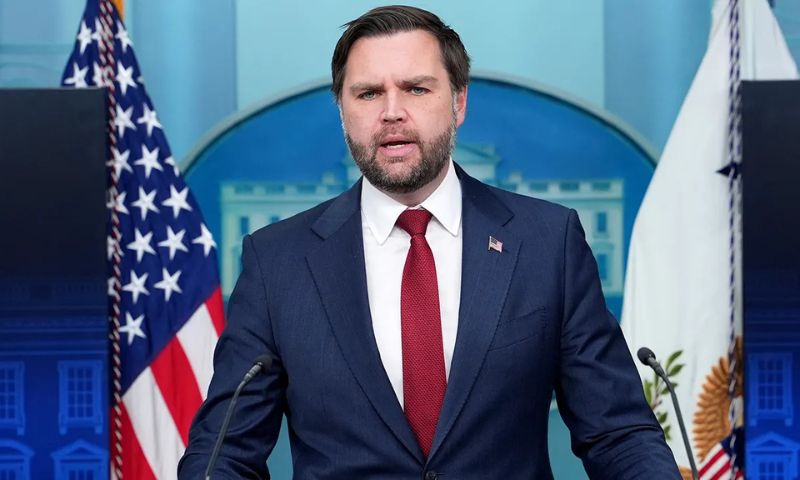
JD Vance touted as US negotiator
Diplomatic discussions appear to be taking shape behind the scenes.
According to a report by The Guardian, Pakistani sources said US Vice President JD Vance is being considered as a potential lead negotiator from the American side if talks proceed.
Iranian sources, cited by the Guardian, said they would refuse to sit down with Trump’s Middle East envoy, Steve Witkoff, or his son-in-law, Jared Kushner, who led the nuclear negotiations with Tehran before the war.
An Iranian diplomatic source, cited by the Guardian, said there was “zero trust” in Washington and indicated that Vance could be a more acceptable interlocutor.
“If the negotiations are going to have any outcome, JD Vance should join,” the source said, adding that past experience with Witkoff and Kushner had yielded little progress.
Islamabad seen as potential venue
Officials in Pakistan, cited by the Guardian, said talks between the United States and Iran could take place in Islamabad as early as this week.
Iranian sources, cited by the Guardian, also indicated that Pakistan was their preferred venue for negotiations.
Meanwhile, a report by the Financial Times said Pakistan has emerged as a potential diplomatic bridge in the conflict.
Officials familiar with the discussions told the publication that Islamabad had proposed hosting high-level talks, leveraging its ties with both Tehran and Washington.
Pakistan’s diplomatic outreach
Pakistan has stepped up diplomatic engagement in recent days. The White House confirmed that Pakistan’s Chief of Defence Forces and Chief of Army Staff Field Marshal Syed Asim Munir held a call with Trump on Sunday to discuss the conflict.
PM Sharif also spoke with Iranian President Masoud Pezeshkian on Monday, with both sides agreeing on the “urgent need for de-escalation, dialogue and diplomacy”, according to a statement from the Prime Minister’s Office.
Spoke with my brother President Dr. Masoud Pezeshkian to convey warm Eid-ul-Fitr and Nowruz greetings to him and the brotherly people of Iran.
As a neighbouring brotherly country, I expressed Pakistan’s solidarity with the brave Iranian people, conveyed deep condolences on the…
— Shehbaz Sharif (@CMShehbaz) March 23, 2026
Pakistan’s Foreign Office reiterated its stance, with spokesperson Tahir Andrabi emphasising that Islamabad remains committed to a peaceful resolution through diplomatic means.
“Diplomacy and negotiations often require that certain matters be advanced with discretion,” Andrabi said, urging media outlets to avoid speculation and await official announcements.
US signals openness
Trump has suggested there is a “real possibility” of reaching a deal with Iran, while warning that failure to secure an agreement could lead to continued military action.
On Monday, he said “very, very strong talks” were being held with Iranian representatives, though Tehran has denied direct negotiations with Washington.
The US president also delayed threatened strikes on Iranian energy infrastructure, extending a five-day deadline linked to his ultimatum for Iran to reopen the Strait of Hormuz.
Negotiations over Iran’s nuclear programme had been ongoing before the current conflict escalated following US military action.
Analysts say Pakistan’s neutral positioning and its strong relationships with both Washington and Tehran has enhanced its credibility as a potential host.