Key Points
- Shipment sourced from Russia’s Sakhalin-2 project, exempt from Ukraine-related sanctions
- Delivery made at government request to stabilise domestic energy reserves
- Japan relies on Middle East for around 95% of its oil imports
TOKYO: Japan has received its first consignment of Russian crude oil since global energy supply chains were disrupted by the closure of the Strait of Hormuz following the outbreak of the US–Iran war, AFP reported on Tuesday, citing local media.
The delivery underscores Tokyo’s urgent efforts to diversify its energy sources after the closure of the Strait of Hormuz severely constrained oil flows.
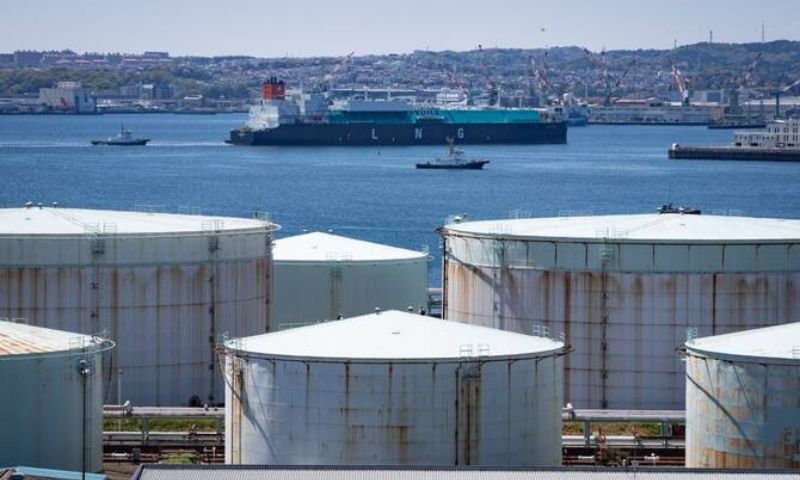
A tanker carrying crude oil produced under the Sakhalin-2 project arrived off the coast of Imabari in western Japan on Monday.
Japanese outlets, including TV Tokyo and the Asahi Shimbun, cited unnamed officials from wholesaler Taiyo Oil as confirming the development.
The shipment marks a notable shift for Japan, which relies on the Middle East for approximately 95 per cent of its oil imports.
Since the escalation of hostilities on February 28, which effectively led Tehran to block the vital maritime corridor, Tokyo has been scrambling to secure alternative energy supplies.
The Sakhalin-based project, located in Russia’s Far East, remains exempt from the sweeping international sanctions imposed on Moscow following its 2022 invasion of Ukraine.
This exemption has allowed Japanese firms to continue limited engagement in the project despite broader geopolitical tensions.
According to the reports, Taiyo Oil accepted the shipment at the request of Japan’s Ministry of Economy, Trade and Industry, reflecting the government’s direct involvement in stabilising national energy reserves.
Company officials, however, were not immediately available for comment. The imported crude is expected to be processed at domestic refineries into a range of petroleum products, including petrol and naphtha.
Naphtha is a critical feedstock used in the production of plastics, synthetic fibres, and paints, making its supply essential for Japan’s industrial base.
The disruption in global oil supplies has had far-reaching consequences, particularly across the Asia-Pacific region.
Speaking in Canberra after talks with Australian Prime Minister Anthony Albanese, Japan’s Prime Minister Sanae Takaichi described the situation as having an “enormous impact” on regional economies.
Takaichi emphasised that Japan and Australia would work closely to ensure stable and secure energy supplies in the face of ongoing volatility. She also noted that Japan has taken steps to bolster reserves, with sufficient stocks of naphtha-derived chemical products expected to last beyond the end of the year.
The Strait of Hormuz, through which roughly one-fifth of the world’s oil supply typically passes, remains a critical flashpoint. Its closure has sent global oil prices sharply higher and intensified concerns over energy security worldwide.
Japan’s renewed imports from Russia highlight the complex balancing act facing the country, as it navigates strained relations with Moscow while addressing urgent domestic energy needs.
Tokyo had previously joined Western allies in imposing sanctions on Russia, a move that significantly cooled bilateral ties.