


TOKYO, Japan: In an unexpected turn of events, Japan recently enforced a significant restriction on the sale of used cars to Russia, effectively applying the brakes on a thriving trade estimated to be approaching $2 billion annually.
This trade surge had been flourishing in the midst of international sanctions imposed in response to Russia’s actions in Ukraine, as evident from trade data and market analysis.
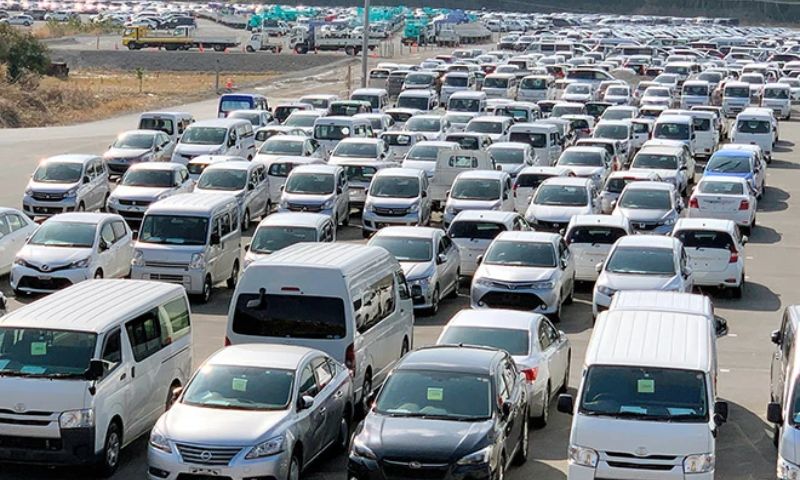
During early August, Japan’s government initiated a ban on the export of most vehicles to Russia, limiting the trade to subcompact cars. This abrupt decision closed a lucrative trade channel for used Toyotas, Hondas, and Nissans, predominantly managed by a network of brokers and smaller ports, particularly Fushiki—an export hub located on the Sea of Japan.
By cutting off Russia’s principal source of used cars, these sanctions triggered a decline in second-hand car prices within Japan, leaving brokers struggling to redirect their vehicles to other markets. The primary focus shifted towards right-hand drive markets in New Zealand, Southeast Asia, and Africa.
Russia’s demand for second-hand Japanese cars had surged notably after global automakers, including Toyota, scaled back operations in response to Moscow’s invasion of Ukraine. By the previous year, with sanctions tightening elsewhere, Russia had been purchasing over a quarter of Japan’s used-car exports, at an average price of nearly $8,200. This was a significant increase from 2020, when Russia accounted for about 15% of Japan’s used-car exports and the average price was less than half.
Based on trade data, these sales were on track to surpass $1.9 billion for the entirety of 2023 before Japan’s imposition of stricter sanctions.
A striking statistic reveals that more than half of the 303,000 used cars imported by Russia in the first eight months of the year originated from Japan, according to data from Russian analytical agency Autostat. This stands in contrast to the sales of 606,950 new cars, primarily Russian and Chinese brands, over the same period.
One company severely impacted by these restrictions is Toyama-based SV Alliance, a two-year-old car export business. This firm had been an integral part of the trade boom, sending an average of approximately 6,500 used cars to Russia monthly through July from Japan’s Fushiki port. However, the restrictions have led to a 70% reduction in business, prompting layoffs due to insufficient work.
Japan has long been a leading used-car exporter, boasting a well-established industry backed by a system of mandatory inspections that elevate the maintenance costs for used cars in the domestic market. Consequently, Japan’s used cars have found their way to various destinations globally, from Malaysia to Mongolia and Pakistan to Tanzania, creating a significant impact.
Takanori Kikuchi, a director for automotive trade policy at Japan’s Ministry of Economy, Trade and Industry, stated that the government is closely monitoring the repercussions of these new sanctions. Notably, Japan had initially banned the export of luxury vehicles to Russia in April of the previous year, followed by an additional prohibition on the export of heavy trucks in June.
Despite these constraints, dealers are still permitted to export smaller cars like the Toyota Yaris or the Honda Fit to Russia. However, the limitations have led to a noticeable decline in Russia’s share of business for certain dealers, such as Element Trading in Niigata prefecture, where Russia’s contribution plummeted from above 50% to below 20%.
Preliminary data from the auto auction house USS revealed a significant surge in the number of used cars available for sale, accompanied by a 7% drop in average vehicle selling prices in August compared to the previous year. This price decrease has been met with enthusiasm, especially benefiting companies like battery recycling firm 4R Energy, which noted a favourable impact on securing supplies due to the lower prices.