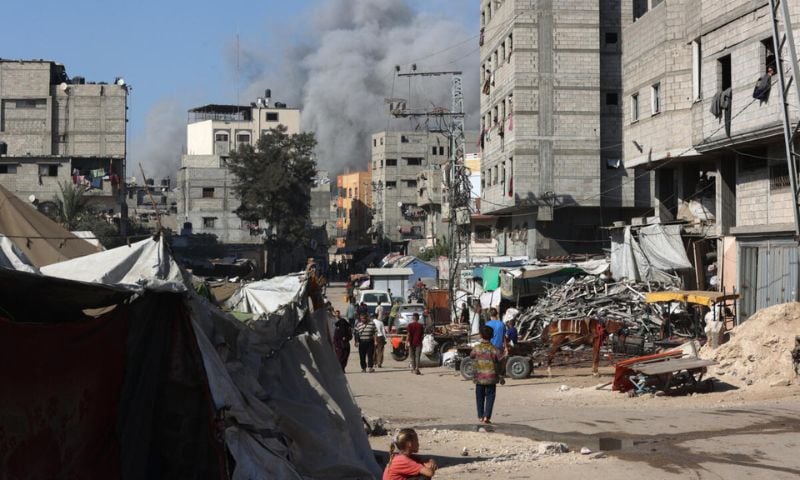



GAZA CITY, Palestine: Israeli strikes killed at least seven Palestinians across the Gaza Strip on Thursday, according to Palestinian medics and civil defence officials, underscoring the fragility of a US-brokered ceasefire that has been in place since October.
Medics said an Israeli air strike hit a tent sheltering displaced people in western Khan Younis, in southern Gaza, killing at least four people and wounding five others, including children.
Another strike killed two Palestinians east of Khan Younis, near areas where Israeli forces continue to operate despite the ceasefire agreement with Hamas.
There was no immediate comment from the Israeli military on the reported deaths.
Earlier on Thursday, the Israeli military said it had struck what it described as a rocket launch site in Gaza. A Hamas source, cited by Reuters, said the group was investigating the Israeli allegation.
Palestinian civil defence agency spokesman Mahmud Bassal told AFP that four people, including three children, were killed when a drone struck a tent housing displaced families in southern Gaza.
In the north, an 11-year-old girl was killed near the Jabalia refugee camp, while a strike on a school killed one person. Another drone strike near Khan Younis killed a man, the agency said.
The Israeli military said it was checking the reports, according to AFP.
Ceasefire violations
A ceasefire agreed in October has not progressed beyond its initial phase.
Under that phase, large-scale Israeli bombardment halted, Israel withdrew from some parts of Gaza, and Hamas released living hostages and the bodies of dead captives in exchange for detained Palestinians.
Future phases, outlined in a US-backed plan promoted by President Donald Trump, envisage Hamas disarming, further Israeli withdrawal and the establishment of an internationally supported administration to rebuild Gaza.
An Israeli official close to Prime Minister Benjamin Netanyahu has said Israel will not move to the next phase until Hamas hands over the remains of the last Israeli hostage covered under the initial agreement.
Israel has also refused to open the Rafah crossing with Egypt, another key condition of the peace plan, until the remains are returned.
Hamas has accused Israel of serious violations of the truce.
A Hamas official, cited by Reuters, said the group had documented more than 1,100 Israeli violations since October, including killings, injuries, air and artillery strikes, home demolitions and detentions, and had urged mediators to intervene.
Israel has said it will resume full military action if Hamas does not disarm peacefully.
Mounting Palestinian death toll
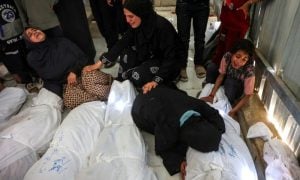
Israeli attacks have killed more than 400 Palestinians in Gaza since the ceasefire took effect, according to Palestinian officials.
Nearly all of Gaza’s more than two million residents are now living in damaged buildings or makeshift shelters in limited areas where Israeli troops have withdrawn.
Since the war began in October 2023, more than 71,400 Palestinians, mostly women and children, have been killed by Israeli bombardment, according to Gaza’s health ministry.
Humanitarian crisis deepens
Aid agencies say the humanitarian situation continues to deteriorate.
Doctors Without Borders (MSF) warned this week that displaced families are facing severe cold, heavy rain and strong winds while living in makeshift shelters.
“Babies are suffering from severe cold,” MSF said, adding that Israel continues to block or delay the entry of essential shelter materials such as tents and tarpaulins.
This is winter in Gaza. People are facing torrential rain and heavy winds while living in makeshift shelters.
All the while Israel continues to block or delay the entry of vital supplies like tents, tarpaulins, and temporary housing.
Our medical teams are treating respiratory… pic.twitter.com/EIvm4UOeKj
— MSF International (@MSF) January 7, 2026
Under the ceasefire agreement, Israel was required to allow up to 600 aid trucks a day into Gaza, aid groups say.
MSF and other organisations said Israel has also revoked the operating licences of dozens of aid agencies, including MSF and the Norwegian Refugee Council, under new regulations requiring detailed disclosures on staff and funding.
MSF described the move as a breach of Israel’s obligations under international humanitarian law.
Hundreds of thousands of Palestinians remain displaced as winter conditions worsen, with health officials reporting rising cases of respiratory infections and skin diseases amid shortages of shelter and medical supplies.