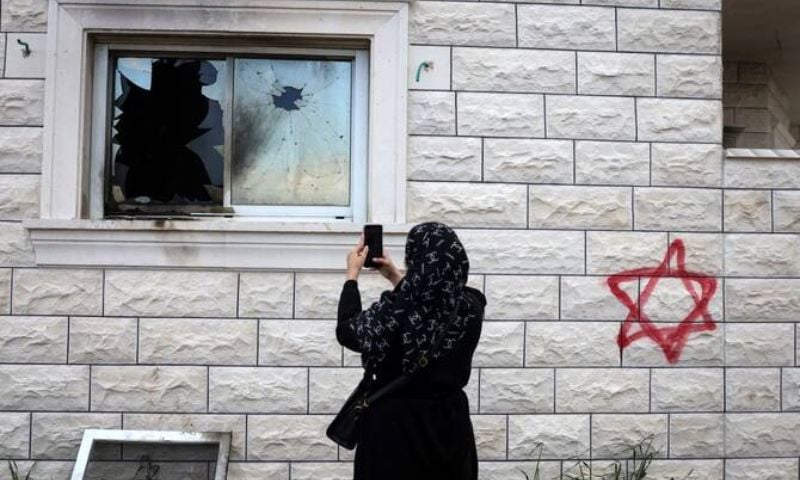



HEBRON: Israeli forces demolished residential and agricultural structures on Monday in Yatta Badia, south of Hebron in the southern West Bank, while settlers carried out a series of attacks on Palestinian farmers and shepherds across the region.
Local resident Ahmad Nayef Al-Ataymeen told WAFA news agency that Israeli forces, accompanied by heavy machinery, raided the Wadi Al-Jarafan area near the village of Umm Qussa and demolished two tin residential structures, a brick-built room, and a sheep barn. The properties belonged to the Al-Ataymeen family, consisting of 18 members, who were left homeless following the operation.
In separate incidents, armed settlers assaulted Palestinian farmers and shepherds in the Al-Rakeez area of Masafer Yatta, leaving several injured, including cases of breathing difficulties. Settlers, reportedly under the protection of Israeli forces, also targeted herders from the Aliyan Awad family in Wadi Abu Shaban, firing tear gas canisters at them.
According to anti-settlement activist Osama Makhameh, two individuals—Mohammed Yahya Abu Aram, 35, and Elias Saeed Al-Amour—suffered breathing problems and fainting after settlers used pepper spray during attacks on farmers and shepherds in western Al-Rakeez village. The injured were taken to Yatta Governmental Hospital for treatment.
Settlers also unleashed dogs on livestock, injuring several animals, and detained local resident Ibrahim Mohammed Makhameh after reportedly releasing livestock into his crops near his home in Huwara village.
In Al-Mufaqara village, settlers attacked shepherds and attempted to steal livestock belonging to Fadel Al-Hamamdeh. Meanwhile, in the town of Beita, south of Nablus, dozens of settlers uprooted mature olive trees after storming the Hariqa Al-Hilwa area and razing Palestinian-owned land.
Violence by settlers against Palestinians and their property remains a recurring issue in the West Bank, with limited legal accountability, according to local sources.
Meanwhile, Israeli authorities have continued to restrict access to the Al-Aqsa Mosque compound in Jerusalem for the 24th consecutive day, citing security concerns. The site has not experienced a full closure during the holy month of Ramadan since 1967.
Israeli forces also prevented worshippers from offering Taraweeh prayers in several parts of Jerusalem, deploying heavily around Damascus Gate and Herod’s Gate and dispersing gatherings to prevent congregational prayers.
The closure of Al-Aqsa comes amid a heavy security presence in and around the Old City, where strict movement restrictions, gate closures, and limits on entry have disrupted daily life and religious activities. These measures have also affected waqf staff, hindering routine administration of the holy site.
The restrictions are part of a broader tightening of measures across the West Bank, coinciding with a wider lockdown and rising regional tensions.