
Key Points
- Israelis living abroad are paying thousands of dollars to return home and oppose Benjamin Netanyahu at the ballot box
- Their grievances overlap with protests over the October 7 security failures, the Gaza war and judicial reforms
- Israel’s restrictions on overseas voting have turned participation into a costly personal commitment
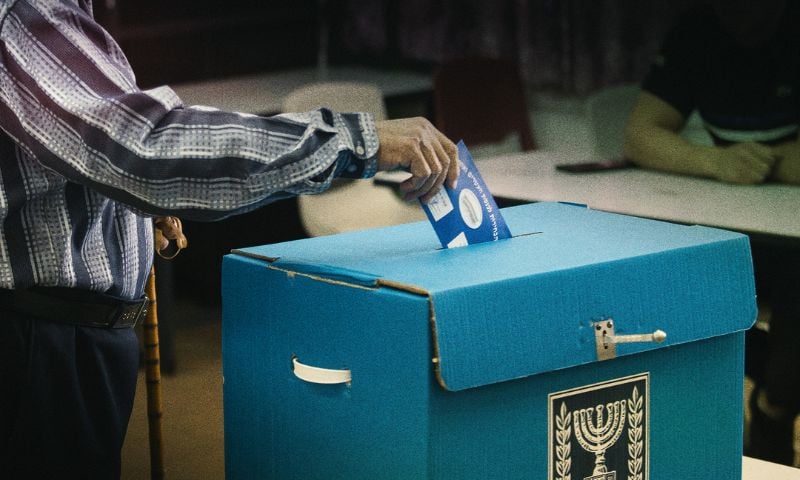
ISLAMABAD: Israeli expatriates are travelling thousands of miles to vote against Benjamin Netanyahu, extending a campaign of opposition that has repeatedly brought demonstrators onto the streets of Israel.
Adam Pines, an Israeli living in Los Angeles, has spent $2,900 on a flight to Tel Aviv for the October 27 Knesset election.
In comments reported by The Telegraph, Pines said he felt Israel had lost its moral compass. His journey reflects the resolve of expatriates who believe that voting is one way to challenge the government’s direction.
Other Israelis abroad have expressed similar concerns. In an opinion article for The Washington Post, filmmaker Jonathan Dekel explained why he was flying from New York to vote against Netanyahu.
He connected his decision to the government’s conduct during the Gaza war, the condition of Israeli democracy and his concerns about the country his children would inherit.
Their journeys add an international dimension to the opposition confronting Netanyahu at home.
From Israeli street protests to the ballot box
Opposition to Netanyahu intensified in 2023 when his government proposed a judicial overhaul that critics said would weaken checks on executive power and undermine judicial independence.
Mass demonstrations brought together Israelis concerned about the courts, democratic safeguards and the concentration of political authority.
The Hamas attacks of October 7, 2023, and the subsequent war in Gaza added new sources of conflict.
Protesters demanded accountability for the security failures surrounding the attacks and pressed the government to secure the release of hostages. The war also generated sustained criticism over Palestinian civilian deaths and the destruction of Gaza.
Other points of contention include violence by Israeli settlers against Palestinians in the occupied West Bank and exemptions from compulsory military service for many ultra-Orthodox Jewish men.
In a Bloomberg report published by The Japan Times, Israeli expatriate Lital Lee Doron described returning from Barcelona to vote against Netanyahu.
She cited the October 2023 attacks and the proposed judicial overhaul as turning points, arguing that political developments in Israel affect citizens living overseas as well as those at home.
Why voting means travelling home
Israel generally does not permit citizens living abroad to vote by post or at embassies and consulates. Exceptions cover diplomats and certain authorised officials and emissaries serving overseas.
The rule makes participation expensive. Airfares, accommodation and time away from work can turn a single vote into a commitment costing thousands of dollars.
An i24NEWS report on Israelis paying thousands to return for the election describes citizens arranging travel despite the financial burden, with some viewing the election as an opportunity to influence the country’s future.
The effort has also prompted political opposition. Netanyahu’s Likud party challenged an initiative facilitating expatriates’ return, arguing that its arrangements could breach restrictions on benefits intended to influence voters.
Struggle over Israel’s future
The returning expatriates cannot be treated as a uniform voting bloc, and their participation does not guarantee a particular electoral outcome.
READ ALSO: Thousands Rally Against Netanyahu Ahead of Election, Demand Probe into October 7 Failures
Israel’s 120-member Knesset is elected through proportional representation, and a governing coalition requires support from at least 61 lawmakers.
The domestic protests and the expatriates’ journeys express opposition in different ways. Demonstrators have used public gatherings to demand accountability and challenge government policy; returning voters are using the electoral system to register their choices.
For some expatriates, the decision to travel home is also an expression of responsibility towards relatives, friends and future generations who will live with the consequences of Israel’s policies.
Their journeys do not resolve the divisions over security, Palestinian rights, religion or democratic governance. They do, however, bring overseas dissent into the same national contest playing out in Israel’s streets, where Netanyahu’s leadership and the country’s future remain fiercely disputed.