


JERUSALEM: Israeli Defense Minister Israel Katz said Tuesday that Israel will not move “one millimeter” from the so-called “Yellow Line” in Gaza until Hamas is fully disarmed, despite the start of the second phase of a US-backed plan to end the war.
The “Yellow Line” refers to the positions to which Israeli forces withdrew in eastern Gaza during the first phase of US President Donald Trump’s plan aimed at ending the conflict.
Under the plan’s second phase, which began last month, Israel is expected to gradually withdraw further from that line, reports Anadolu.
“We will never allow Hamas to remain — not with weapons and not with tunnels. The slogan is simple: until the last tunnel,” Katz said at a conference organized by Yedioth Ahronoth, one of Israel’s largest newspapers.
“We will not move from the Yellow Line by one millimeter until Hamas is disarmed — from weapons, from tunnels and from other things,” he added.
On Monday, Israeli Cabinet Secretary Yossi Fuchs said the government would give Hamas 60 days to disarm, warning that military operations could resume if the group does not comply.
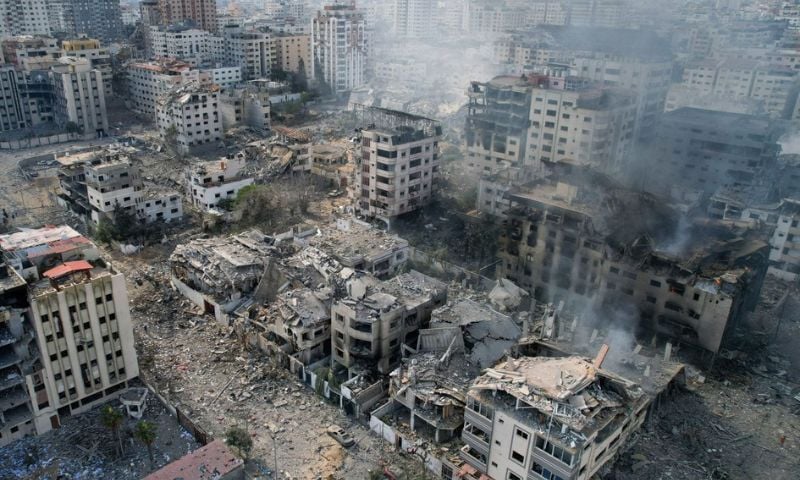
Israel launched its war in Gaza on Oct. 8, 2023, with US support. The conflict lasted two years, killing more than 72,000 Palestinians and wounding over 171,000, according to local health authorities, with widespread destruction to civilian infrastructure.
A ceasefire agreement took effect on Oct. 10, 2025, formally ending large-scale hostilities. However, Israeli airstrikes and demolition operations have continued in parts of Gaza, with Palestinian officials accusing Israel of violating the truce.
The disarmament of Hamas forms a central component of the second phase of Trump’s plan, which includes further Israeli withdrawals, reconstruction efforts, increased humanitarian aid, and the establishment of an administrative committee to manage Gaza.
Separately, Yedioth Ahronoth reported that Katz called for expanding domestic weapons production to reduce reliance on foreign suppliers, citing global competition for ammunition and occasional disagreements with allies during wartime.
Describing the United States as a “great ally,” Katz said Israel had received significant support during what he termed a “multi-front conflict,” while acknowledging that differences with partners had “their impact.”
He also announced a long-term defense initiative, temporarily named “Shield of Israel,” which would add 350 billion shekels (approximately $95 billion) to the defense budget over the next decade.
“There is no security without an economy, and no economy without security,” Katz said.