


Key Points
- US and Israel launched attacks after nuclear talks collapsed.
- Iran retaliated with missiles and disrupted Strait of Hormuz shipping.
- Netanyahu signals possible ground offensive without revealing operational details.
- Israeli leader denies pushing United States into the conflict.
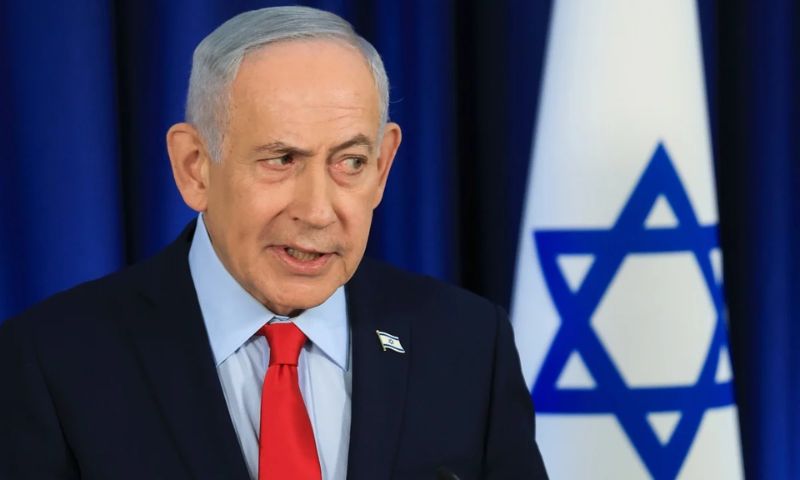
ISLAMABAD: Israel’s Prime Minister Benjamin Netanyahu has claimed that Iran no longer has the capacity to enrich uranium or produce ballistic missiles following nearly three weeks of joint airstrikes by Israel and the United States.
According to Reuters, Netanyahu made the remarks during a press conference, saying the ongoing offensive had significantly degraded Iran’s missile and drone arsenal and that key facilities linked to weapons production were being systematically destroyed.
“We are winning, and Iran is being decimated. Strikes are now targeting factories producing components for missiles and what he described as nuclear weapons,” he claimed.
“We are winning, and Iran is being decimated. Strikes are now targeting factories producing components for missiles and what he described as nuclear weapons,” he claimed.
However, Reuters noted that Netanyahu did not present independent evidence to substantiate his claim that Iran’s uranium enrichment capability had been fully eliminated.
Conflict background
Reuters reported that the current escalation began after indirect negotiations over Iran’s nuclear programme collapsed, followed by coordinated US-Israeli airstrikes on February 28. Since then, Iran has retaliated with missile attacks targeting Israel and has also affected shipping activity around the strategically critical Strait of Hormuz.
Despite 20 days of sustained conflict, Netanyahu acknowledged, according to Reuters, that it remains unclear whether internal unrest in Iran could escalate into a broader political challenge to the government.
“It’s up to the Iranian people… to rise to the moment,” he said.
Possibility of ground operations
While the conflict has so far remained limited to aerial strikes, Reuters quoted Netanyahu as saying there could be a ground component, adding that “there are many possibilities” without elaborating.
He also rejected suggestions that Israel had drawn Washington into the conflict, saying no one dictates policy to US President Donald Trump.
Narrative and strategic messaging
Analysts say similar claims about crippling Iran’s nuclear capabilities have been made in the past by Washington and Tel Aviv, often without conclusive verification.
In this context, while the remarks were reported by Reuters, some observers suggest Netanyahu’s strong assertions may also serve a domestic political purpose — projecting a decisive military success to the Israeli public.
Such messaging, analysts say, can help justify the launch and continuation of the war while also creating political space for a potential exit or de-escalation later, by framing the campaign as having achieved its core objectives.
At the same time, tensions remain high, with no clear indication yet of whether the conflict will expand or move towards de-escalation.