


RIYADH: Türkiye’s Foreign Minister Hakan Fidan has said that Israel is plunging the region into an “unprecedented crisis,” warning that it must not be allowed to use the ongoing conflict to conceal its actions and occupation policies.
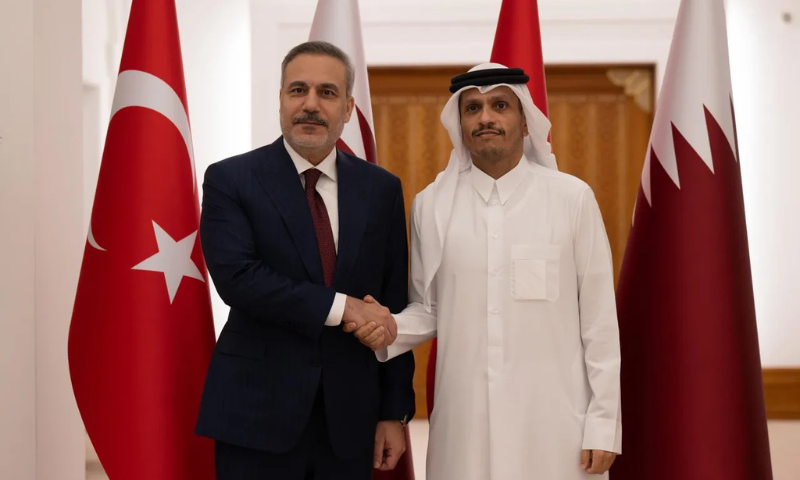
Speaking at a joint press conference in Doha alongside Qatar’s Prime Minister Sheikh Mohammed bin Abdulrahman Al Thani in Riyadh, Fidan said escalating US-Israeli attacks during a period of diplomatic engagement had widened the conflict and destabilised the region.
He condemned strikes targeting civilian infrastructure, reaffirming Türkiye’s support for Qatar.
“We condemn and reject attacks targeting civilian infrastructure and the public. Türkiye stands with Qatar and will continue to do so,” Fidan said.
At the same time, he cautioned Iran against retaliatory actions across the region.
“No matter the justification, Iran’s attacks on regional countries undermine the foundations of regional stability. They are unacceptable and serve neither Iran nor the region,” he said.
Fidan called on Tehran to act with “historic responsibility” and urged an immediate halt to escalation, warning of “irreparable and lasting fractures” among regional states. He also highlighted risks to maritime security and global energy routes.
Echoing similar concerns, Qatar’s Prime Minister called for an immediate end to the war, stressing that expanding the conflict would not serve regional stability.
“Diplomacy must remain the first and final solution,” Al Thani said, while also criticising Iran’s targeting of Gulf countries as “unacceptable and unjustified.”
He warned that any attack on key energy infrastructure, including Ras Laffan, could have serious consequences for global energy supplies.
Fidan’s visit to Doha is part of a broader regional tour aimed at de-escalating tensions, as instability deepens following the launch of a joint US-Israeli offensive against Iran on February 28 and Tehran’s subsequent retaliatory strikes across multiple countries.