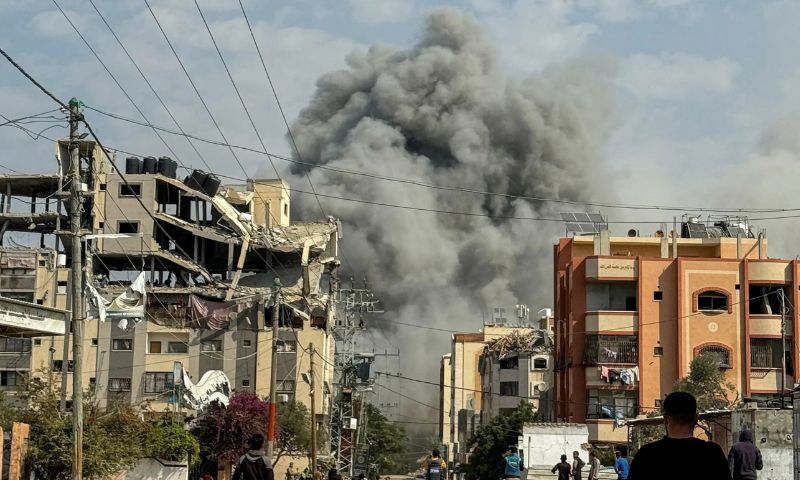



BEIRUT/GAZA CITY: Israeli forces carried out a series of air strikes on southern Lebanon and Gaza on Thursday, killing at least six Palestinians and targeting multiple towns in Lebanon, despite ceasefire agreements with Lebanese group Hezbollah and Palestinian group Hamas.
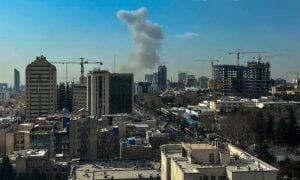
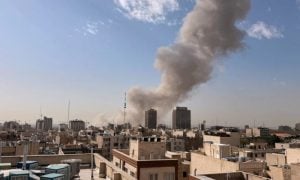
Israeli warplanes struck the southern Lebanese towns of Mahrouna, Jbaa, al-Majadel, and Braashit, the country’s National News Agency reported. The strikes destroyed several buildings in densely populated residential areas.
Israel’s military issued warnings on social media, urging residents to evacuate buildings it said were used by Hezbollah.
Israeli military spokesperson Avichay Adraee posted maps marking multiple buildings as targets, cautioning residents to stay at least 300 metres away for their safety.
Lebanese President Joseph Aoun said the next round of talks with Israel will take place on December 19.
He described the initial discussions as a “paving step” and stressed that the dialogue aims to prevent a second war, despite ongoing Israeli attacks on southern towns.
Gaza death toll rises
In Gaza, at least six Palestinians were killed and 16 others injured in fresh Israeli attacks on Thursday, according to the Health Ministry of the Palestinian enclave.
Two more bodies were recovered from rubble following previous Israeli strikes. Since the October 10, 2025 ceasefire, the ministry said 366 Palestinians have died and 938 have been injured in the Israeli attacks.
The Israeli military claimed it killed Muhammad Jawad Muhammad al-Bawab, commander of Hamas’s Eastern Rafah Battalion, in eastern Rafah, along with three others, including his deputy.
Humanitarian concerns
Meanwhile, Hamas condemned Israel for the deaths of three Palestinian prisoners, describing them as “systematic crimes” and alleging torture and medical neglect.
Palestinian prisoner rights groups reported the deaths of Taysir Saeed al-Abd Sababa, Khamis Shukri Mar’i Ashour, and Khalil Ahmad Khalil Haniyeh in Israeli detention.
A report by Israel’s public defender highlighted deteriorating conditions in detention facilities, including severe hunger, overcrowding, poor sanitation, and extreme heat, affecting inmates’ health.
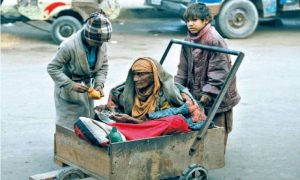
Meanwhile, the UN agency for Palestinian refugees, UNRWA, warned that living conditions in Gaza have “fallen back more than 20 years,” stressing the urgent need for aid supplies, which Israel has largely blocked for nine months.
UNRWA chief Philippe Lazzarini said dismantling the agency would not solve the refugee crisis, underscoring the need for political solutions.
Ceasefire challenges
The Israeli attacks come amid repeated violations of the October 10 US-brokered ceasefire. Gaza authorities report at least 591 Israeli violations since the agreement.
Survivors of a strike on a tented camp in al-Mawasi, designated a “safe zone,” told Reuters that children and women were killed and injured despite the ceasefire.
In Lebanon, the attacks coincide with unprecedented direct talks under the UN-led ceasefire monitoring mechanism in Naqura, near the border.
Civilian representatives from Lebanon and Israel, along with the US, France, and the UN, met to discuss hostilities, hostage releases, and Israel’s withdrawal.
Prime Minister Benjamin Netanyahu’s office described the talks as “positive” but reiterated that Hezbollah must disarm.
Lebanese Prime Minister Nawaf Salam cautioned that these discussions do not constitute broader peace talks, focusing solely on the implementation of last year’s truce.