


GAZA CITY, Palestine: Dozens of sick and wounded Palestinians were again unable to leave Gaza for urgent medical treatment on Tuesday, as Israel allowed only a small number of people to cross into Egypt through the Rafah border, UN and humanitarian officials said.
About 135 Palestinians travelled to the Rafah crossing hoping to be evacuated for treatment abroad, but it was unclear how many would be allowed to cross into Egypt.
On Monday, the first day of the crossing’s limited reopening after nearly two years, Israel allowed only five critically ill patients to exit Gaza, according to the World Health Organization (WHO).
Rafah, Gaza’s only crossing point not directly leading into Israel, has been largely closed since Israeli forces seized control of the Palestinian side in May 2024 during the war with Hamas.
Its reopening was envisaged under a US-backed ceasefire plan, but movement of Palestinians remains tightly restricted.
Palestinian and Egyptian sources, cited by Al Jazeera, said only 16 patients were allowed to cross on Tuesday, while dozens of others remained stranded amid lengthy Israeli security checks.
Only 12 Palestinians were permitted to return to Gaza on Monday, while at least 38 people who were due to re-enter the enclave were left overnight on the Egyptian side with no clear explanation.
“There is no clarity on why crossings are being delayed,” a Palestinian official said. “Israel is using new procedures to control everything related to Rafah.”
Aid agencies warn of humanitarian impact
The International Committee of the Red Cross (ICRC) said uncertainty over the crossing was deepening the suffering of Gaza’s population.
“Ambiguity around the reopening of Rafah is adding to the trauma of people who have lived through incredible hardship,” ICRC spokesman Pat Griffiths told Al Jazeera.
He said the ICRC does not select which patients are allowed to leave but advocates for their rights under international law.
“Israel has obligations as the occupying power to ensure civilians’ needs are met,” Griffiths said.
The WHO said around 20,000 people in Gaza require urgent medical evacuation.
“So far during the war, we have evacuated more than 10,000 people,” WHO spokesman Tarik Jasarevic said from Geneva, adding that most went to Egypt, the United Arab Emirates, Turkiye and some European countries.
“The numbers leaving now are tiny compared to the need,” he said, calling for all crossings to open, including routes to the West Bank and East Jerusalem where hospitals are ready to receive patients.
Searches and confiscations
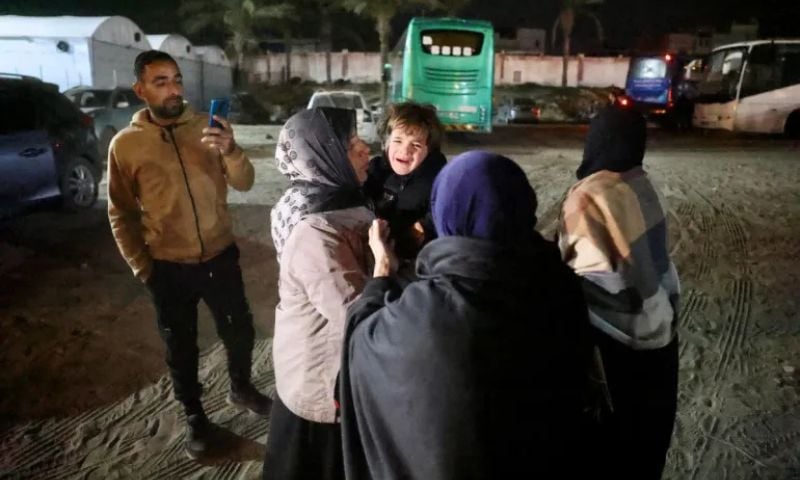
Palestinians returning to Gaza described harsh treatment and confiscation of personal belongings during the crossing process.
“We were exhausted from this humiliating journey,” said Rotana al-Riqib, who returned from Egypt with her mother.
“They interrogated us and confiscated everything, even my children’s belongings. We were left with only clothes.”
Others reported repeated searches at Israeli checkpoints. “They didn’t let us cross with anything,” said Samira Said. “The process was very difficult.”
Regional and international reaction
Qatar said Israel’s limited opening of Rafah was insufficient.
“Preventing the passage of thousands of medical cases is a crime,” Qatari foreign ministry spokesman Majed al-Ansari said in Doha.
The European Union’s foreign policy chief, Kaja Kallas, described the reopening as a “positive step” but said far more was needed.
Britain’s Foreign Secretary Yvette Cooper also welcomed the move but stressed that aid flows must increase and restrictions ease.
Under current arrangements, the crossing is supervised by the EU Border Assistance Mission and Palestinian staff, while Israel conducts remote security checks.
Aid entering Gaza from Egypt is still routed mainly through Israel’s Kerem Shalom crossing.
Deaths and continuing violence
The humanitarian crisis comes amid continued bloodshed despite a US-brokered ceasefire.
Gaza’s health ministry said 529 Palestinians have been killed by Israeli fire since the peace process began in October 2025, bringing the overall death toll since October 2023 to more than 71,800.
On Tuesday, Nasser Hospital in Khan Younis said a 19-year-old Palestinian, Ahmed Abdel-Al, was shot dead by Israeli troops in southern Gaza.
Palestinian officials and aid agencies say reopening Rafah is only a first step.
More than 30,000 Gazans are registered in Egypt seeking to return home, while thousands inside Gaza are waiting to leave for treatment.
“What we really should be focused on now is rebuilding the health system inside Gaza,” the WHO’s Jasarevic said, “so people do not have to rely on evacuations to survive.”