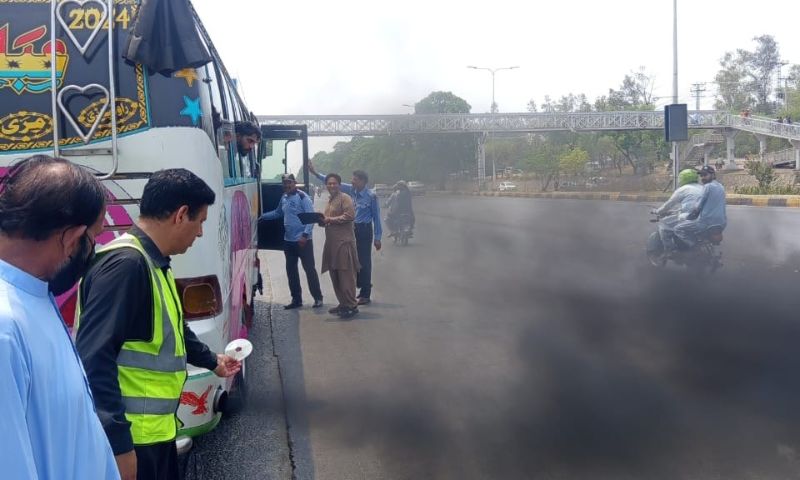



ISLAMABAD: The Pakistan Environmental Protection Agency Islamabad (Pak-EPA), operating under the Ministry of Climate Change and Environmental Coordination, has announced a sweeping crackdown on smoke-emitting vehicles across the federal capital, warning that violators will face heavy fines, vehicle confiscation or both.
In a statement issued on Sunday, Pak-EPA Director-General Nazia Zaib Ali said the agency has intensified enforcement operations to curb vehicular pollution — a major driver of Islamabad’s declining air quality and recurrent winter smog.
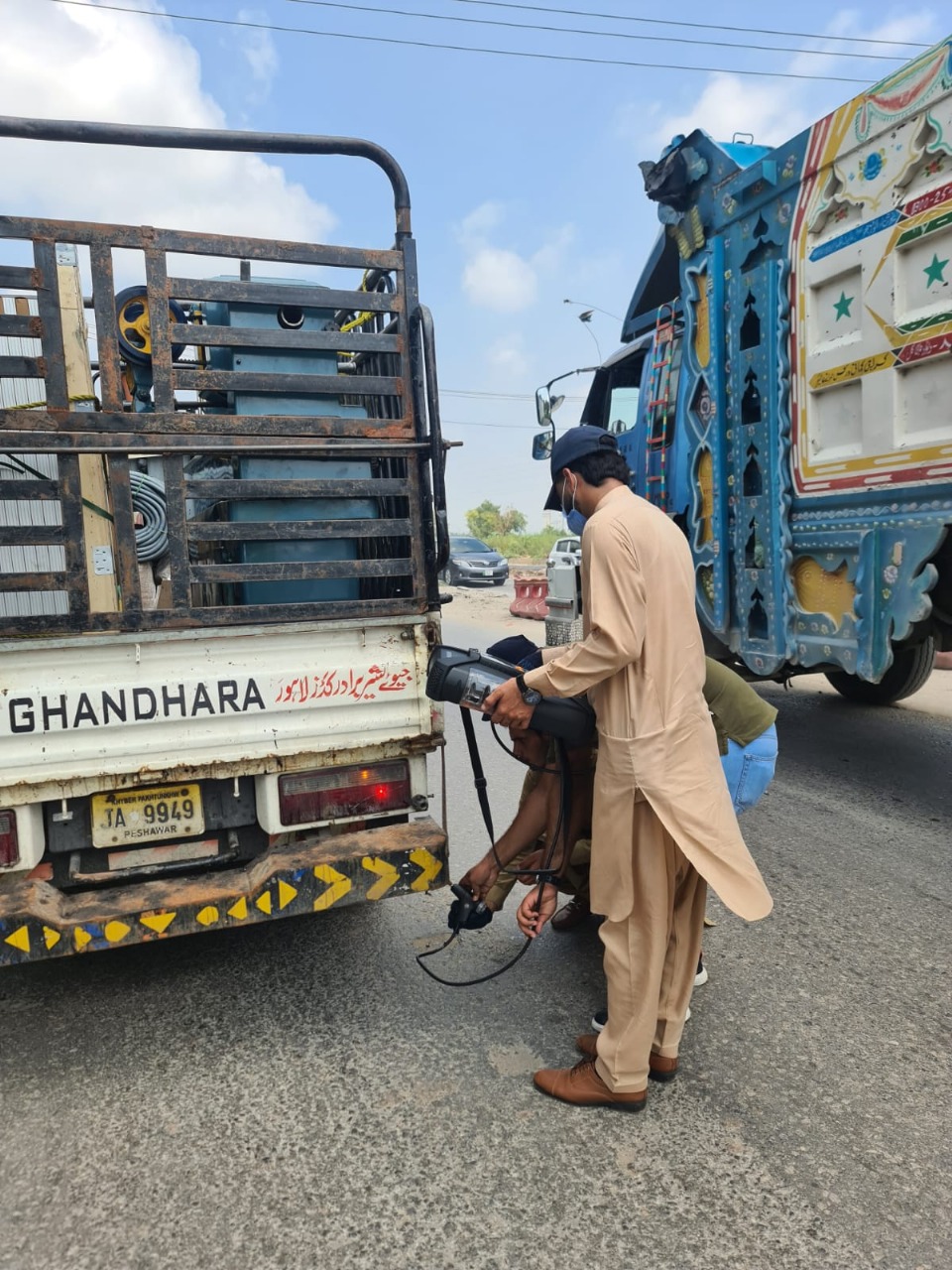
She said inspection teams are conducting routine checks on major roads, intersections and congested corridors to identify vehicles releasing excessive smoke.
The Director General emphasized that emitting smoke beyond permissible limits is an environmental offence under federal law. “Let me be very clear: smoke-emitting vehicles will not be allowed to operate in Islamabad under any circumstances,” she said.
“This is not just a regulatory matter — it is a public health emergency. Vehicular smoke is poisoning the air our children breathe.”
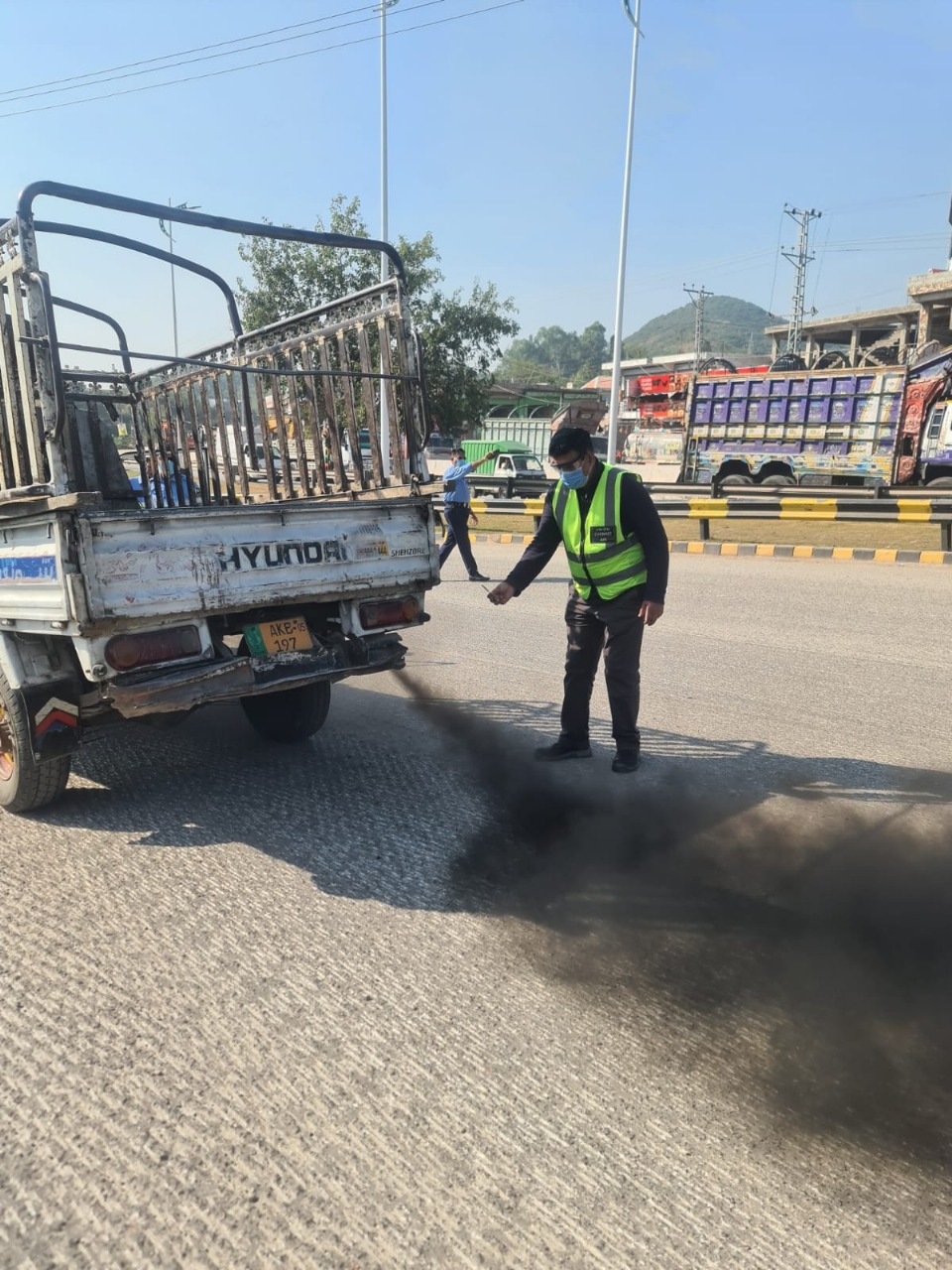
She noted an alarming rise in pollutant emissions from poorly maintained diesel buses, trucks, wagons, Qingqi rickshaws and motorcycles, many of which continue to operate without proper servicing.
These emissions contain hazardous pollutants including PM2.5, PM10, nitrogen oxides, sulfur dioxide, carbon monoxide and unburnt hydrocarbons — all key contributors to smog and deteriorating urban air quality.
Health experts warn that particulate matter, especially PM2.5, can penetrate deep into the lungs and bloodstream, increasing risks of chronic respiratory disease, stroke, heart attacks and premature death. The World Health Organization ranks air pollution among the leading global environmental health threats.
Islamabad’s winter season typically traps pollutants close to the ground due to temperature inversions, worsening smog episodes. Local medical specialists report spikes in asthma attacks, chronic cough, respiratory distress, eye irritation and pollution-induced allergies during these months. Children, the elderly and individuals with heart or lung conditions remain particularly vulnerable.
Mohammad Saleem Shaikh, spokesperson for the Ministry of Climate Change and Environmental Coordination, underscored the collective impact of vehicular smoke. “People often fail to realise that the smoke coming from a single vehicle affects hundreds of people around it,” he said. “Every plume of black smoke is a toxic cloud carrying disease.”
Shaikh urged residents in Islamabad and surrounding areas to have their vehicles tested at Pak-EPA-approved emission testing facilities, warning that vehicles operating without valid certificates will face penalties.
He also advised routine engine maintenance, timely oil changes and use of quality fuel to reduce emissions and improve performance.
Pak-EPA has also asked citizens to cooperate during roadside inspections, report smoke-emitting vehicles, and maintain their vehicles responsibly. “Cleaner air is a shared national responsibility,” Nazia Zaib Ali said.
“If citizens cooperate with us, we can significantly reduce pollution levels and protect the health of millions, she added.”
Shaikh said a healthier and more environmentally secure Islamabad is achievable only through collective effort. He stressed that compliance with emission standards will not only safeguard families but also contribute to a more livable and sustainable capital city.