


Key Points
- 17 vessel incidents confirmed by UN maritime agency
- Casualties reported among crew, with some still missing
- Key oil transit route under threat, disrupting global trade
- Energy prices jump sharply, fueling inflation fears
- Risk of global food crisis increases due to supply disruptions
BEIRUT: Allegations that Iranian forces deliberately targeted civilian commercial vessels in the Strait of Hormuz have sparked serious concerns over potential war crimes, with global repercussions for energy markets, food security, and economic stability.
According to a new assessment by Human Rights Watch (HRW), at least two civilian ships were intentionally struck on March 11, while a broader pattern of maritime incidents has been recorded since the start of the US-Israel-Iran conflict.
Between March 1 and 17, the United Nations’ International Maritime Organization (IMO) confirmed 17 incidents involving damage to commercial vessels across the Strait of Hormuz, the Arabian Gulf, and the Gulf of Oman.
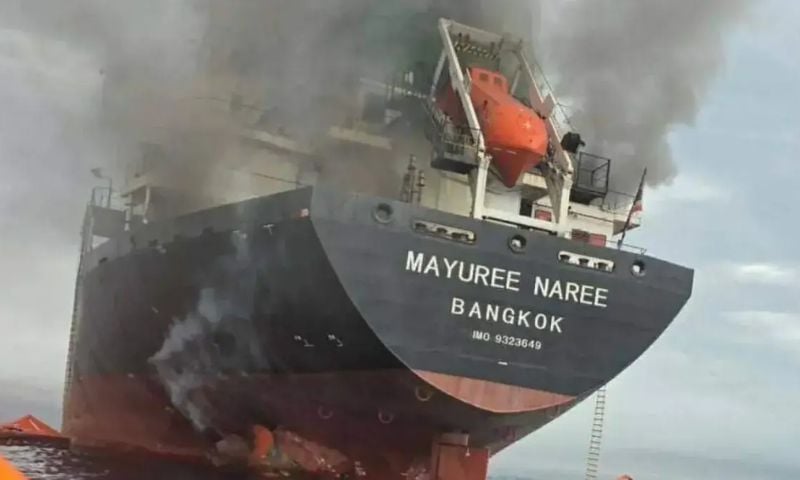
HRW said evidence—including official statements, satellite data, and visual documentation—indicates that vessels such as the Safesea Vishnu and the Mayuree Naree were deliberately targeted. The attacks resulted in casualties, injuries, and missing crew members, with several seafarers still unaccounted for.
International humanitarian law strictly prohibits attacks on civilian objects, including commercial ships, unless they are being used for military purposes. HRW stressed that no evidence has been presented to justify classifying the targeted vessels as military assets.
The Strait of Hormuz, a critical chokepoint through which roughly one-quarter of global seaborne oil trade passes, has become increasingly volatile since hostilities escalated in late February. Iranian officials have publicly threatened to restrict or block oil shipments through the passage, further heightening global tensions.
The impact of these developments is already being felt worldwide. Energy markets have reacted sharply, with oil prices rising by approximately 40% since the conflict began, fueling concerns over inflation and economic strain, particularly in import-dependent countries.
Analysts warn that continued disruption could trigger cascading effects across sectors such as transportation, agriculture, and manufacturing. Humanitarian agencies have also raised alarms about the broader consequences.
The World Food Programme has cautioned that rising costs linked to the conflict could push tens of millions more people into acute hunger, while disruptions to fertilizer supply chains may intensify the risk of a global food crisis.
Beyond economic fallout, environmental risks are also mounting. Attacks on oil-carrying vessels and offshore infrastructure have already led to multiple oil spills, posing threats to marine ecosystems and coastal regions.
While responsibility for all reported incidents has not been conclusively established, statements by Iranian military officials suggest an intent to target vessels associated with the United States or Israel—regardless of their civilian status.
At the same time, other parties in the conflict have also conducted strikes on maritime and energy-related targets, raising concerns about escalating violations.
Human Rights Watch has called on all sides—including Iran, the United States, and Israel—to immediately cease unlawful attacks on civilians and civilian infrastructure, urging adherence to international law and the protection of maritime safety.
As tensions persist in one of the world’s most strategically vital waterways, the risks extend far beyond the region—threatening global trade, energy security, and the livelihoods of millions.