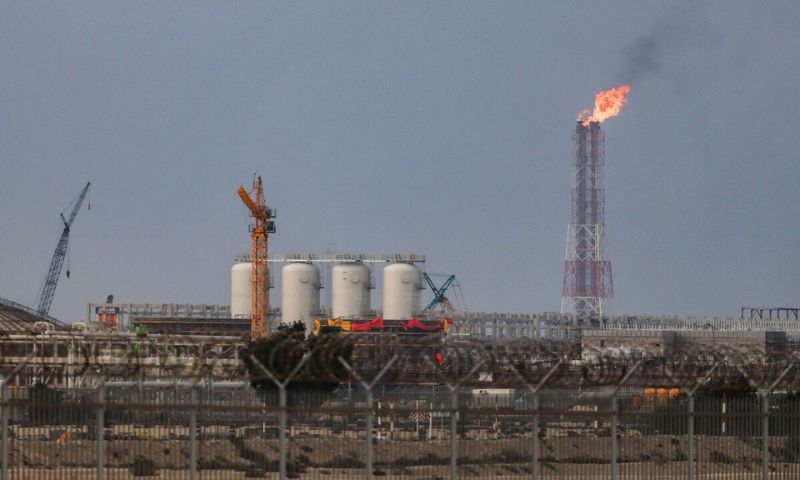



DOHA, Qatar: Iranian missile strikes have caused “extensive damage” to liquefied natural gas (LNG) facilities at Ras Laffan in Qatar, authorities and company officials said, marking a major escalation in the regional conflict and raising fresh concerns over global energy supplies.
State energy firm QatarEnergy confirmed that its installations at Ras Laffan Industrial City — the world’s largest LNG hub — were hit, triggering fires and halting operations.
The facility processes and exports around 20 per cent of global LNG supply, making Qatar one of the world’s leading energy exporters.
Major damage at strategic energy hub
Qatari officials said the latest wave of Iranian missile attacks caused “sizeable fires and extensive further damage” to the site.
Fires were brought under control and no injuries were reported, according to the interior ministry.
Production at Ras Laffan had already been suspended earlier this month, with Qatar declaring force majeure on LNG shipments amid escalating hostilities.
The complex, located about 80 kilometres northeast of Doha, houses the country’s liquefaction plants and export infrastructure.
All Qatari LNG cargoes transit through the Strait of Hormuz, a key global shipping route now under severe strain due to the conflict.
Global energy majors, including ExxonMobil, Shell plc, TotalEnergies, Eni and ConocoPhillips, are among investors in Qatar’s LNG sector.
Attack on South Pars gas field
The strikes on Ras Laffan came hours after Israel targeted Iran’s South Pars gas field, the world’s largest, which is jointly shared by Iran and Qatar.
Iran responded by launching attacks on energy infrastructure across the Gulf, including facilities in Qatar and Kuwait, as well as shipping routes near the United Arab Emirates.
Qatar’s Ministry of Foreign Affairs condemned the attack as a “blatant” act of aggression that caused significant damage to civilian infrastructure.
‘Very dangerous escalation’
Qatar’s Prime Minister Mohammed bin Abdurrahman Al-Thani described the strike on Ras Laffan as a “very dangerous escalation”.
He said diplomacy remained the preferred path but warned that trust had been “destroyed” by the attacks.
“There is always space for diplomacy. It is the first and last solution,” he said, while calling for an immediate halt to Iranian strikes.
He added that the conflict had been triggered by Israel’s actions, but said Iran’s decision to target neighbouring countries had further destabilised the region.
Global energy markets
The attack has intensified fears of a prolonged disruption to global energy supplies, particularly as Qatar is a key supplier to Europe and Asian markets.
More than 80 per cent of Qatar’s LNG exports are shipped to countries including China, Japan, India, South Korea and Pakistan.
In addition to LNG, Qatar is a major exporter of fertilisers, helium and liquefied petroleum gas, as well as refined fuels produced from gas-to-liquids facilities.
US President Donald Trump warned that Washington could respond forcefully if Iran continues targeting Qatar’s energy infrastructure, including potential action against Iran’s South Pars field.
“I do not want to authorise this level of violence,” Trump said, while cautioning about the long-term consequences.
Iranian President Masoud Pezeshkian warned that the conflict could have “uncontrollable consequences” and risk engulfing the wider region.