


KEY POINTS
- Iran’s sports minister announces World Cup withdrawal after US-Israel airstrikes kill Supreme Leader Ayatollah Ali Khamenei.
- All three of Iran’s Group G matches were scheduled in US against Belgium, Egypt and New Zealand in Los Angeles and Seattle.
- Over 1,300 Iranian civilians killed since February 28 strikes, according to Iran’s UN ambassador Amir Saeid Iravani.
- FIFA regulations mandate $320,800 fine for withdrawal with UAE and Iraq emerging as potential replacements.
TEHRAN, Iran: Iran will not participate in the 2026 FIFA World Cup following the US-Israel airstrikes that killed the country’s Supreme Leader Ayatollah Ali Khamenei, Sports Minister Ahmad Donyamali confirmed on Wednesday, citing the ongoing conflict and security concerns.
The United States and Israel launched airstrikes on Iran nearly two weeks ago, on February 28, killing the Islamic Republic’s supreme leader and triggering a region-wide conflict in the Gulf.
According to Iran’s UN ambassador Amir Saeid Iravani, more than 1,300 Iranian civilians have been killed since the strikes began.
“Considering that this corrupt regime has assassinated our leader, under no circumstances can we participate in the World Cup,” the minister told state television. “Our children are not safe and, fundamentally, such conditions for participation do not exist”.
The 48-team World Cup is scheduled to be held in the United States, Mexico, and Canada from June 11 to July 19.
All Group G matches set for US soil
In the draw held last December, Iran was grouped with Belgium, Egypt, and New Zealand in Group G. All three of their matches were scheduled to take place on US soil, two at SoFi Stadium in Los Angeles and one at Lumen Field in Seattle.
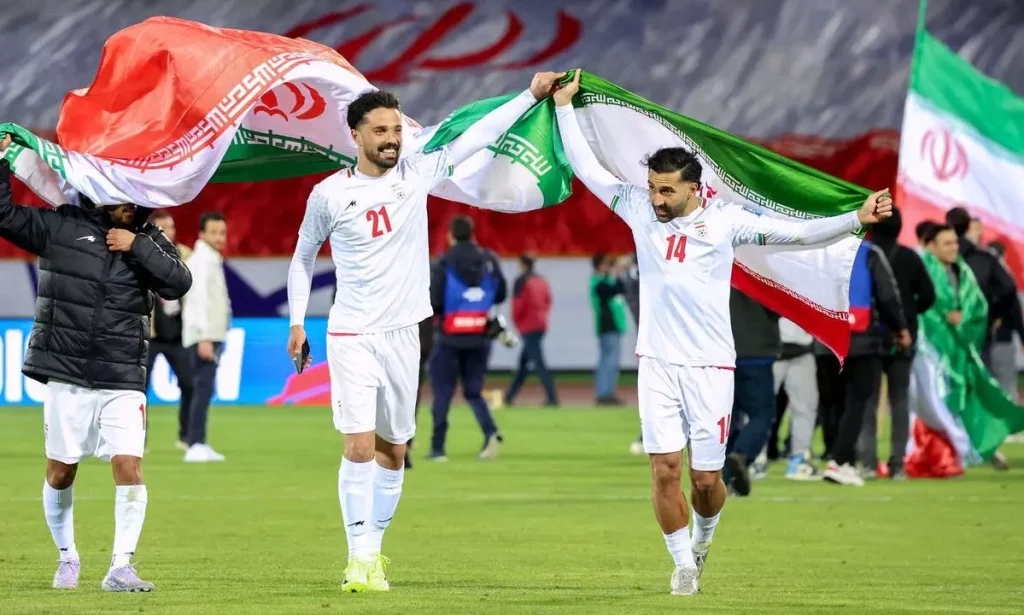
Iran, who dominated the Asian qualifying rounds to secure their tournament berth in March last year, was notably the only nation absent from a FIFA planning summit for World Cup participants held last week in Atlanta.
The president of Iran’s football federation, Mehdi Taj, had previously indicated the country’s participation was in doubt, telling Iranian sports portal Varzesh3: “What is certain is that after this attack, we cannot be expected to look forward to the World Cup with hope”.
He cited the mandatory 40-day mourning period following Khamenei’s death, which suspends all football-related activities, along with ongoing security threats and logistical impossibilities for preparation or international travel.
Trump administration maintains welcome stance
Despite the escalating conflict, FIFA President Gianni Infantino revealed he met with US President Donald Trump, who reiterated that Iran’s team would be welcome to compete in the tournament.
“During the discussions, President Trump reiterated that the Iranian team is, of course, welcome to compete in the tournament in the United States,” Infantino said.
This followed Trump’s earlier comment to Politico that he “really [doesn’t] care” if Iran participates, describing Iran as “a very badly defeated country” that is “running on fumes”.
A White House official later confirmed to The Athletic that the “everyone is welcome” message has been the administration’s public stance throughout, though Iranian nationals remain subject to Trump’s expanded travel ban with limited exceptions for athletes and team officials.
FIFA regulations and potential replacements
Reuters has contacted the Iranian Football Federation for comment, while FIFA has yet to respond regarding a potential replacement if Iran follows through with the boycott.
Under FIFA’s World Cup regulations, any team that withdraws “no later than 30 days before the first match” faces a fine of at least 250,000 Swiss francs ($320,800) from the FIFA Disciplinary Committee.
Regulation 6.7 further states: “If any Participating Member Association withdraws and/or is excluded from the FIFA World Cup 26, FIFA shall decide on the matter at its sole discretion and take whatever action is deemed necessary.
FIFA may decide to replace the Participating Member Association in question with another association”.
The regulations also address “force majeure” in Article 6.5, giving FIFA’s organising body authority to decide on matters at its sole discretion if a withdrawal occurs as a result of unforeseen events.
UAE or Iraq emerge as likely replacements
If Iran officially withdraws, the United Arab Emirates and Iraq have emerged as the most likely replacement candidates, though FIFA’s regulations do not specify an automatic replacement based solely on rankings or confederation standing.
The UAE finished third in their Asian qualifying group behind Iran and Uzbekistan, then lost to Iraq in a subsequent playoff.
Iraq, meanwhile, is scheduled to face either Bolivia or Suriname in an intercontinental playoff on March 31 near Monterrey, Mexico, with a World Cup berth at stake.
Iraq’s coach Graham Arnold has proposed that FIFA postpone the March 31 playoff due to airspace closures preventing his players from travelling, suggesting that “if Iran withdraws, we go into the World Cup and it gives the UAE, who we beat in qualifying, the chance to prepare for either Bolivia or Suriname”.
FIFA Secretary General Mattias Grafstrom previously stated it was “premature to comment in detail” on Iran’s situation, adding that the governing body’s focus is “to have a safe World Cup with everybody participating”.
Historic precedent for World Cup withdrawals
The last time countries withdrew from a World Cup after qualifying was in 1950, when Scotland, Turkiye, India, and France pulled out, leaving the tournament to be contested by only 13 teams.
At the 1938 World Cup, Austria qualified but withdrew following its annexation by Nazi Germany. In that case, FIFA did not invite a replacement, and Sweden received a bye into the next round.
The most relevant modern precedent came during the 2025 FIFA Club World Cup, when Mexican qualifier León was removed due to multi-club ownership rules just months before the tournament.
FIFA organised a playoff between Club América and LAFC to determine the replacement.
Officials in Tehran familiar with the matter confirmed the decision not to attend the World Cup has effectively been taken, with pre-tournament warm-up matches also impossible due to the ongoing war.