


TEHRAN / WASHINGTON: Ali Larijani, head of Iran’s Supreme National Security Council, said Monday that Iran “will not negotiate with the United States,” dismissing media reports that Tehran had sought talks following a wave of US-Israeli strikes.
In a post on X, Larijani denied claims that Iranian officials were attempting to open channels with the administration of Donald Trump after weekend attacks that followed recent nuclear discussions between Tehran and Washington.
ترامپ با “آرزوهای واهی” منطقه را به آشوب کشاند و حالا نگران تلفات بیشتر نیروهای امریکایی است.
وی با عملکرد متوهمانه، شعار خودساخته “اول امریکا” را به “اول اسرائیل” تبدیل کرد و سربازان امریکایی را فدای قدرت طلبی اسرائیل نمود… ۱/۲— Ali Larijani | علی لاریجانی (@alilarijani_ir) March 2, 2026
US leader Donald Trump’s “delusional fantasies” have plunged the Middle East into chaos, Larijani said.
“Trump plunged the region into chaos with his ‘delusional fantasies’ and now fears more American troop casualties,” Ali Larijani wrote on X, following a wave of US-Israeli strikes on Iran.
His remarks came as hostilities deepened across Iran and the wider Middle East.
US Expands Campaign, Vows Further Action
The United States struck hundreds of targets across Iran, while Israel extended its bombing campaign to Lebanon. Trump has framed the operation as necessary for long-term US security and has openly called for the overthrow of Iran’s ruling clerical establishment.
“Sadly, there will likely be more before it ends,” Trump said in a video message after the Pentagon confirmed that three US service members had been killed and five seriously wounded in what Washington calls “Operation Epic Fury.”
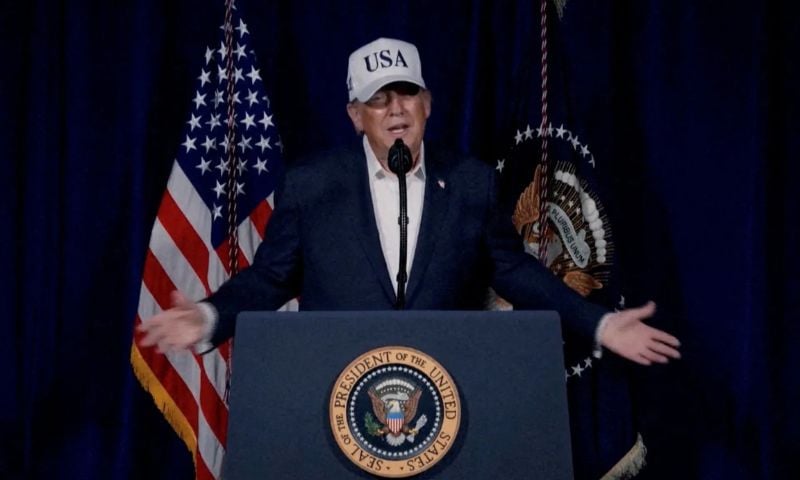
“But America will avenge their deaths and deliver the most punishing blow to the terrorists who have waged war against, basically, civilization,” he added.
Trump suggested the campaign could continue for “four to five weeks,” saying US and Israeli forces had ample ammunition and capacity to sustain operations.
The US military said it had destroyed the headquarters of the Islamic Revolutionary Guard Corps (IRGC).
“The IRGC no longer has a headquarters,” US Central Command said.
Iran has denied US and Israeli claims and has not publicly confirmed the reported scale of military losses.
Strikes Spread Across the Middle East
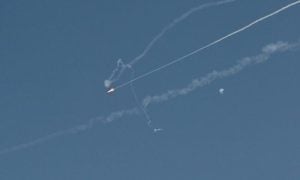
Iranian forces launched missiles and drones across Israel and the Gulf states hosting US military facilities.
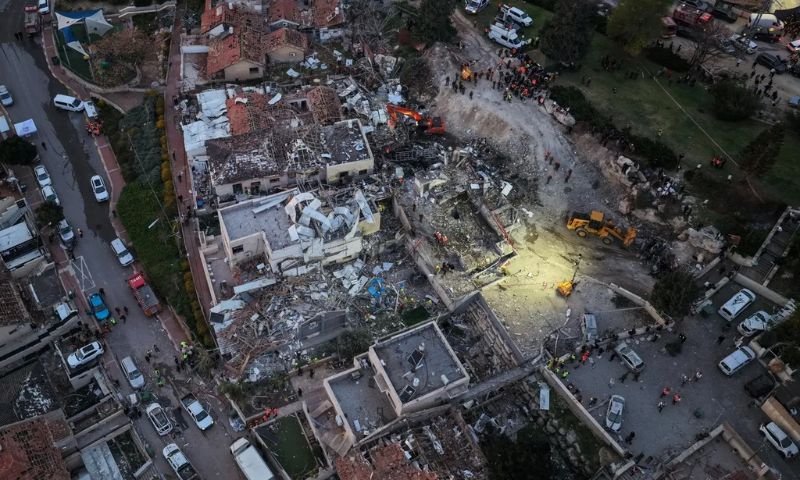
In Israel, missile strikes killed at least nine people in Beit Shemesh and injured dozens more. Additional injuries were reported near Jerusalem and Tel Aviv.
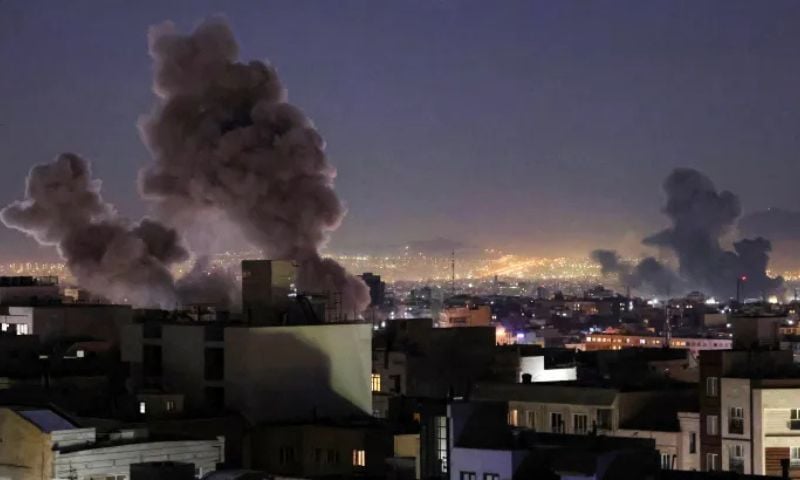
Israel said it was conducting “large-scale strikes” in central Tehran and also bombing targets in Lebanon linked to Hezbollah, the Iran-aligned movement. Explosions were reported in Beirut, and Hezbollah said it had fired rockets and drones at Israel “in retaliation for the pure blood” of Supreme Leader Ali Khamenei.
Iran’s retaliatory strikes in the Gulf have killed at least four people and wounded dozens more, according to regional reports.
Smoke rising from the US embassy in Kuwait
Black smoke was seen rising from the US embassy in Kuwait City on Monday after the latest volley of Iranian strikes, an AFP correspondent saw. Sirens earlier sounded over the city as the officials asked people to avoid visiting the US embassy in Kuwait.
“There is a continuing threat of missile and UAV attacks over Kuwait. Do not come to the Embassy. Take cover in your residence on the lowest available floor and away from windows. Do not go outside,” the embassy said in a statement.
“U.S. Embassy personnel are sheltering in place,” it added.
Leadership Transition and Defiance
President Masoud Pezeshkian called Khamenei’s killing a “declaration of war against Muslims.”
“Iran considers it its legitimate duty and right to avenge the perpetrators,” Pezeshkian said.
Iran has appointed Ayatollah Alireza Arafi to join Pezeshkian on an interim leadership council pending the selection of a new supreme leader.
Larijani warned that Iran would strike back with force “that they have never experienced before.”
Iran’s judiciary confirmed that senior figures, including Ali Shamkhani and IRGC commander General Mohammad Pakpour, were killed in the initial wave of strikes.
Rising Civilian Toll and International Reaction
Inside Iran, the Red Crescent said 201 people had been killed and hundreds more injured as of its latest count. Casualties have also been reported in Israel and Gulf states, underscoring the widening human cost of the confrontation.
British Prime Minister Keir Starmer said the United Kingdom would allow the US use of its bases for “defensive” operations but would not join offensive action.
Three ships were attacked in the Strait of Hormuz after Iran declared the strategic waterway closed, sending global oil prices higher.
Iran’s Revolutionary Guards claimed to have struck the USS Abraham Lincoln, though the Pentagon said the missiles “didn’t even come close.”
With diplomacy publicly ruled out by Tehran and Washington signalling sustained military pressure, the conflict appears set to continue — raising fears of further regional escalation and mounting civilian losses.