


TEHRAN: Iran has warned that it is fully prepared to respond to any ground invasion by the United States, as the conflict triggered by recent US and Israeli strikes on Iran continues to expand across the Middle East and beyond.
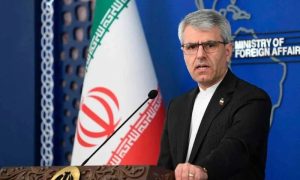
Iranian Foreign Minister Abbas Araghchi on Thursday said Tehran has strengthened its military capabilities and is ready to confront any potential escalation involving American forces. He emphasised that Iran has prepared for multiple scenarios if the war intensifies.
“When I said we are waiting for them, it does not mean we seek the continuation of war,” Araghchi said, adding that Iran is ready to handle any possible development.
The remarks came as the conflict entered its sixth day on Thursday, with tensions spreading beyond Iran and Israel to several countries including Cyprus, Turkiye, Azerbaijan and Sri Lanka, raising fears of a broader regional confrontation.
According to media reports, Iranian officials also claimed that drones launched by the Islamic Revolutionary Guard Corps (IRGC) Navy struck the US aircraft carrier USS Abraham Lincoln, forcing the vessel and accompanying destroyers to withdraw from the area. The claim could not be independently verified.
Security analysts say the conflict has evolved into a complex regional confrontation involving multiple forms of warfare, including strikes on leadership targets, threats to energy infrastructure and pressure on key maritime routes.
In a major development, a US submarine reportedly sank an Iranian warship near Sri Lanka, killing dozens of personnel on board. Tehran condemned the incident as a serious escalation and warned that Washington would regret its actions.
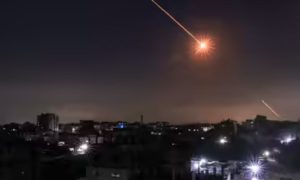
Meanwhile, Iranian attacks have targeted locations across the wider region. A drone strike hit a British military base in Cyprus, while NATO defence systems intercepted a ballistic missile heading toward Turkiye. Drones were also reported to have crossed into Azerbaijan’s Nakhichevan region, prompting warnings of retaliation.
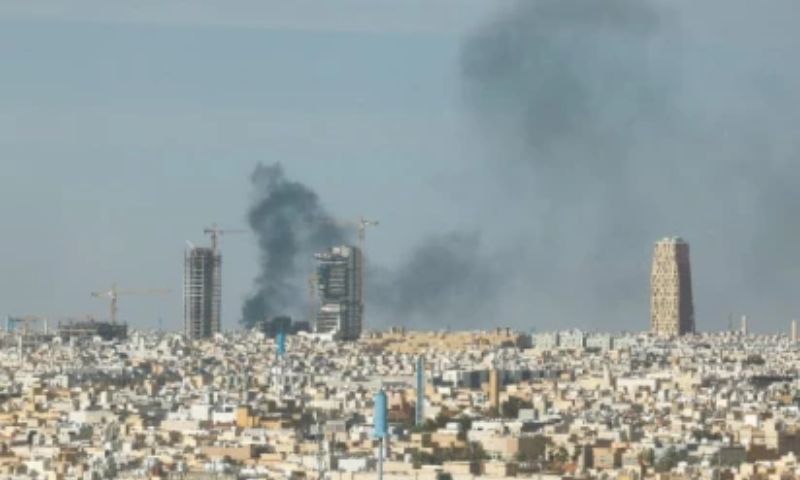
Iran has continued missile and drone strikes across the Gulf, including an attack that triggered a fire at Bahrain’s Bapco Energies refinery. Authorities said the blaze was later contained and there were no reported casualties.
The conflict has also affected the broader Gulf region. Several Western diplomatic missions have advised staff to shelter in place, while some embassy personnel have been temporarily relocated due to security concerns.
The war intensified following US and Israeli strikes that killed Iran’s Supreme Leader Ayatollah Ali Khamenei, triggering retaliatory attacks by Tehran across the region.
Amid the escalating crisis, US President Donald Trump suggested Washington should have a role in determining Iran’s next supreme leader, warning that future military action could follow if Tehran does not adopt a leadership willing to pursue peace.
The conflict has also drawn in regional actors. Hezbollah, the Iran-backed group in Lebanon, launched attacks against Israel earlier this week, prompting Israeli air strikes and evacuation warnings in Beirut’s southern suburbs.
Pakistan has expressed concern over reported attacks affecting Türkiye and Azerbaijan, calling for restraint and urging dialogue to prevent further escalation.
As the situation unfolds, analysts warn that the growing confrontation risks disrupting energy markets, global shipping routes and regional stability.