


TEHRAN: Tensions across the Gulf surged on Friday as Iran warned civilians to avoid areas near US military bases, while fresh drone and missile attacks hit key locations across the region.
In a statement released by Iran’s Revolutionary Guards via their Sepah News platform on Friday, residents in Gulf countries were advised to immediately evacuate zones surrounding US forces.
The Guards accused American and allied forces of placing civilians at risk by operating within populated areas.
“The American and Zionist forces are attempting to use civilian locations as shields,” the statement said, calling on residents to leave such areas “urgently” to avoid harm.
According to AFP, the warning came against the backdrop of escalating hostilities that have now stretched nearly a month, involving Iran, the United States, and Israel.
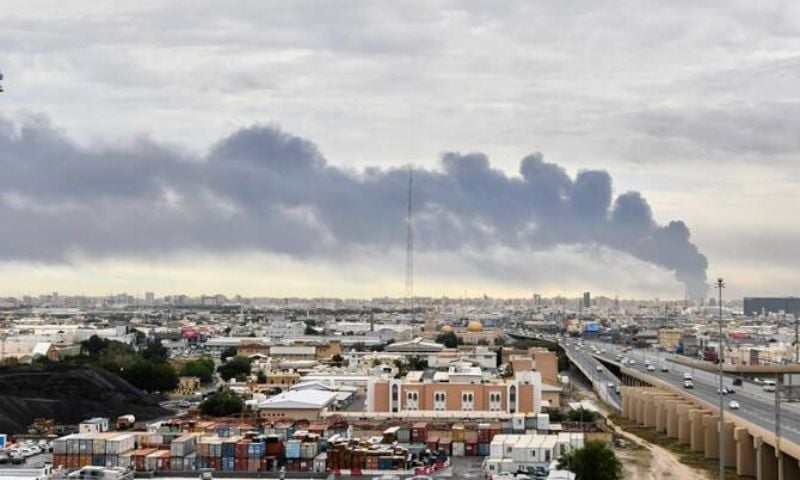
Earlier in the day, Kuwait confirmed that its primary commercial hub, Shuwaikh port, had been struck by drones at dawn. Authorities reported material damage to infrastructure but said there were no casualties.
The port, a critical artery for trade, briefly suspended operations as assessments were carried out. Meanwhile, regional alarm systems were activated as fears of further strikes grew.
Bahrain sounded missile alert sirens late Friday morning in response to what officials described as an incoming Iranian threat. Qatar also issued alerts, marking a renewed wave of anxiety after several days of relative calm.
Iran’s Revolutionary Guards claimed responsibility for a series of coordinated missile and drone strikes carried out the previous day.
According to Iranian state-linked media, the targets included sites in Israel as well as military facilities in Gulf countries hosting US forces.
Among the reported targets was a maintenance facility associated with the US Patriot air defense system in Bahrain, underscoring the strategic nature of the strikes.
The latest developments highlight the widening scope of the conflict, with Gulf nations increasingly caught in the crossfire.
The situation has raised concerns over civilian safety, regional stability, and the potential for further escalation involving critical infrastructure and military assets.