WASHINGTON: US President Donald Trump on Tuesday said Iran “wants to make a deal” and claimed that Washington had “completely destroyed” Tehran’s military capabilities.
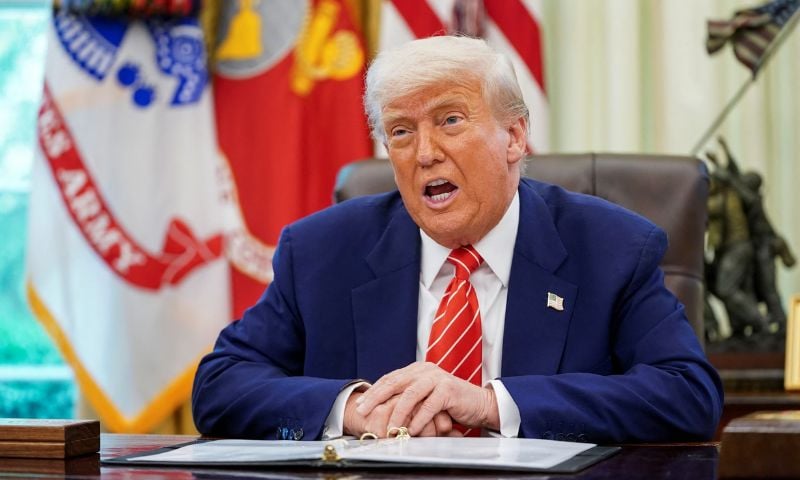
Speaking at the White House during the signing of a proclamation on children’s physical fitness, Trump said Iran’s leadership was publicly defiant but privately seeking negotiations.
“They want to make a deal. What I don’t like about Iran is that they’ll talk to me with such great respect, and then they’ll go and tell television, ‘We did not speak to the president,’” he said.
“They want to make a deal, and who wouldn’t when your military is totally gone?” Trump added.
.@POTUS on Iran: “Let me tell you, they want to make a deal, and who wouldn’t when your military is totally gone, we could do anything we want to them.” pic.twitter.com/h4R2ez4OOQ
— Trump War Room (@TrumpWarRoom) May 5, 2026
‘White flag of surrender’
Trump told reporters that Iran “should wave the white flag of surrender”, saying its military had been reduced to “peashooters”.
“They play games, but let me just tell you, they want to make a deal. And who wouldn’t, when your military is totally gone?” he said.
He also said Iran’s navy had been destroyed, claiming: “Every single ship they had is resting underwater at the bottom of the sea.”
Trump further said Iran’s economy was under severe pressure due to sanctions, calling the currency “worthless” and inflation “probably 150 percent”.
“They should do the smart thing because we don’t want to go in and kill people,” he said.
Trump defended a US naval operation in the Strait of Hormuz, saying it had helped enforce a blockade on Iranian ports.
“We have a situation where we have total control. The blockade’s been amazing; it’s like a piece of steel,” he said, adding that “nobody’s going to challenge the blockade”.
President Trump Signs a Proclamation, May 5, 2026 https://t.co/11e4JtQUCW
— The White House (@WhiteHouse) May 5, 2026
Strait of Hormuz
The Pentagon said earlier that US Central Command (CENTCOM) had launched “Project Freedom” on Sunday to ensure safe passage for international shipping through the strait.
Chairman of the Joint Chiefs of Staff General Dan Caine said Iranian attacks since the ceasefire remained below the threshold for restarting major combat operations.
“Since the ceasefire was announced, Iran has fired at commercial vessels nine times and seized two container ships, and they have attacked US forces more than 10 times, all below the threshold of restarting major combat operations at this time,” he said.
US Secretary of Defence Pete Hegseth said the operation was defensive and temporary in scope.
“Project Freedom is defensive in nature, focused in scope and temporary in duration, with one mission: protecting commercial shipping from Iranian aggression,” he said.
Iran warns ‘decisive response’
He added that US forces would not enter Iranian territory and warned that any attack on shipping or US forces would trigger a strong response.
“If you attack American troops or innocent commercial shipping, you will face overwhelming and devastating American firepower,” he said.
Hegseth also said Washington was in contact with Tehran.
“We’re not looking for a fight. But Iran also cannot be allowed to block innocent countries and their goods from an international waterway,” he said.
In response, Iran’s Islamic Revolutionary Guard Corps (IRGC) said vessels must only use routes it has approved in the Strait of Hormuz.
“The only safe route… is the corridor previously announced by Iran,” the IRGC Navy said in a statement carried by Fars news agency.
It warned that any deviation from designated routes would face a “decisive response”.
Pakistan’s mediation efforts
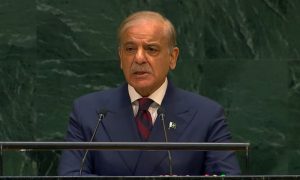
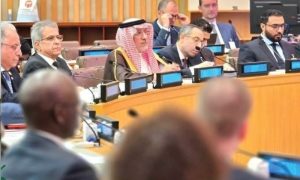
Meanwhile, Pakistan’s Deputy Prime Minister and Foreign Minister Ishaq Dar said Islamabad was continuing efforts to mediate between Washington and Tehran.
Addressing diplomats in Islamabad, Dar said Pakistan’s goal was to end the conflict “in a dignified manner”.
“Whatever has happened so far, it has already dented global GDP to a great degree,” he said.
Dar said Pakistan had engaged around 120 international counterparts and was acting as a bridge between the two sides.
He said Islamabad had already facilitated a two-week ceasefire on April 8 and later hosted US-Iran talks in Islamabad on April 10–11, which he said reached an “advanced level”.
Iranian Foreign Minister Abbas Araghchi said on Monday that talks with the United States were progressing with Pakistan’s “gracious effort”, adding that there was no military solution to the crisis.
Iran’s Foreign Ministry also confirmed it had received Washington’s response to a 14-point proposal and was reviewing it before replying via Pakistani intermediaries.
Foreign Ministry spokesman Esmaeil Baqaei said Iran would convey its position “through the Pakistani mediation”.
US President Trump later extended the ceasefire without a fixed deadline, following a request from Pakistan.