


KEY POINTS
- Iran and the US held indirect nuclear talks in Geneva under Omani mediation.
- Oman said both sides showed openness to “new and creative ideas”.
- Talks paused after about three hours, according to Iran’s IRNA.
- The US has deployed two aircraft carriers to the region amid tensions.
- Trump warned Iran to strike a deal within 15 days or face action.
- Tehran insists talks must focus only on its nuclear programme.
GENEVA: Iran and the United States held indirect nuclear talks in Geneva on Thursday, in what officials described as a critical effort to prevent a new conflict in the Middle East amid a major American military build-up in the region.
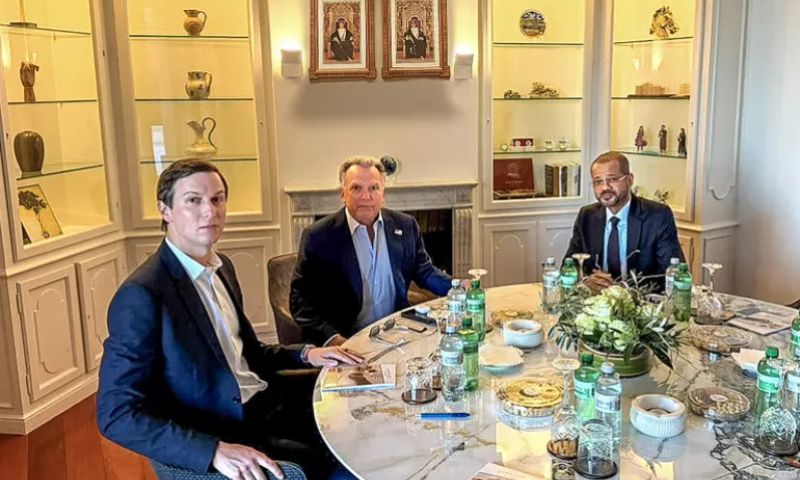
The discussions are being mediated by Omani Foreign Minister Badr Albusaidi, whose country has long acted as a quiet go-between between Tehran and Washington.
The delegations met at the Omani ambassador’s residence under tight security.
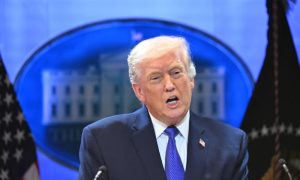
The talks come after repeated warnings from Donald Trump, who last week gave Tehran 15 days to reach a deal or face possible military action.
Oman’s foreign minister confirmed that negotiations had begun and said both sides had shown “unprecedented openness to new and creative ideas and solutions”.
He later said the meeting was paused and would resume after consultations.
Iran’s state news agency IRNA reported that the delegations left the residence after about three hours of talks.
US military build-up near Iran
The diplomacy is taking place amid a rare American force concentration in the Middle East.
As part of the build-up, the USS Gerald R. Ford aircraft carrier left a naval base in Crete this week for the eastern Mediterranean, according to AFP.
The United States already has the USS Abraham Lincoln carrier strike group in the region, alongside nine destroyers and three other combat ships.
It is unusual for two US aircraft carriers — each carrying dozens of aircraft and thousands of personnel — to operate simultaneously in the area.
In his State of the Union address on Tuesday, Trump accused Iran of “pursuing sinister nuclear ambitions”.
He claimed Tehran had developed missiles capable of threatening Europe and US bases overseas and was working on missiles that could reach the United States.
Iran’s foreign ministry dismissed the claims as “big lies”.
Tehran says the maximum range of its missiles is 2,000 kilometres.
The US Congressional Research Service estimates the range at around 3,000 kilometres — far short of the US mainland.
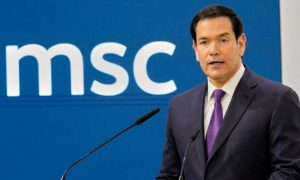
US Secretary of State Marco Rubio said ahead of the talks that Iran must also negotiate over its ballistic missile programme.
He called Tehran’s refusal to discuss missiles “a big, big problem” but added that “the president wants diplomatic solutions”.
Vice President JD Vance told Fox News that Iran should take Trump’s warnings seriously, saying the US leader had a “right” to use military force if necessary.
Dispute over scope of talks
Iran insists the discussions should focus solely on its nuclear programme.
President Masoud Pezeshkian said ahead of the meeting that the Islamic republic was “not at all” seeking a nuclear weapon.
He later said Iran was “one of the main victims of terror” in the region, responding to Trump’s description of Tehran as sponsor of terrorism.
“Our analysis is that they want the country to be bereft of its human capital,” Pezeshkian said during a provincial visit, referring to what he called efforts to undermine Iran through assassinations and unrest.
Foreign Minister Abbas Araghchi, who is leading the Iranian delegation, described the negotiations as “a historic opportunity” and said a deal was “within reach”.
The United States is represented by envoy Steve Witkoff and Jared Kushner.
ALSO READ: Iran Enters High-Stakes Nuclear Talks with US, Seeks Viable Deal
A source close to the talks told AFP that Rafael Grossi, head of the International Atomic Energy Agency (IAEA), had joined the negotiations. An Iranian state television also reported Grossi’s presence.
Oman’s foreign ministry said Albusaidi met Grossi beforehand to exchange views on technical matters related to Iran’s nuclear dossier and “new ideas currently under negotiation”.
‘Drumbeat of war’
The latest effort follows earlier rounds of talks in Oman and Geneva.
A previous diplomatic push collapsed last June when Israel launched surprise strikes on Iranian targets, triggering a 12-day conflict that briefly drew in Washington to bomb Iranian nuclear facilities.
Former IAEA chief Mohamed ElBaradei warned on social media that the United States was intensifying a “drumbeat of war” without evidence of an imminent threat.
“This is Iraq redux,” he wrote, referring to the 2003 US-led invasion of Iraq.
Meanwhile, US Ambassador to Israel Mike Huckabee said Trump had been “very, very clear” about the requirements for a deal.
He said Iran’s ballistic missiles must be addressed alongside its nuclear programme.