


TEHRAN, Iran: Iran has reviewed a 15-point US proposal to end the war and considers its conditions excessive, Iran’s Press TV cited an official as saying on Wednesday, saying Tehran will end the war only at a time of its own choosing and if its conditions are met.
Tehran had responded negatively to a US initiative, an Iranian official, cited by Press TV, said. “Iran has responded negatively” to the proposal, the official said, adding that any end to the war would occur only “on Tehran’s own terms and timeline.”
Iran has responded negatively to an American proposal aimed at ending the ongoing imposed war, insisting that any cessation of hostilities will only occur on Tehran's own terms and timeline, a senior political-security official told Press TV on Wednesday.https://t.co/2foRQj5kJw
— Press TV 🔻 (@PressTV) March 25, 2026
“Tehran will not allow US President Donald Trump to dictate the timing of the war’s end,” the official was quoted as saying.
Iran also called for an end to hostilities across all fronts, including those involving regional groups, and insisted that its sovereignty over the Strait of Hormuz be recognised as a “natural and legal right”.
🔴 Official: Iran will end the war at a time of own choosing, only if its own conditions are met
🔺 Official: Iran not to allow Donald Trump to dictate the timing of the war's end pic.twitter.com/0EdmRg01cR
— Press TV 🔻 (@PressTV) March 25, 2026
According to Press TV, the official listed five conditions under which Iran would consider ending the conflict.
These include a complete halt to what Tehran described as “aggression and assassinations”, concrete guarantees to prevent the war from being reimposed, and assured payment of war damages and reparations.
Key points highlighted by the official and shared by Press TV on X include:
- Iran will end the war at a time of its own choosing, only if its conditions are met.
- Iran will not allow Donald Trump to dictate the timing of the war’s end.
- Iran demands an end to aggression by the enemy.
- Iran calls for concrete guarantees to prevent the recurrence of war.
- Iran seeks a clear determination and guaranteed payment of war damages and compensation.
- Iran demands a comprehensive end to the war across all fronts, including against all resistance groups.
- Iran insists on recognition of Tehran’s sovereignty over the Strait of Hormuz as its natural, legal right.
The official added that these demands build on positions already conveyed during earlier negotiations in Geneva prior to a fresh escalation on February 28.
US conveys 15-point proposal to Iran via Pakistan
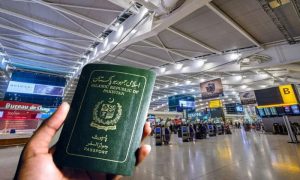
Earlier, a senior Iranian official told Reuters that proposals from Washington had been conveyed through Pakistan.
The official said either Pakistan or Turkiye could serve as venues for potential talks aimed at de-escalation.
Separate reporting by Reuters and AP confirmed that a US proposal, described as a 15-point plan, had been passed to Tehran via Pakistani officials.
Pakistan has offered to host talks, with Prime Minister Shehbaz Sharif stating Islamabad was ready to facilitate “meaningful and conclusive” negotiations if both sides agree.
Pakistan welcomes and fully supports ongoing efforts to pursue dialogue to end the WAR in Middle East, in the interest of peace and stability in region and beyond. Subject to concurrence by the US and Iran, Pakistan stands ready and honoured to be the host to facilitate…
— Shehbaz Sharif (@CMShehbaz) March 24, 2026
Conflicting signals on negotiations
Earlier, Iranian officials have denied that any formal negotiations are under way.
Foreign ministry spokesperson Esmail Beghaei said there were “no talks or negotiations between Iran and the United States”, describing earlier diplomatic efforts as a “betrayal of diplomacy”.
Meanwhile, Ebrahim Zolfaqari, spokesperson for Iran’s joint military command, said on state television that Iran would never reach an agreement with Washington.
“People like us can never get along with people like you,” he said in remarks directed at Trump.
Details of the US proposal remain unclear, but sources cited by Reuters and other media said it could include halting uranium enrichment, curbing Iran’s missile programme, and ending support for regional allies.
Israeli officials, including aides to Prime Minister Benjamin Netanyahu, have been briefed on the plan and expressed scepticism that Iran would accept the terms.
One Israeli source said there were concerns that negotiations could lead to concessions by Washington, while Israel sought to retain the option of pre-emptive strikes.
US, Iran both claim victory
On Wednesday, the US and Iran both claimed victory in their ongoing conflict.
Trump said that Tehran’s forces had been defeated, while Iranian officials insisted Washington had failed in its objectives.
The US President said the war against Iran “has been won,” claiming Iranian military capabilities have been “totally defeated” and “incapacitated.”
Speaking from the Oval Office, he stated that Washington had achieved key objectives, including preventing Iran from acquiring nuclear weapons and reshaping the country’s leadership structure.
Trump also dismissed reports of continued fighting as “fake news,” describing remaining activity as limited “military operations” rather than an active war.
PRESIDENT TRUMP: The war in Iran has been won.
The only one that likes to keep it going is the fake news. pic.twitter.com/pAYfeglpzJ
— Department of State (@StateDept) March 24, 2026
Meanwhile, Iranian officials rejected the US narrative, instead describing the conflict as a failure for Washington.
Commander of Iran’s Khatam al-Anbia Central Headquarters, Major General Ali Abdollahi, said the United States had been “defeated” and was now seeking assistance from other countries to exit what he described as a “quagmire.”
He said the US and its allies initiated the conflict to destabilise Iran, but miscalculated the country’s response. According to Abdollahi, Iranian forces, backed by public support, have resisted the campaign and are “advancing toward ultimate victory.”
The commander added that US leadership, having failed to achieve its objectives, is now looking for a way out of the conflict.
🎥 سخنگوی قرارگاه مرکزی خاتمالانبیا خطاب به آمریکا: سطح خوددرگیریهایتان به مرحلۀ مذاکره خودتان با خودتان رسیده؟
اسم شکستتان را توافق نگذارید. نه خبری از سرمایهگذاریهایتان در منطقه خواهد بود و نه قیمت سابق انرژی و نفت را خواهید دید. pic.twitter.com/0Zjj8wXfZR
— خبرگزاری فارس (@FarsNews_Agency) March 25, 2026
Military build-up continues
Even as diplomatic efforts continue, the United States is expanding its military presence in the region.
The Pentagon is preparing to deploy additional troops from the 82nd Airborne Division, alongside two Marine units already en route, adding to an estimated 50,000 US personnel in the Middle East.
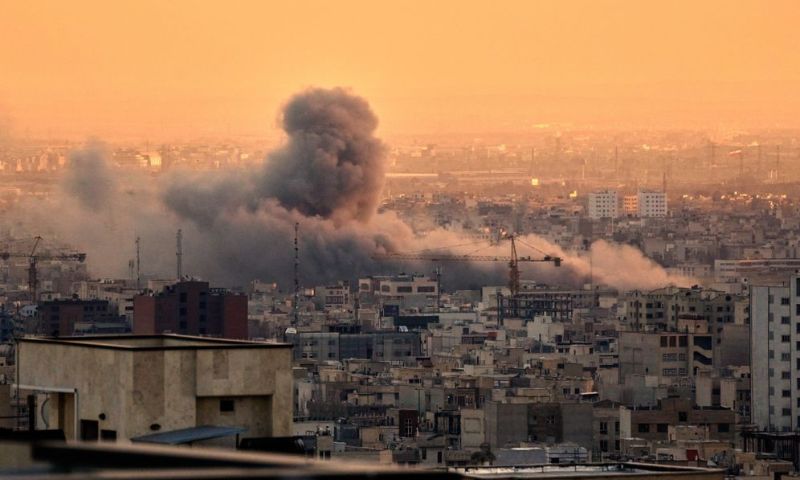
The war, now in its fourth week, has seen continued airstrikes and missile exchanges involving Iran, Israel and US forces.
Iran’s Revolutionary Guards said they had launched new attacks targeting locations in Israel as well as US bases in Kuwait, Jordan and Bahrain. Regional countries reported intercepting drone attacks.
Iran has also effectively restricted access through the Strait of Hormuz, a key global energy corridor, allowing limited passage primarily to its own oil shipments and vessels from friendly states.
Financial markets reacted to reports of potential talks, with oil prices briefly easing before climbing back above $100 per barrel amid ongoing uncertainty.
The conflict has disrupted energy supplies and raised fears of wider regional instability, with mediators focusing on measures such as protecting energy infrastructure and reopening shipping routes.