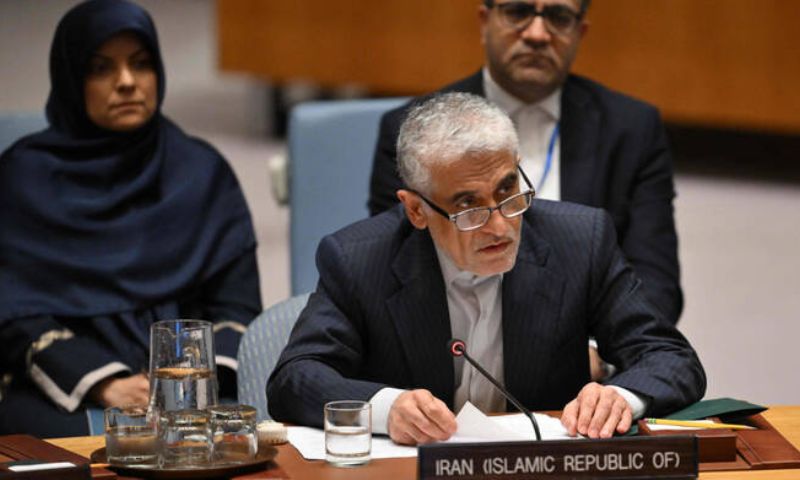



THE UNITED NATIONS, United States: At a session of the United Nations Security Council, Iran called for binding and credible assurances against any future military aggression, warning that without such guarantees, long-term stability in the Gulf region will remain elusive.
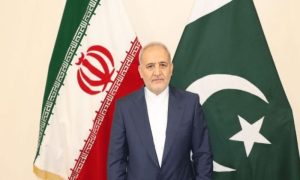
Speaking during a session of the United Nations Security Council, Iran’s Permanent Representative Amir Saeid Iravani stressed that sustainable peace in the Arabian Gulf hinges on ending hostilities directed at Tehran and respecting its sovereignty.
The meeting, convened at the request of Bahrain, saw widespread criticism from dozens of nations accusing Iran of attempting to assert control over the strategically vital Strait of Hormuz – a crucial maritime route through which a significant portion of the world’s oil supply passes.
Addressing the council, Iravani underscored that regional security cannot be achieved through pressure or confrontation.
Instead, he argued, it requires a “durable and permanent cessation of aggression” against Iran, coupled with dependable guarantees that such actions will not recur.
“Lasting stability and security in the Arabian Gulf and beyond can only be ensured when there is a complete halt to hostile actions against Iran, reinforced by credible assurances and full respect for the country’s legitimate sovereign rights and interests,” he said.
Following the session, the Iranian envoy voiced strong criticism of the United States, accusing it of hypocrisy and unlawful conduct at sea, according to AFP.
He alleged that Washington had imposed a de facto naval blockade, targeting commercial shipping and undermining freedom of navigation.
“The United States is behaving like pirates and terrorists,” Iravani told reporters. “It is targeting commercial vessels through coercion and intimidation, seizing ships unlawfully and detaining crew members.”
He further expressed frustration that, while several countries raised concerns about maritime security during the council meeting, none openly condemned what he described as US actions.
According to Iravani, the silence of the international community on these alleged incidents reflects a selective approach to upholding international law and maritime norms.
The remarks come amid heightened tensions involving Iran, the United States, and Israel, with the Gulf region remaining a focal point of geopolitical rivalry.
Control and security of key shipping lanes, particularly the Strait of Hormuz, continue to be a major concern for global energy markets and international trade.