



Key Points
- Iran expresses readiness to discuss compromises in nuclear negotiations with the US
- Deputy Foreign Minister confirms second round of talks scheduled in Geneva
- Iran emphasises nuclear file focus, refuses discussion on ballistic missiles
- Tehran points to dilution of enriched uranium as evidence of flexibility
ISLAMABAD: Iran has signalled a willingness to consider compromises to revive a nuclear deal with the United States, provided Washington engages in meaningful discussions on lifting sanctions, Tehran’s deputy foreign minister told the BBC.
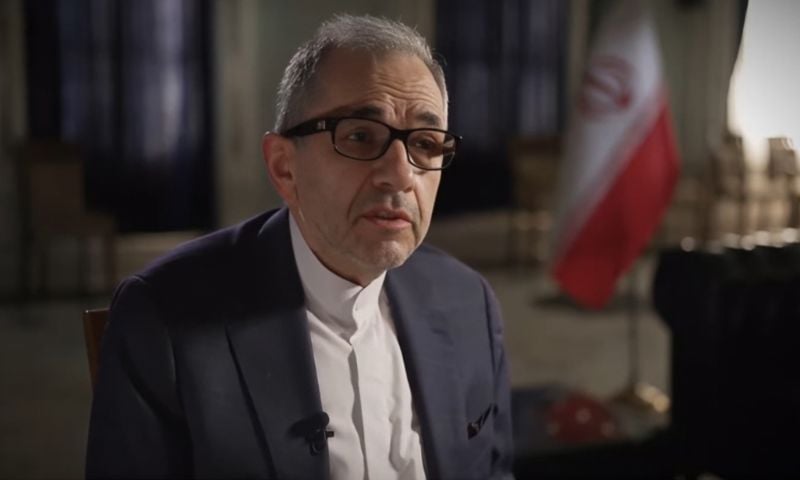
Majid Takht-Ravanchi, speaking in Tehran, said the initiative now rests with the US, adding: “If they are sincere, I’m sure we will be on the road to an agreement.” The minister indicated that Iran remains committed to the nuclear negotiations and is prepared to discuss technical aspects of its uranium programme to reach an accord.
The remarks come amid continued tensions in the region, including threats from the US of military action should a deal not materialise. Recent months have also seen nationwide protests inside Iran, which authorities suppressed violently, raising international scrutiny of Tehran’s domestic situation.
Takht-Ravanchi confirmed that indirect talks between the two countries held in Oman earlier this month had progressed “more or less in a positive direction,” and that a second round is scheduled to take place in Geneva on Tuesday.
He pointed to Iran’s proposal to dilute its 60 per cent-enriched uranium as a demonstration of the country’s readiness to compromise. However, he did not clarify whether this would entail lifting all or some sanctions.
On the question of removing Iran’s stockpile of highly enriched uranium, as agreed under the 2015 nuclear accord, the minister said it was too early to predict the outcome.
Russia has offered to accept the material again, a move Tehran views as a constructive option. Tehran has also reportedly proposed temporarily suspending enrichment, signalling further flexibility, according to the BBC.
One of Iran’s long-standing conditions for any deal has been that discussions remain focused exclusively on the nuclear file.
Takht-Ravanchi confirmed that Washington had accepted this approach, a potential breakthrough after previous US insistence on broader demands, including zero enrichment.
“The issue of zero enrichment is not an issue anymore, and as far as Iran is concerned, it is not on the table anymore,” he said, contradicting recent statements from US President Donald Trump.
The deputy foreign minister reiterated Tehran’s refusal to negotiate its ballistic missile programme with the US, a key demand of Israel. Iran maintains that its missile capabilities fall outside the scope of the nuclear deal and are considered defensive under its national security policy.
Analysts suggest that Iran’s latest statements are aimed at both signalling flexibility to the US and consolidating domestic and regional support for a deal that respects its nuclear rights under the Non-Proliferation Treaty. The upcoming Geneva talks will be closely watched as a barometer of whether both sides can move past long-standing deadlocks and revive the 2015 accord framework.