


TEHRAN: Iran’s government has begun implementing wide-ranging emergency measures aimed at ensuring continuity of governance and securing essential supplies amid growing concerns of renewed military conflict with the United States or Israel.
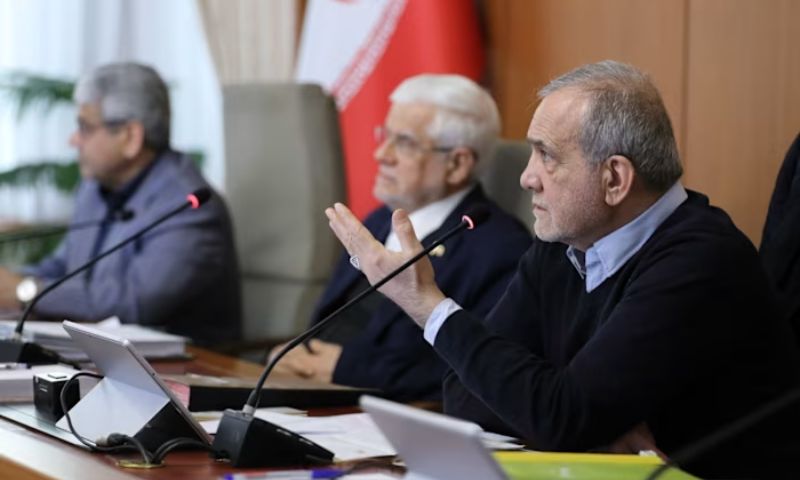
President Masoud Pezeshkian, meeting governors of Iran’s border provinces on Tuesday, issued directives intended to streamline decision-making and accelerate the import of basic commodities, according to Financial Times.
According to state media, the measures are designed to reduce bureaucratic delays and strengthen resilience in the event of further attacks on the country.
“We are handing over authorities to provinces so that governors can contact the judiciary and officials in other organisations and make decisions themselves,” Pezeshkian said, adding that the goal was to “eliminate redundant bureaucracy and accelerate the import of basic commodities.”
The move comes as fears mount of another escalation following recent hostilities and is widely seen as a step to decentralise power, ensuring that provincial administrations can function independently should senior national leaders be targeted.
Iran’s elite Islamic Revolutionary Guard Corps (IRGC) has meanwhile issued warnings to countries across the region, cautioning that any new military action against Iran could endanger the flow of global energy supplies through the Strait of Hormuz — a vital shipping route between Iran and the Gulf states.
“We do not want to jeopardise the global economy, but the Americans and their supporters cannot benefit from a war they initiate against Iran,” said Mohammad Akbarzadeh, a political affairs deputy in the Guards’ naval forces, according to state media.
Akbarzadeh added that neighbouring countries regarded as “friendly” had been informed that allowing their airspace, territory or waters to be used in an attack on Iran would render them “hostile” in Tehran’s view.
Regional diplomacy has intensified in response to the rising tensions. A diplomat familiar with the discussions said countries across the Middle East were engaging both Tehran and Washington to de-escalate the situation.
These states have reportedly warned the Trump administration that if Iran believed the US was seeking regime change or threatening its survival, Tehran could retaliate by targeting oil and gas infrastructure across the region.
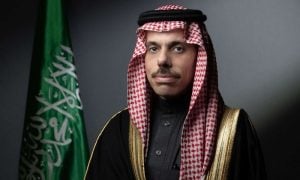
Iranian state media reported that President Pezeshkian spoke by phone on Tuesday with Saudi Crown Prince Mohammed bin Salman, who expressed support for regional peace.
The conversation was confirmed by the semi-official Tasnim news agency, underscoring Riyadh’s efforts to prevent further instability.
Despite the warnings, Iranian officials have repeatedly stressed that Tehran does not seek war. “Iran does not want conflict, but it is fully prepared if one is imposed on the Islamic republic,” Akbarzadeh said. “Iran will not retreat by even one millimetre.”
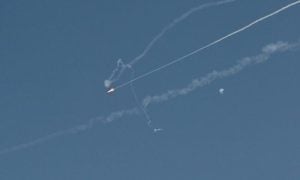
Tensions have remained high since Israel launched a 12-day war against Iran in June, killing dozens of senior military commanders in an opening strike that Tehran later acknowledged had caught its leadership off guard. The US briefly entered the conflict, carrying out air strikes on Iranian nuclear facilities.
In recent weeks, Washington has indicated it may again consider military action against Iran. Speculation has grown that potential targets could include senior political and military figures, including Supreme Leader Ayatollah Ali Khamenei.
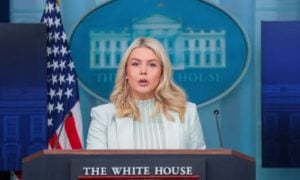
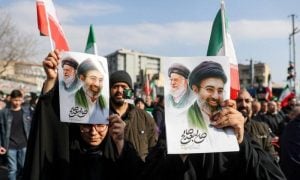
President Donald Trump has repeatedly issued warnings during the violent mass protests that have rocked Iran this month, and last week said he had dispatched a naval “armada” towards Iran “just in case” military action became necessary.
US Central Command confirmed on Monday that the aircraft carrier USS Abraham Lincoln has been deployed to the Middle East, reinforcing Washington’s military presence in the region.
Following the June conflict, Pezeshkian’s administration announced plans to delegate authority to all 31 of Iran’s provinces to ensure that government operations could continue uninterrupted under emergency conditions. The measures unveiled this week expand on that approach.
Under the new framework, provincial governors are authorised to pursue “imports without foreign currency,” including barter arrangements with neighbouring countries, bypassing previously required bureaucratic approvals, according to domestic media reports.
Government spokesperson Fatemeh Mohajerani acknowledged the gravity of the situation, saying on Tuesday that a “heavy shadow of war” was hanging over the country and worsening existing challenges.
While reiterating that Iran was fully prepared to defend itself against foreign aggression, she emphasised that the government remained committed to finding a diplomatic solution.
“We are still trying to find a solution through diplomacy,” Mohajerani said, even as contingency plans are put in place.
Ali Gholhaki, a journalist with close ties to Iran’s security establishment, told the reformist outlet Ensafnews that Iran and the US were engaged in “direct or indirect” talks in a third country. However, he expressed scepticism that diplomacy alone could prevent what he described as a “highly likely” war.
Senior Iranian political and military figures have warned that any attempt on Ayatollah Khamenei’s life would be treated as an act of all-out war.
Calling for unity, Mohajerani urged Iranians to stand together in the face of mounting external pressure. “We are hearing war drums beaten by hostile media overseas seeking to create fear and disruption in people’s lives,” she told local reporters. “We knew from the beginning that we are facing a multi-layered, hybrid war.”
The emergency measures, officials say, are intended not only to prepare for worst-case scenarios but also to reinforce stability at home as diplomatic efforts continue to defuse volatile standoffs.