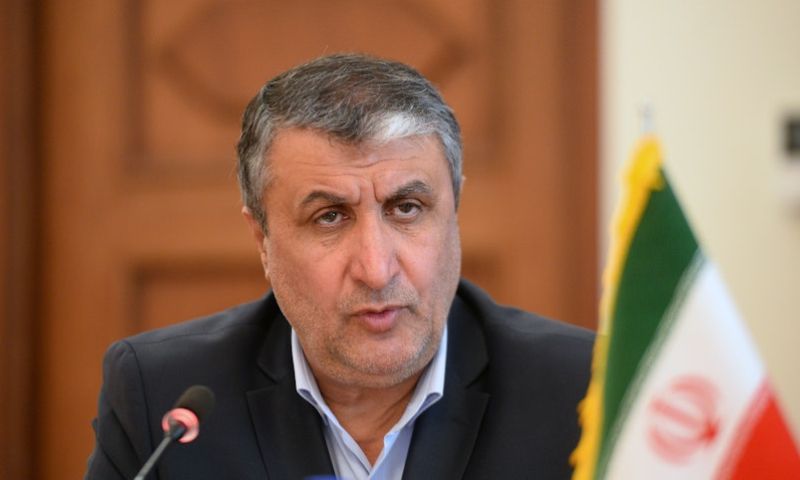



ISLAMABAD: Iran’s atomic energy chief Mohammad Eslami on Thursday reaffirmed the Islamic Republic’s right to uranium enrichment, saying no country can deprive Tehran of its lawful nuclear activities.
The comments follow the United States’ overtures of hinting at military action if diplomatic efforts fail to stop Iran from uranium enrichment.
“The basis of the nuclear industry is enrichment. Whatever you want to do in the nuclear process, you need nuclear fuel,” Eslami said in a video published by the Etemad daily.
“Iran’s nuclear programme is proceeding according to the rules of the International Atomic Energy Agency, and no country can deprive Iran of the right to benefit from this technology, peacefully.”
Ongoing Geneva talks
Eslami’s remarks followed the second round of Oman-mediated indirect talks between Iran and the United States in Geneva on Tuesday.
The negotiations are the first since previous diplomacy collapsed after a brief 12-day Iran–Israel conflict, during which the US conducted strikes on Iranian nuclear facilities.
While Tehran insists its nuclear ambitions are peaceful, Washington and Western allies have repeatedly demanded limits on uranium enrichment.
Discussions in Geneva also touch on Iran’s ballistic missile programme and regional proxy networks — issues Israel has pressed to include in negotiations.
Tit-for-tat rhetoric
The diplomatic exchange has coincided with aggravated military rhetoric.
On Wednesday, US President Donald Trump suggested that American forces might use the Diego Garcia airbase in the Indian Ocean to preempt a potential Iranian attack, calling the Tehran government “highly unstable and dangerous.”
Analysts interpret the statement as both a warning and a pressure tactic ahead of further talks.
In response, Iran has reinforced its positions both militarily and unequivocally. Iranian naval forces conducted exercises in the Strait of Hormuz, demonstrating their ability to control strategic shipping routes.
Tehran also held joint naval drills with Russia in the Sea of Oman and northern Indian Ocean, underscoring Tehran’s readiness to defend its sovereignty.
Regional and international implications
The standoff has drawn international concern. Russia, through Foreign Minister Sergei Lavrov, urged the United States to avoid military action, warning that escalation could destabilise the Middle East and undermine diplomatic progress.
The ongoing impasse underscores the complexity of balancing Iran’s right to peaceful nuclear technology with the international community’s security concerns.
Experts note that failure to reach an agreement could exacerbate regional instability and heighten the risk of armed confrontation.
Unresolved core issues
At the heart of the negotiations remains Iran’s uranium enrichment programme.
While Tehran emphasises civilian nuclear applications under IAEA oversight, the US insists on verifiable restrictions to prevent the development of weapons-grade material.
Both sides face the challenge of reconciling these positions while managing military posturing and regional sensitivities.
As indirect negotiations continue, the international community watches closely, aware that the outcome will shape US-Iran relations, regional security, and the broader non-proliferation landscape.