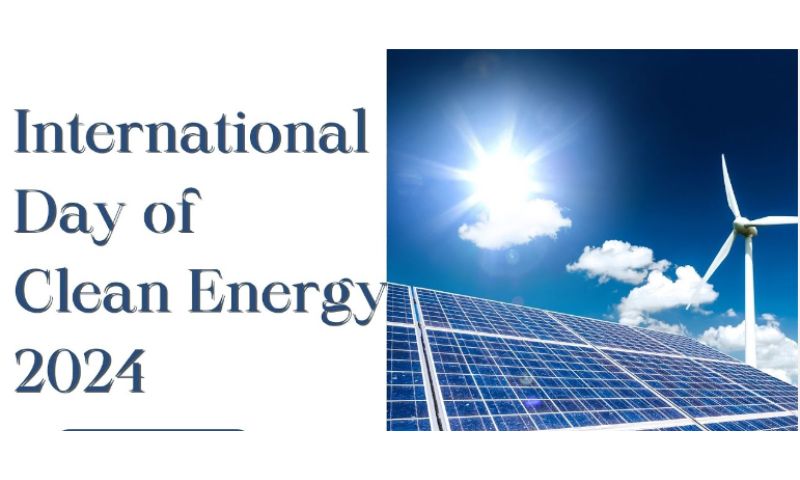



ISLAMABAD: The International Day of Clean Energy was observed on Friday by the General Assembly, marked as a call to raise awareness and mobilize efforts for a fair and inclusive transition to clean energy for the well-being of both people and the planet.
January 26 also commemorates the founding date of the International Renewable Energy Agency (IRENA), a global intergovernmental agency established in 2009. IRENA’s mission includes supporting countries in their energy transitions, serving as a platform for international cooperation, and providing data and analyses on clean energy technology, innovation, policy, finance, and investment.
The celebration of the International Day of Clean Energy underscores the environmental impact of fossil fuels, responsible for nearly 90 percent of global carbon dioxide emissions. Scientists emphasize the urgent need to reduce emissions by almost half by 2030 and achieve net-zero by 2050 to mitigate the worst impacts of climate change.
While fossil fuels currently dominate global energy production, renewable sources such as wind, solar, hydro, and geothermal now contribute to about 29 percent of global electricity generation. Clean energy is recognized as crucial in addressing the twin challenges of inclusive development and environmental preservation.
In a world grappling with climate change, clean energy emerges as a key player in emission reduction, with additional benefits for communities lacking access to reliable power sources. Presently, 675 million people, predominantly in Sub-Saharan Africa, live without access to electricity, hindering education, healthcare, and economic opportunities.
The nexus between clean energy, socio-economic development, and environmental sustainability holds significant importance in addressing challenges faced by vulnerable communities globally. For regions without clean energy access, reliance on polluting fossil fuels perpetuates poverty and hinders progress.
Despite improvements, the world is not on track to achieve Sustainable Development Goal 7 (SDG7), aiming to ensure access to affordable, reliable, sustainable, and modern energy for all by 2030. The General Assembly plans to conduct a Global Stocktaking on SDG7 in April 2024 to assess progress and recommend solutions.