



Key points
- Powerplay collapses cost against South Africa
- Sticky pitches expose lack of adaptability
- Team urged to find Plan B
AHMEDABAD: India’s heavy defeat to South Africa at the Narendra Modi Stadium has sparked fresh debate over whether the defending champions are facing an identity crisis midway through the T20 World Cup 2026.
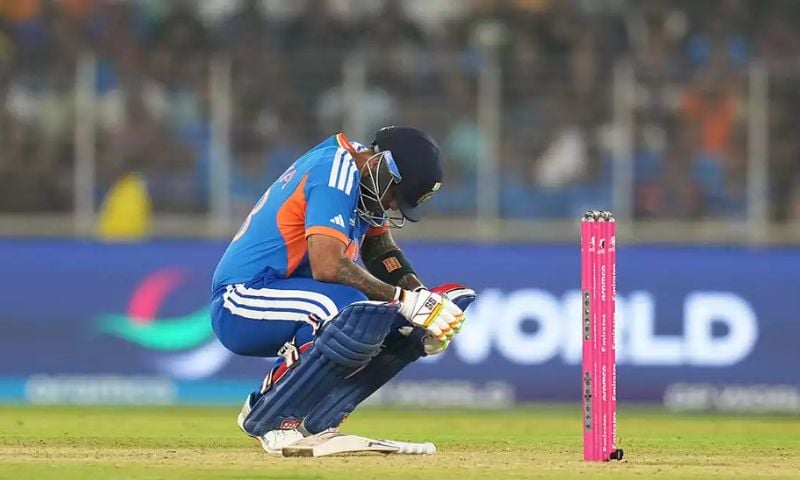
Leading the side in a high-stakes Super Eights clash, captain Suryakumar Yadav was left reflecting on familiar disappointment at the same venue. As Cricbuzz noted in its post-match analysis, the loss has exposed deeper concerns about India’s batting template on surfaces that do not suit their aggressive blueprint.
“Sometimes you’ve got to think, if you’re chasing 180-185, you can’t win the game in the Powerplay, but you might lose the game in the Powerplay,” Suryakumar admitted after the defeat — a statement that would have seemed unlikely just weeks ago.
India entered the tournament widely regarded as the most formidable batting unit in T20 cricket, built on relentless Powerplay aggression. Over the 2024–2026 cycle, they have scored at nearly 10 runs per over in the first six overs — among the best returns in world cricket. That high-octane approach allowed them to dominate phases, dictate tempo and suffocate opposition attacks.
Slower surfaces
However, this World Cup has presented a different challenge. Sticky and slower surfaces have curtailed India’s usual fluency at the top. Early collapses against USA in the group stage and South Africa in the Super Eights have underlined the risk of their all-out attacking strategy when conditions are less forgiving.
Assistant coach Ryan ten Doeschate previously acknowledged the need for a “plan B” after India slumped to 46/4 in the Powerplay against USA. While they recovered in that match, South Africa capitalised ruthlessly, reducing India to 31/3 and never allowing them to regain control.
The concern is not about talent but adaptability. On flatter home pitches, India’s explosive starts have forced opponents onto the defensive. On slower tracks where timing is harder and the ball grips, that same method has looked one-dimensional.
With a poor net run rate now compounding their defeat, India’s margin for error has shrunk dramatically. Their title defence hinges on whether a batting line-up wired for early aggression can recalibrate quickly enough against Zimbabwe and West Indies.