



KEY POINTS
- The 3,240-kilometre exclusion zone signals intent to militarise the Indian Ocean.
- Observers view the move as a significant regional arms race escalation.
- Parameters suggest a nuclear-capable K-4 Submarine-Launched Ballistic Missile trial.
- Launch from Arihant-class submarines shifts South Asia’s strategic nuclear equilibrium.
- India is transitioning towards an aggressive, multi-tiered nuclear triad posture.
- Experts warn this persistent testing triggers a dangerous regional reactive spiral.
- Underwater “cold launch” technology indicates India’s pursuit of technical aggression.
- India’s sea-based deterrent forces a counter-response to maintain strategic balance.
- Expanding strategic reach threatens the stability and peace of South Asia.
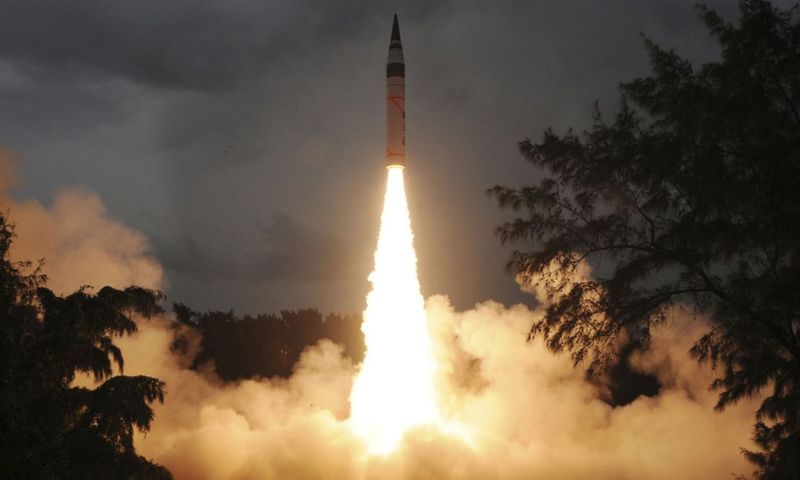
ISLAMABAD: India has re-issued a provocative Notice to Airmen (NOTAM) for a long-range missile test in the Bay of Bengal, a move observers view as a significant escalation in the regional arms race.
The notification, valid from December 22 to December 24, 2025, outlines a massive 3,240-kilometre exclusion zone, signalling India’s intent to further militarise the Indian Ocean Region (IOR).
Expanding the nuclear shadow
The notified corridor, stretching deep into the southern Indian Ocean, is far beyond the requirements of routine defence exercises.
Defence analysts note that the geometry of the no-fly zone is consistent with a K-4 Submarine-Launched Ballistic Missile (SLBM).
With a range of 3,500 km, this nuclear-capable weapon is designed specifically to give India a “second-strike” capability, fundamentally altering the strategic equilibrium in South Asia.
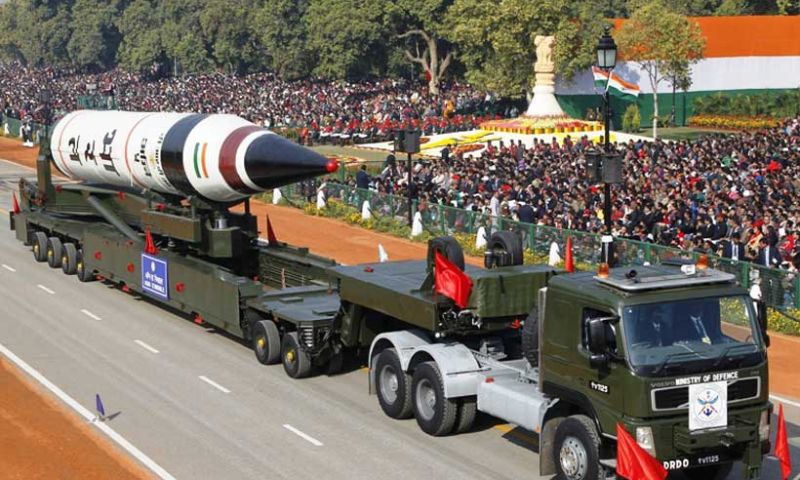
By operationalising these systems via its Arihant-class nuclear submarines, India is moving away from a posture of “credible minimum deterrence” towards an aggressive, multi-tiered nuclear triad.
Triggering regional instability
Experts warn that India’s persistent testing of long-range delivery systems forces a reactive spiral in the region.
- A Shift in Parity: The K-4 test is seen not merely as a technical milestone but as a clear signal of India’s ambition to dominate the maritime commons, directly threatening the security architecture of neighbouring states.
- The “Second Strike” Myth: While New Delhi labels these tests as “defensive,” the pursuit of sophisticated underwater launch capabilities incentivises a “use it or lose it” mentality during a crisis, heightening the risk of accidental or pre-emptive nuclear escalation.
- Ignoring Diplomatic Restraint: The re-issuing of this NOTAM, despite growing calls for regional maritime arms control, underscores a unilateral approach to security that overlooks the concerns of the wider Indian Ocean community.
Sea-based technical aggression
The launch, expected to take place off the coast of Visakhapatnam, involves complex “cold launch” underwater technology.
While India maintains “strategic silence” regarding the specifics, the 3,240 km range confirmed by the NOTAM suggests a full-range validation of a system capable of reaching deep into the heart of the continent.
Regional weapons spiral
Pakistan has previously raised concerns at international forums regarding the “nuclearisation of the Indian Ocean.”
This latest activity is expected to further validate those concerns, as India’s pursuit of a sea-based deterrent necessitates a counter-response to maintain strategic balance.
As New Delhi pushes forward with its SSBN (Nuclear Ballistic Missile Submarine) programme, the stability of South Asia remains under pressure.
The December testing window serves as a stark reminder that the region is being pushed into a costly and dangerous weapons race, triggered by India’s expanding strategic reach.