


ISLAMABAD: India has suffered a series of rocket launch failures in recent years, including the loss of a key Earth observation satellite earlier this year, raising concerns over the reliability of its space launch systems and the broader impact on its commercial and strategic space ambitions.
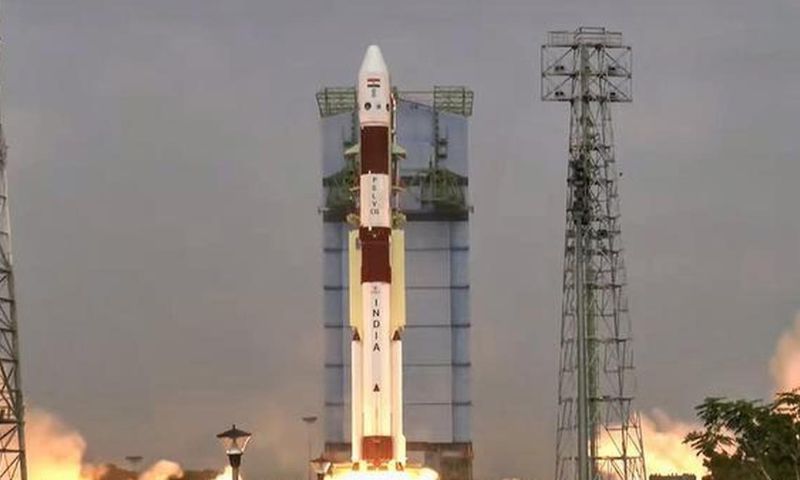
The most recent setback occurred in January when the Indian Space Research Organisation (ISRO) launched the PSLV-C62 mission carrying the Earth observation satellite EOS-N1 (Anvesha) along with multiple smaller payloads.
The mission ended in failure shortly after launch from the Satish Dhawan Space Centre in Sriharikota due to a technical anomaly during the rocket’s third stage.
ISRO confirmed that the vehicle performed normally during the early stages of flight but began showing disturbances near the end of the third stage, leading to a deviation from its intended trajectory and the loss of the mission.
The failed launch destroyed the primary satellite as well as 15 co-passenger satellites carried for domestic and international customers, dealing a blow to India’s space programme and its commercial launch services.
Recent mission failure
The PSLV-C62 rocket lifted off as India’s first space mission of 2026 and the 64th flight of the Polar Satellite Launch Vehicle (PSLV), a launch system widely regarded as the workhorse of India’s space programme.
According to ISRO Chairman V. Narayanan, the rocket performed nominally until the latter phase of the third stage when engineers observed disturbances in the vehicle’s motion.
“The performance of the vehicle close to the third stage was as expected,” Narayanan said after the launch.
“However, near the end of the third stage we observed disturbances and a deviation in the flight path. We are analysing the data.”
The anomaly prevented the rocket from placing its payload into the intended sun-synchronous orbit, resulting in the loss of all satellites onboard.
EOS-N1, also known as Anvesha, was designed to provide advanced imaging capabilities for Earth observation and strategic monitoring.
Consecutive PSLV setbacks
The incident marked the second consecutive failure involving the PSLV’s third stage.
In May 2025, the PSLV-C61 mission failed to place the EOS-09 satellite into orbit after an anomaly caused a sudden drop in chamber pressure during the third stage of flight.
Historically, the PSLV had built a reputation as one of the world’s most reliable launch vehicles, with only a handful of failures since its first flight in 1993.
The rocket has been central to several high-profile missions, including Chandrayaan-1, the Mars Orbiter Mission, and the Aditya-L1 solar mission.
However, the recent back-to-back anomalies have prompted questions about technical reliability and quality assurance in the programme.
Impact on commercial and strategic missions
The PSLV programme has played a key role in India’s ambition to build a competitive space launch industry by offering low-cost rideshare services to international customers.
The latest failure also affected satellites from several organisations and international partners that had booked launch slots on the mission.
Experts say repeated launch anomalies could undermine confidence among global clients seeking reliable small-satellite launch providers, particularly as competition intensifies from private companies and emerging launch systems worldwide.
Strategically, the loss of the EOS-N1 satellite is also significant.
The spacecraft was expected to enhance India’s Earth-observation capabilities and support applications such as environmental monitoring, disaster management and strategic surveillance.
ISRO has initiated a detailed technical investigation into the PSLV-C62 failure.
Engineers are analysing telemetry data and mission logs to determine the precise cause of the third-stage anomaly and to assess corrective measures.
Space missions are inherently complex and failures are not uncommon even among advanced space agencies.
However, analysts note that ensuring consistent reliability will be crucial as India seeks to expand its role in the global commercial space market and pursue ambitious future missions.