


NEW DELHI: India’s plan to induct 114 more French-made Rafale fighter jets is set to cost the country tens of billions of dollars more and deliver aircraft years later than originally envisaged, after Prime Minister Narendra Modi’s government scrapped an earlier fighter procurement programme.
The proposed Multi-Role Fighter Aircraft (MRFA) deal is estimated at around $35 billion for 114 aircraft, compared with the earlier Medium Multi-Role Combat Aircraft (MMRCA) programme, which envisaged 126 fighters for about $10–12 billion, according to The Wire.
Analysts, cited by The Wire, said that India will now pay substantially more for fewer aircraft, while the Indian Air Force (IAF) continues to face an acute shortage of combat squadrons.
The MMRCA programme, launched in 2007, was scrapped after the BJP came to power in 2014. It had included large-scale licence production in India and technology transfer.
Defence experts cited by The Wire say the MRFA effectively revives the same requirement years later, after India lost more than a decade in procurement time.
As a result, initial deliveries under the new plan are unlikely before 2028–29, with full induction possibly stretching into the mid-2030s.
The delay has left the IAF operating at around 29–30 fighter squadrons, well below its sanctioned strength of 42.5.
Local production doubts
Under the original MMRCA plan, 108 of the 126 aircraft were to be built in India by state-owned Hindustan Aeronautics Limited (HAL), backed by extensive technology transfer.
By contrast, the MRFA’s production model remains unclear. It is yet to be decided whether HAL or a private-sector strategic partner will assemble the aircraft locally, and what level of technology transfer would be offered.
Analysts warn that selecting a private partner could involve lengthy vetting and negotiations, further delaying the programme.
Concerns have also been raised about transparency and execution risks if firms with limited defence manufacturing experience are chosen, The Wire reported.
Dependence and delivery risks
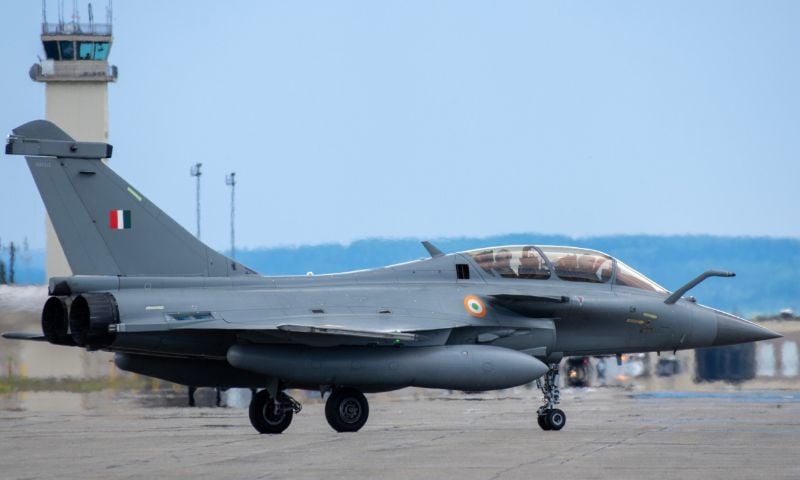
India already operates 36 Rafales, while the navy has ordered 26 naval variants. With 114 more proposed, analysts say India risks excessive dependence on a single aircraft type and supplier, reducing flexibility and bargaining power.
Dassault Aviation, the French manufacturer, is also reported to be facing production constraints due to multiple international orders.
Defence analysts caution that this could further delay deliveries to India.
Furthermore, newer Rafale variants planned under the MRFA, including F4R and F5R, are expected to be more expensive to acquire, operate and upgrade, increasing long-term pressure on India’s defence budget.
India’s Defence Ministry is also grappling with France’s reported refusal to transfer the Rafale’s critical source codes, which govern radar fusion, electronic warfare systems and weapons integration.
Defence sources cited by Defence Security Asia said France has made clear that the source codes will remain under French control, despite the scale of the proposed deal.
Such restrictions could limit India’s ability to independently upgrade or modify the aircraft.
Rafale’s battlefield failure
The Rafale has also come under renewed scrutiny following the May 2025 India–Pakistan conflict.
Pakistani officials claimed that the Pakistan Air Force (PAF) shot down seven Indian fighter jets during the conflict, including three Rafales. India initially denied the claims.
Subsequently, images of aircraft wreckage circulated online, and French newspaper Le Monde reported that Rafale losses had occurred.
The matter was later discussed in the French parliament, and India’s Chief of Defence Staff acknowledged aircraft losses without specifying numbers.
Pakistan has said its JF-17 Thunder Block III fighters, armed with PL-15 beyond-visual-range missiles, were involved.
International defence media and open-source analysts have also reported that Dassault sent a technical audit team to India to assess whether systemic issues contributed to the losses.
According to these reports, Indian authorities did not grant the team access to Rafale squadrons, fuelling speculation about operational or doctrinal vulnerabilities.