


Key Points:
- Iran conflict pushes up crude oil prices, increasing packaging costs for India’s bottled water industry.
- Around 2,000 small manufacturers have raised distributor prices by ₹1 per bottle (5%).
- Cost of plastic bottle material has surged nearly 50% to about ₹170 per kg.
- Bottle cap prices have more than doubled, adding further pressure on producers.
- Premium mineral water brands have increased reseller prices by up to 18%.
- Industry warns consumer prices may rise soon as summer demand peaks.
NEW DELHI: Escalating geopolitical tensions involving Iran are beginning to disrupt India’s $5 billion packaged water industry, with manufacturers facing rising packaging costs just as the country approaches peak summer demand.
Industry representatives say the conflict has triggered a surge in crude oil prices, which in turn has significantly increased the cost of polymers used in producing plastic bottles.
The sudden spike in input costs is already forcing many smaller manufacturers to raise prices for distributors.
According to the Federation of All India Packaged Drinking Water Manufacturers’ Association, nearly 2,000 small bottled water producers have already increased rates for resellers by about ₹1 per bottle — roughly a 5% hike. Industry officials warn that prices could climb another 10% within the next few days if cost pressures continue.
“There is chaos in the market, and within four to five days consumers will likely begin to see the impact,” said Apurva Doshi, secretary general of the federation.
The cost of materials used to produce plastic bottles has surged dramatically, rising by nearly 50% to around ₹170 per kilogram.
According to Reuters, bottle caps have become even more expensive, with prices more than doubling to about ₹0.45 per piece. At the same time, other packaging inputs such as corrugated boxes, labels and adhesive tape have also become costlier.
India is one of the world’s fastest-growing bottled water markets. With about 70% of the country’s groundwater considered contaminated by researchers, millions of people rely heavily on packaged drinking water for daily consumption.
A one-liter bottle typically sells for less than ₹20 (about $0.20), making the product highly price-sensitive.
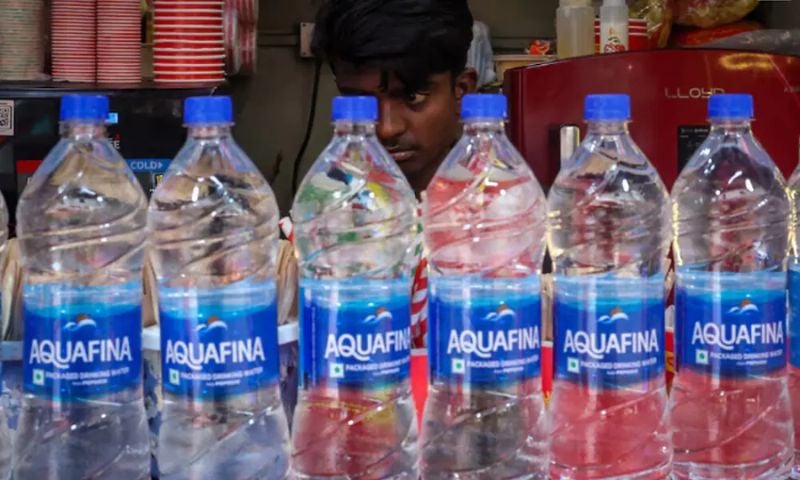
Major beverage brands operating in the market include Bisleri, Coca-Cola’s Kinley, PepsiCo’s Aquafina, Reliance and Tata Group companies. While larger players are currently absorbing part of the cost increases, smaller manufacturers say they have little room to sustain the pressure.
The price surge is also affecting India’s growing premium water segment. Natural mineral water, a niche but rapidly expanding category valued at about $400 million, has been gaining popularity among affluent consumers as part of the wellness trend.
Market research firm Euromonitor estimates that premium bottled water accounted for about 8% of India’s packaged water market last year, up sharply from just 1% in 2021.
Companies in this segment are also adjusting prices. Aava, a premium mineral water brand sourced from the foothills of the Aravalli mountains, has increased reseller prices by about 18%, according to CEO Shiroy Mehta.
“Most manufacturers are absorbing around 40–50% of the increased costs to retain customers,” Mehta said. “But the situation remains difficult for the beverage industry, especially ahead of the crucial summer season.”
Mass-market brands are also feeling the pressure. Clear Premium Water, owned by India’s Energy Beverages, recently informed distributors that an “unprecedented and continuous surge” in raw material costs has made it impossible to maintain existing prices.
Industry experts say if crude oil prices remain elevated due to geopolitical instability, consumers across India could soon face higher prices for a product that millions depend on daily.