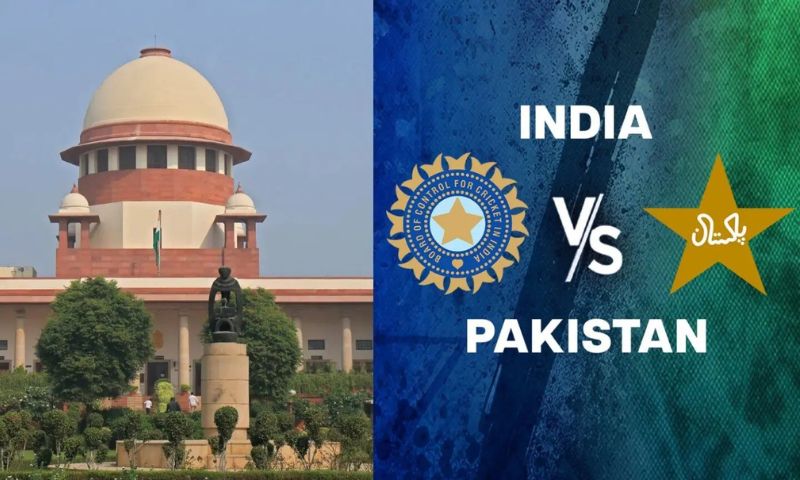



NEW DELHI: Indian Supreme Court on Thursday refused to urgently hear a petition seeking to cancel the upcoming Asia Cup cricket match between India and Pakistan, ruling instead that the highly anticipated 14 September match in Dubai “must go on.”
On Thursday, a bench comprising Justices J.K. Maheshwari and Vijay Bishnoi declined an urgent plea filed by a group of law students seeking to halt the much-anticipated India vs Pakistan cricket showdown, slated for September 14 in Dubai as part of the Asia Cup 2025.
The petition, spearheaded by Urvashi Jain, cited Pahalgam incident and the fallout of the military clash between the two nuclear neighbouring countries as grounds for cancellation.
According to the plea, cited by Indian media, allowing the high-voltage match to proceed would “compromise national dignity” and “insult the sacrifices of soldiers and civilians” caught in cross-border violence.
But the bench was unmoved
When counsel urged the court to take up the matter before the match day, the judges made their stance crystal clear with just five words: “The match must go on.”
Pressed further on whether even a “weak case” deserved to be heard, the court offered no concessions. The listing, it affirmed, would not be expedited.
While the students also invoked the newly enacted National Sports Governance Act, 2025, seeking its immediate implementation to review international sporting ties, the court’s response underscored a broader sentiment: sports, even amid strife, can’t be held hostage to politics.
Clash Beyond Cricket
India vs Pakistan matches have never been just about cricket. They are emotional, symbolic, and often carry the weight of complex diplomatic and historical baggage. But the court, by refusing to intervene, signalled that sport must retain its space as a bridge, not a battleground.
The verdict has drawn mixed reactions. Some hail it as a mature assertion of judicial restraint and faith in sport’s power to unite, while others argue that national security concerns must take precedence over cricketing spectacle.
Regardless of public opinion, one thing is now certain: come September 14, the two arch-rivals will meet under the floodlights in Dubai, not just as players, but as symbols of resilience, rivalry, and a region’s restless pulse.