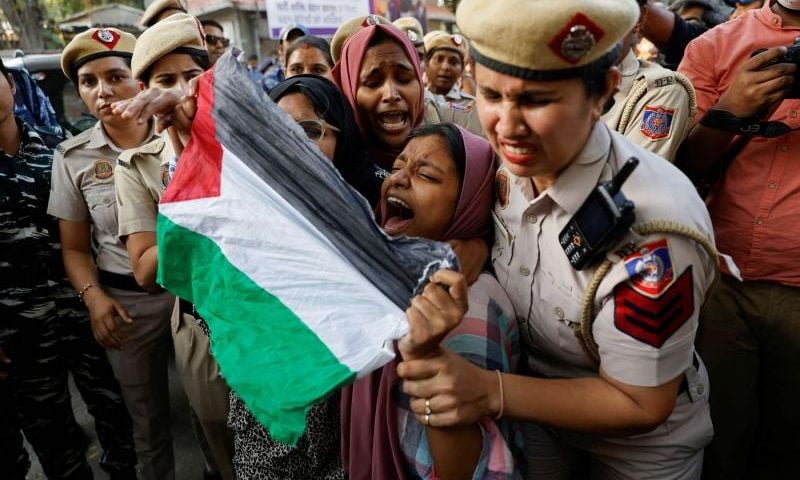



ISLAMABAD: The Indian government is facing growing criticism ahead of Prime Minister Narendra Modi’s planned visit to Israel later this month, with human rights advocates accusing New Delhi of aligning too closely with Israel amid the ongoing Israeli atrocities in Gaza.
The visit comes after two years of Israeli military operations in Gaza that have resulted in widespread devastation across the territory and heavy civilian casualties. Israel’s subsequent military campaign has drawn international scrutiny, with humanitarian groups describing the scale of destruction and civilian casualties as unprecedented in recent history.
According to Gaza-based health authorities, more than 72,000 Palestinians have been killed and over 171,000 wounded since the war began, many of them women and children.
The United Nations estimates that nearly Gaza’s entire population of around 2.1 million has been displaced at least once, with severe shortages of food, water, and medicine persisting despite a fragile truce.
Several international human rights organisations have accused Israel of serious violations of international law, and some experts have raised concerns about potential genocidal acts — allegations Israel strongly denies, saying it targets armed groups operating within civilian areas.
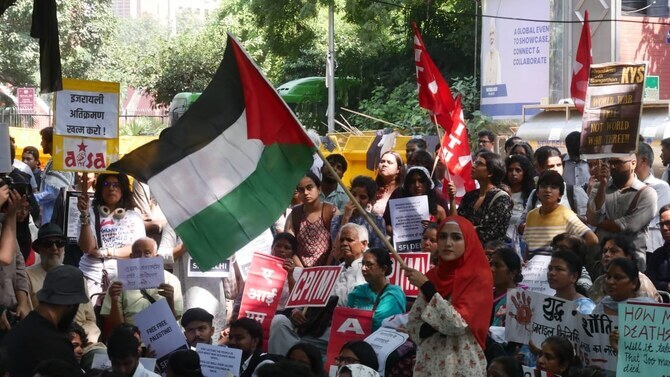
Critics argue that Modi’s visit — expected to focus on defence, technology, and strategic cooperation — risks signaling political endorsement at a time when global pressure on Israel is intensifying. Over the past decade, India has expanded defence procurement from Israel, acquiring drones, missile systems, and surveillance technology, while deepening cooperation in agriculture, cybersecurity, and water management.
Opposition leaders and civil society groups say India, which historically championed the Palestinian cause and supported Palestinian statehood in international forums, is departing from its traditional diplomatic posture.
In recent UN votes calling for immediate humanitarian ceasefires, India has abstained, drawing criticism from some domestic and international observers.
The government maintains that it supports a negotiated two-state solution and humanitarian assistance for Gaza, but it has avoided direct commentary on allegations of war crimes or disproportionate force.
As the conflict enters its third year, with tens of thousands of civilians — many of them women and children — killed, Modi’s visit is expected to intensify debate over India’s evolving Middle East policy.