


By December 2025, relations between India and Bangladesh are no longer merely strained; they are approaching a full-scale diplomatic breakdown. What is unfolding today — visa suspensions, security disputes, hostile rhetoric and public diplomatic confrontations — is the visible outcome of a much deeper crisis that predates the fall of former Bangladeshi prime minister Sheikh Hasina.
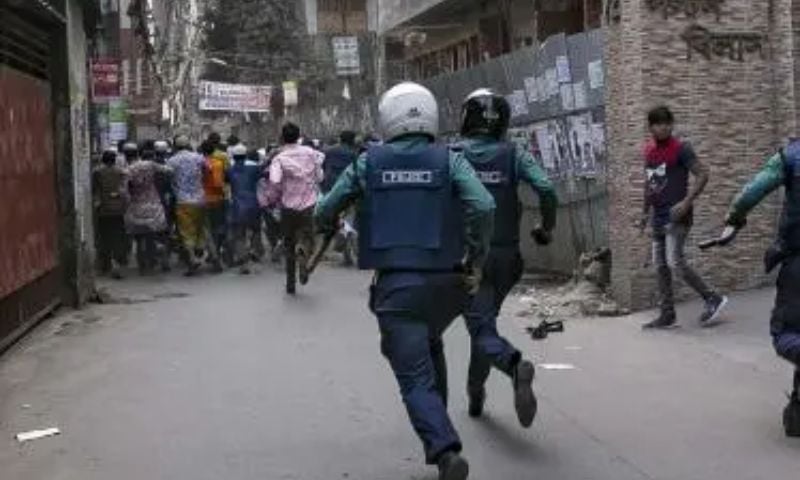
Contrary to the dominant narrative in Indian and some international commentary, anti-India sentiment in Bangladesh did not suddenly emerge after Hasina’s removal in August 2024. It crystallised earlier, during a prolonged student-led protest movement that accused her government of excessive political dependence on New Delhi, democratic backsliding and the erosion of national sovereignty. Hasina’s eventual resignation — and her flight to India — merely transformed an underlying social and political rupture into an open interstate confrontation.
The End of a Carefully Managed Relationship
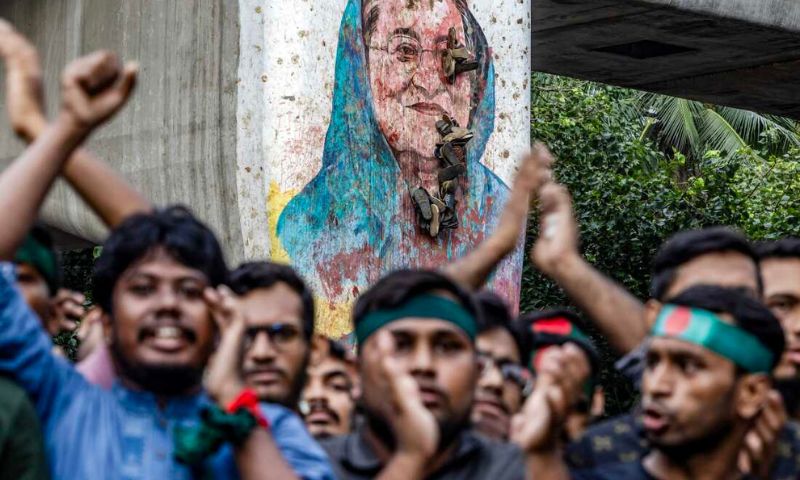
For more than a decade, Bangladesh was often presented internationally as India’s most dependable neighbour. Security cooperation deepened, connectivity projects expanded, and Dhaka was portrayed as a cornerstone of India’s eastern regional strategy. Yet this narrative masked a growing imbalance.
Many Bangladeshis — particularly students, academics, and opposition groups — viewed the relationship as asymmetrical. India was seen not simply as a partner but as an external power exerting decisive influence over Bangladesh’s domestic politics, elections, and security policies. The perception that Sheikh Hasina’s government relied heavily on Indian backing to maintain power became a central grievance of the protest movement that eventually forced her resignation.
When Hasina sought refuge in India after her ouster, these grievances hardened. For many in Bangladesh, New Delhi’s decision confirmed long-held suspicions that India viewed Dhaka less as a sovereign equal and more as a strategic extension of its regional security architecture.
Security, Diplomacy, and Selective Standards
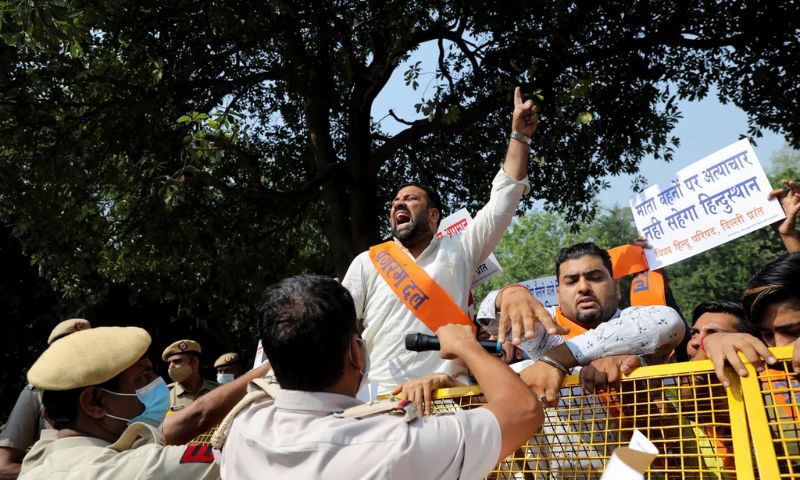
Tensions escalated sharply in late 2025 following protests near Bangladesh’s High Commission in New Delhi. Bangladeshi officials questioned how demonstrators were able to reach a highly secured diplomatic zone — a concern grounded in well-established international norms that place full responsibility for mission security on the host state.
India’s response was widely criticised in Dhaka as dismissive. Rather than addressing the security lapse, New Delhi framed the incident as minor and accused Bangladeshi media of exaggeration. For Bangladeshi policymakers, this response epitomised a broader pattern: India demanding strict standards abroad while applying them selectively at home.
The dispute was compounded when India cited “deteriorating security conditions” to suspend visa services across Bangladesh, including major application centres in Dhaka and Chattogram. While framed as a precautionary measure, the decision disrupted medical travel, education, and business ties, disproportionately affecting ordinary Bangladeshis and reinforcing perceptions of collective punishment rather than targeted risk management.
The Hasina Factor and Diplomatic Deadlock
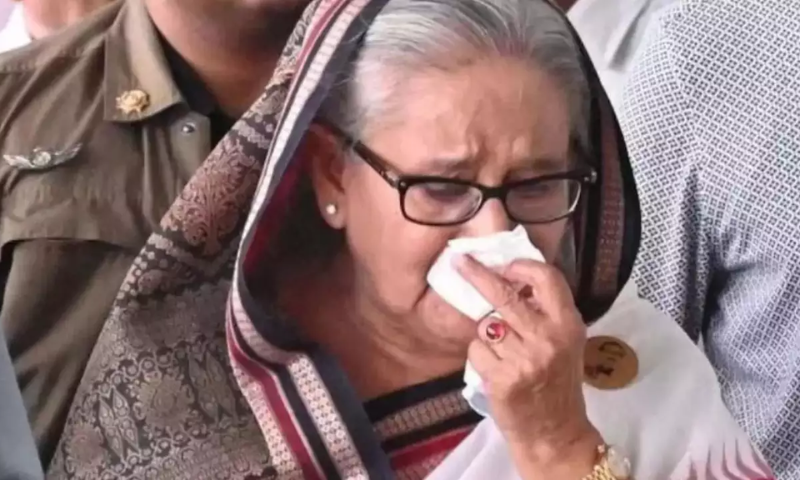
At the heart of the crisis lies India’s refusal to extradite Sheikh Hasina, who faces serious charges in Bangladesh, including crimes against humanity. Dhaka has formally requested her return, arguing that accountability is essential for political stabilisation and democratic transition.
India’s position — that Hasina’s return is a personal decision — has been widely interpreted in Bangladesh as evasive and politically motivated. By allowing Hasina to remain in India and make public statements, New Delhi has positioned itself not as a neutral neighbour, but as an active participant in Bangladesh’s internal political struggle.
This stance has fuelled accusations that India prioritises political loyalty over legal principles and regional stability — a perception that has significantly eroded trust at the highest diplomatic levels.
Weaponising Minority Discourse
India has repeatedly raised concerns about the treatment of Hindu minorities in Bangladesh following the political transition. While minority protection is a legitimate international concern, Bangladeshi authorities argue that India’s public messaging has been selective, exaggerated and politically instrumentalised.
Dhaka maintains that it has taken swift legal action in documented cases of violence and rejects attempts to frame isolated crimes as systemic persecution. For Bangladeshi officials, India’s rhetoric appears less about human rights and more about delegitimising the post-Hasina political order.
This approach has backfired. Instead of reassuring Bangladesh, it has strengthened domestic narratives portraying India as using minority issues as a diplomatic pressure tool.
Economic and Strategic Consequences
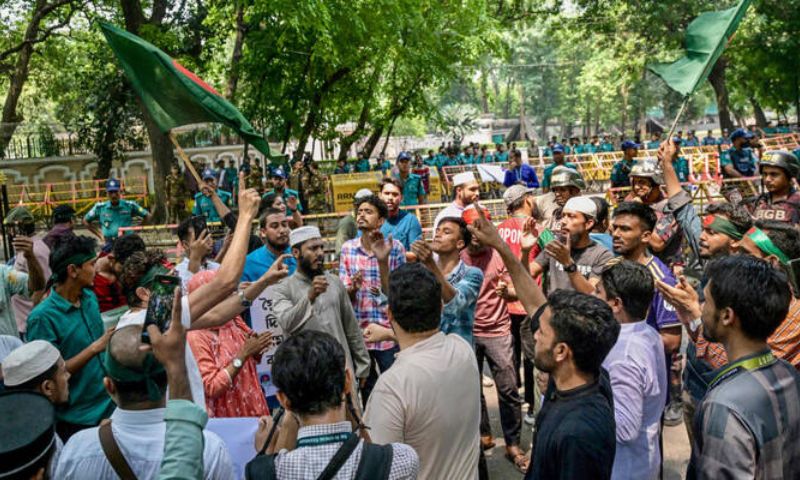
The deterioration of relations is already producing tangible costs. Bilateral trade — previously exceeding $10 billion annually — has been disrupted by logistical restrictions and declining cross-border movement. India’s withdrawal of certain transshipment facilities has raised concerns about the politicisation of trade routes.
Security anxieties are also growing. Indian border agencies have warned of increased instability along the eastern frontier, while Bangladeshi officials fear that unresolved tensions could escalate into long-term securitisation of the border.
Perhaps most consequential is the looming water diplomacy crisis. The Ganga Water Treaty is set to expire in 2026, while negotiations over the Teesta River remain stalled. Without diplomatic trust, shared rivers risk becoming instruments of leverage rather than cooperation — a scenario with serious humanitarian and environmental implications.
In response, Bangladesh is quietly recalibrating its foreign policy. Analysts describe a gradual move away from India-centric regional integration toward a more diversified set of partnerships, including deeper engagement with China and renewed outreach to Pakistan.
This shift is not ideological but pragmatic, driven by the belief that over-dependence on a single regional power carries political and economic risks.
A Crisis of India’s Regional Leadership
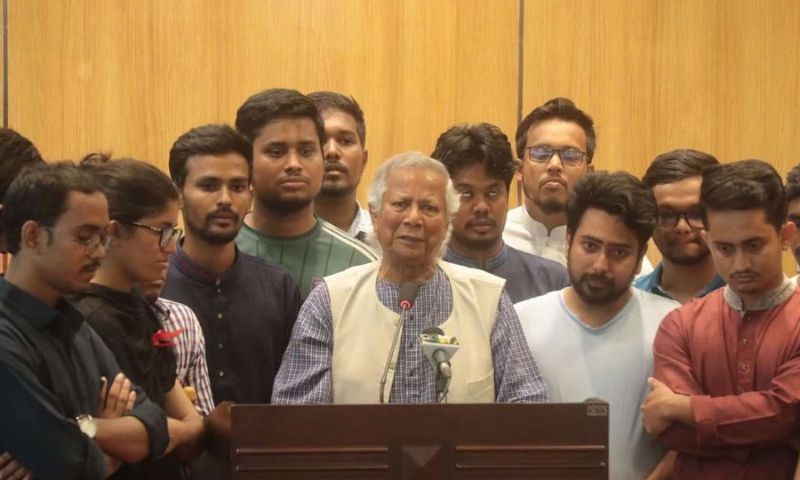
India frequently positions itself as a stabilising force in South Asia. Yet its handling of Bangladesh since the student-led uprising exposes the limits of a strategy built on political patronage rather than mutual respect.
By failing to acknowledge the legitimacy of Bangladesh’s political transition, by sheltering a deposed leader, and by applying diplomatic pressure through visas, trade and rhetoric, New Delhi has undermined its own credibility as a responsible regional power.
The current crisis was not inevitable. But unless India fundamentally reassesses its approach — recognising Bangladesh as an autonomous political actor rather than a strategic subordinate — the damage may soon become irreversible.
What is at stake is not merely a bilateral relationship, but the broader credibility of India’s claim to regional leadership in a rapidly changing South Asia.