


KEY POINTS
- Indian Army will acquire loiter munitions, Pinaka guided rockets, lightweight radars and counter-drone systems.
- Navy cleared purchases of support vessels and long-endurance surveillance drones.
- Air Force will receive Astra Mk-II missiles, SPICE-1000 kits and advanced simulators.
- India’s defence budget reflects accelerated rearmament following battlefield losses to Pakistan.
- Post-conflict assessments acknowledged Pakistan’s effective military response and use of advanced weapon systems.
NEW DELHI: India’s Defence Acquisition Council (DAC) on Monday approved military procurement proposals worth $8.78 billion to strengthen the operational capabilities of the Army, Navy, and Air Force, Indian media reported.
The approvals were granted during a meeting chaired by Defence Minister Rajnath Singh and are part of India’s broader push to modernise its armed forces, India Today reported.
The DAC accorded Acceptance of Necessity (AoN) for several key Army acquisitions, including loiter munition systems for artillery regiments, low-level lightweight radars, long-range guided rocket ammunition for the Pinaka Multiple Launch Rocket System, and the Integrated Drone Detection and Interdiction System Mk-II.
For the Navy, the council approved the acquisition of bollard pull tugs, high-frequency software-defined radio manpacks, and the leasing of high-altitude, long-endurance remotely piloted aircraft systems, measures intended to improve maritime domain awareness and operational mobility.
The Air Force was granted clearance for the acquisition of several systems, including automatic take-off and landing recording systems, Astra Mk-II air-to-air missiles, full mission simulators for enhanced pilot training, and SPICE-1000 long-range guidance kits aimed at strengthening combat readiness and improving strike accuracy.
India’s defence budget for FY 2026/27, the first since its military setback against Pakistan in the May conflict, reflects a shift toward accelerated rearmament and force modernisation.
India’s attempt to regain confidence
New Delhi’s fiscal posture underscores an attempt to regain strategic confidence, close capability gaps exposed during the war with Pakistan, and reinforce deterrence across air, land, maritime, space, and cyber domains.
Over the past five years, India’s defence spending has followed an upward trajectory. The budget expanded from USD 65.6 billion in FY 2021/22 to USD 87.4 billion in FY 2025/26, marking a substantial increase of 33.2% and an average annual growth rate of roughly 7.5%.
This upward defence spending trend predates the May conflict. Yet the post-conflict budget marks a clear inflexion point in both scale and intent.
Strategically, India’s post-May budget signals a shift toward multi-domain readiness and long-term conventional deterrence.
Battlefield losses to Pakistan
The emphasis on capital outlay, indigenous production, and advanced technologies suggests lessons drawn from recent combat experience.
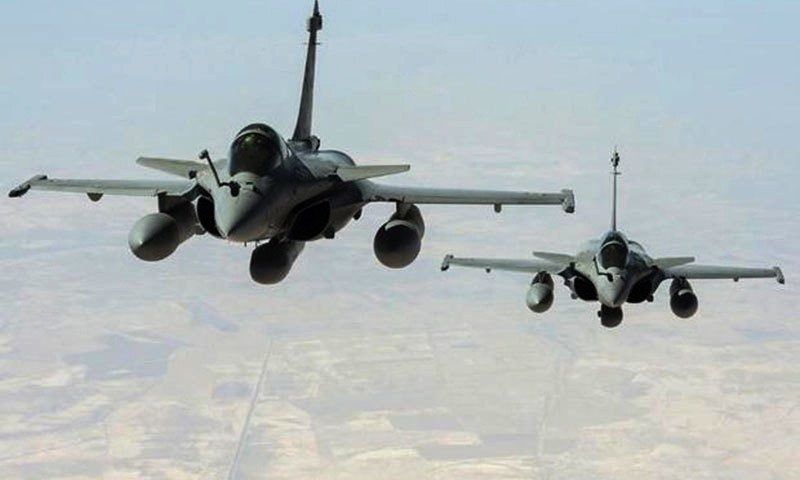
During the May conflict, Pakistan gave a strong and decisive response to Indian military aggression. The Pakistan Air Force (PAF) shot down seven Indian aircraft, including Rafale jets, and successfully neutralised an S-400 air-defence system.
The four-day war between the two nuclear-armed nations began after India conducted missile strikes inside Pakistani territory, resulting in the deaths of multiple civilians and security personnel.
In retaliation, Pakistan targeted over 20 Indian military sites across several regions, demonstrating a well-coordinated, full-spectrum, and effective military response.
The conflict ended on May 10 when both countries agreed to a ceasefire mediated by the United States.
In the months following the conflict, a report submitted to the United States Congress by the US-China Economic and Security Review Commission recognised Pakistan’s military performance.
The report noted that Pakistan employed advanced weaponry, including the HQ-9 air-defence system, PL-15 air-to-air missiles, and J-10C, and JF-17 fighter jets, marking the first operational deployment of these modern systems in active combat.