
Key Points
- IAEA inspectors confirmed damage to meteorological monitoring equipment at the External Radiation Control Laboratory (ERCL), which is now out of service.
- One external power line essential for cooling nuclear fuel has remained disconnected since late March.
- The plant has experienced repeated drone incidents since the start of the war, though officials say the latest damage was limited and operations continue unaffected.
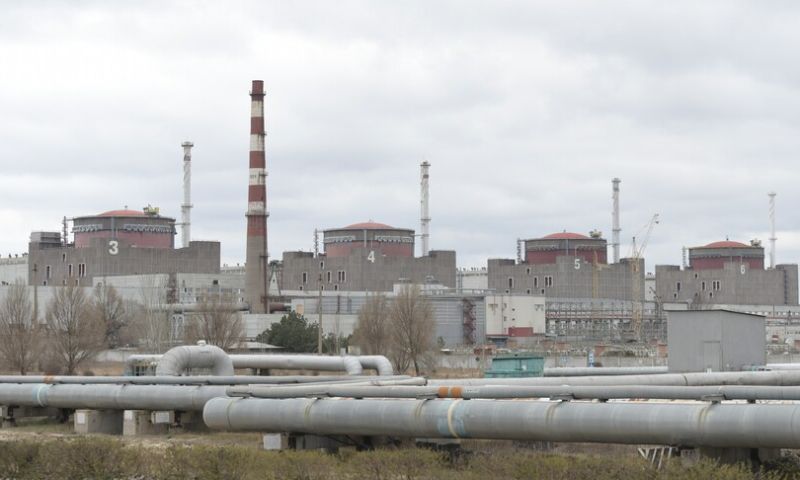
KYIV: The International Atomic Energy Agency (IAEA) has reported that meteorological monitoring equipment at the Russian-controlled Zaporizhzhia Nuclear Power Plant in south-eastern Ukraine has been damaged following a drone incident.
The plant, which is Europe’s largest nuclear facility with six reactors, was seized by Russian forces in the early phase of Moscow’s full-scale invasion of Ukraine in February 2022.
Since then, both Russia and Ukraine have repeatedly accused each other of military activities around the site, raising persistent concerns over nuclear safety in an active conflict zone.
In a statement posted on social media platform X, the UN nuclear watchdog said its inspection team had visited the plant’s External Radiation Control Laboratory (ERCL) one day after the facility’s Russian-installed management reported that it had been struck by a drone.
IAEA team today visited ZNPP’s External Radiation Control Laboratory (ERCL), a day after the plant said it was targeted by a drone. Team observed damage to some of the lab’s meteorological monitoring equipment which is no longer operational. DG @rafaelmgrossi reiterates call for… pic.twitter.com/bOMRisFt5d
— IAEA – International Atomic Energy Agency ⚛️ (@iaeaorg) May 4, 2026
The IAEA confirmed that its experts had observed damage to certain meteorological monitoring instruments at the laboratory, rendering part of the equipment non-operational.
The agency did not specify responsibility for the drone incident but noted the impact on critical monitoring systems.
IAEA Director General Rafael Grossi renewed his appeal for restraint, stressing the importance of avoiding any military actions near nuclear installations.
He called for “maximum military restraint near all nuclear facilities to avoid safety risks”, according to the agency’s statement.
According to Reuters, the Zaporizhzhia plant, although no longer generating electricity, remains a key point of concern due to its nuclear fuel and safety systems that still require stable conditions and continuous monitoring.
The site has previously been subjected to multiple drone-related incidents since the war began, though plant management stated on Sunday that the latest damage was limited and had not disrupted overall operations.
Compounding safety concerns, one of the facility’s external power lines—essential for maintaining cooling systems for nuclear material—has remained disconnected since late March.
The IAEA last week said it was working to establish a localised ceasefire arrangement to allow for repair work to restore the line.
Grossi has made several visits to the Zaporizhzhia facility since it came under Russian control, and the IAEA has maintained a permanent monitoring presence there, as well as at Ukraine’s three other operational nuclear power stations, to oversee nuclear safety conditions during the ongoing conflict.